
Tariff blowback keeps getting more expensive
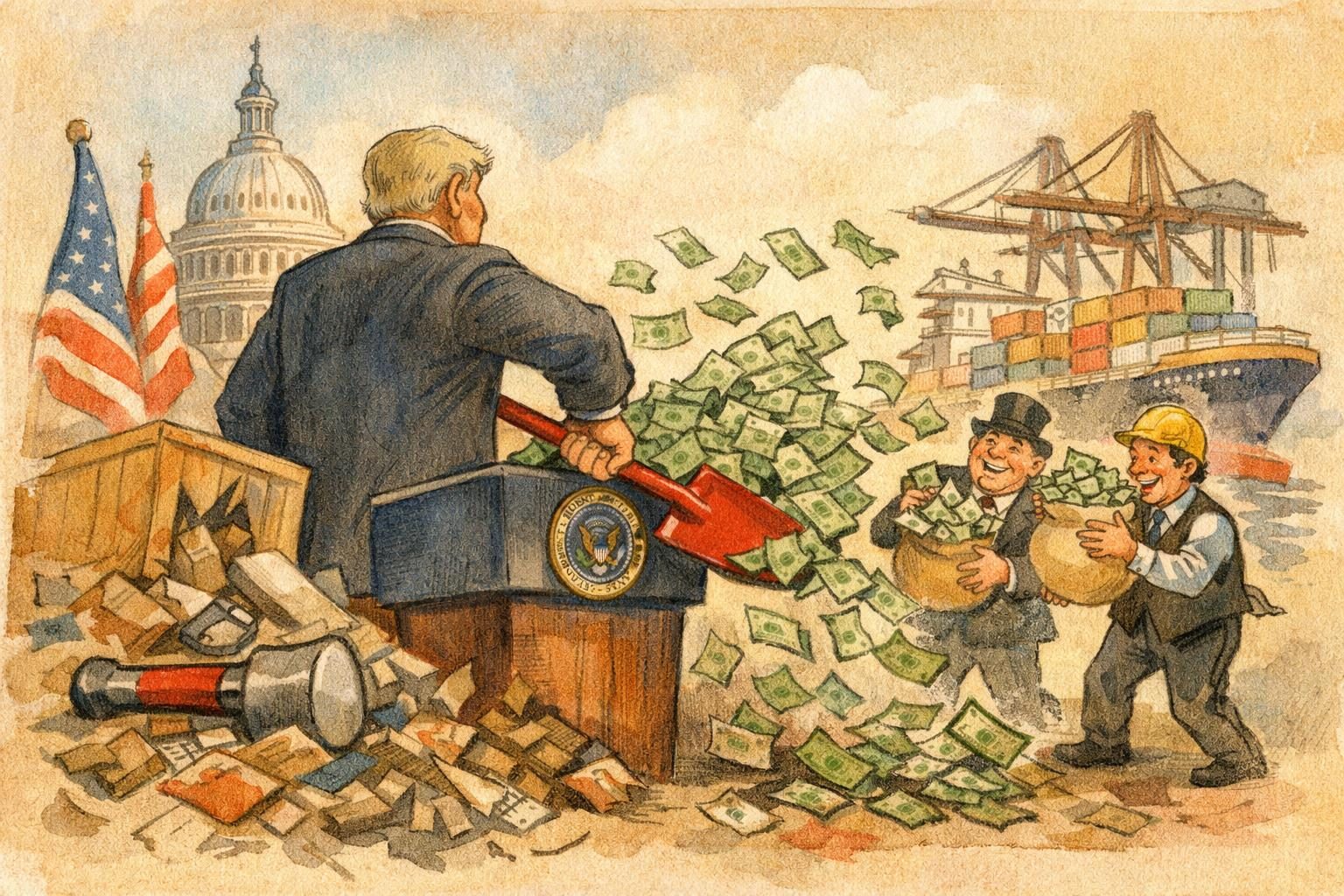
The Trump administration is now on the hook to refund importers after the Supreme Court struck down specific tariff categories, and that turns what was billed as a show of trade muscle into a far less glamorous administrative bill. Tariffs are usually sold as pressure tools: tough, immediate, and easy to explain in a slogan. Refunds are the opposite. They mean the government has to retrace its steps, identify who paid what, and unwind a policy that had already been working its way through supply chains, pricing models, and contracts. That is more than a bookkeeping nuisance. It is the practical consequence of a legal loss that converts a political victory lap into a costly cleanup operation. For businesses, the damage is already partly baked in, because the uncertainty came first and the money may come back later, if it comes back cleanly at all.
The bigger significance is that the court fight exposed just how much tariff policy under this White House has depended on aggressive legal theories and fast-moving executive action. Tariffs do not stay confined to speeches about leverage or fairness. They show up in the prices importers pay, the margins companies can protect, the inventory they order, and the way contracts are written months in advance. Once the Supreme Court narrowed or struck down the tariff categories at issue, the administration had to shift from imposing duties to repairing the mess those duties left behind. That includes refunds, recalculations, paperwork, and the awkward admission that the policy ran past the legal line. It is hard to frame that as strength. It looks more like improvisation that got expensive enough to require a federal accounting.
Critics of the tariff regime have long argued that the president has treated trade powers as a blunt instrument, using the threat of duties as a negotiating weapon while treating legal restraints as obstacles to be managed rather than limits to be respected. The refund episode gives them an easy exhibit. The administration can still argue that tariffs are leverage and that foreign countries should feel pressure when they block U.S. commerce, but the court’s ruling makes clear that not every import surcharge can be justified by force of will. Once the government crosses a legal boundary, it does not just lose an argument in the abstract. It creates a real obligation to give money back, and that means the costs are no longer theoretical. The political problem is obvious: the White House wanted tariffs to project toughness, but it now has to explain why a hardline trade posture has produced a refund queue.
The refund process also raises questions that go beyond the immediate dollars involved. Importers want certainty, and businesses need policies stable enough to plan around. Instead, they got a sequence that looks like this: duty imposed, business behavior altered, court ruling issued, policy trimmed back, and then money returned after the fact. That kind of churn is hard to absorb, especially for firms that had to either pass costs along, absorb them, or scramble to find new suppliers while the legal picture remained unsettled. Even if the administration succeeds in processing refunds without major delay, the episode has already undercut the image of tariff policy as a disciplined strategy. It suggests a system that can move fast when it comes to collecting money, but moves much more slowly when it comes to admitting a legal mistake. The fallout is still developing, but the central lesson is already plain: trade policy built on overreach eventually becomes a financial problem, a legal problem, and a political problem all at once.
Comments
Threaded replies, voting, and reports are live. New users still go through screening on their first approved comments.
Log in to comment
No comments yet. Be the first reasonably on-topic person here.