
Twenty-five states sue to blow up Trump’s latest tariff rerun
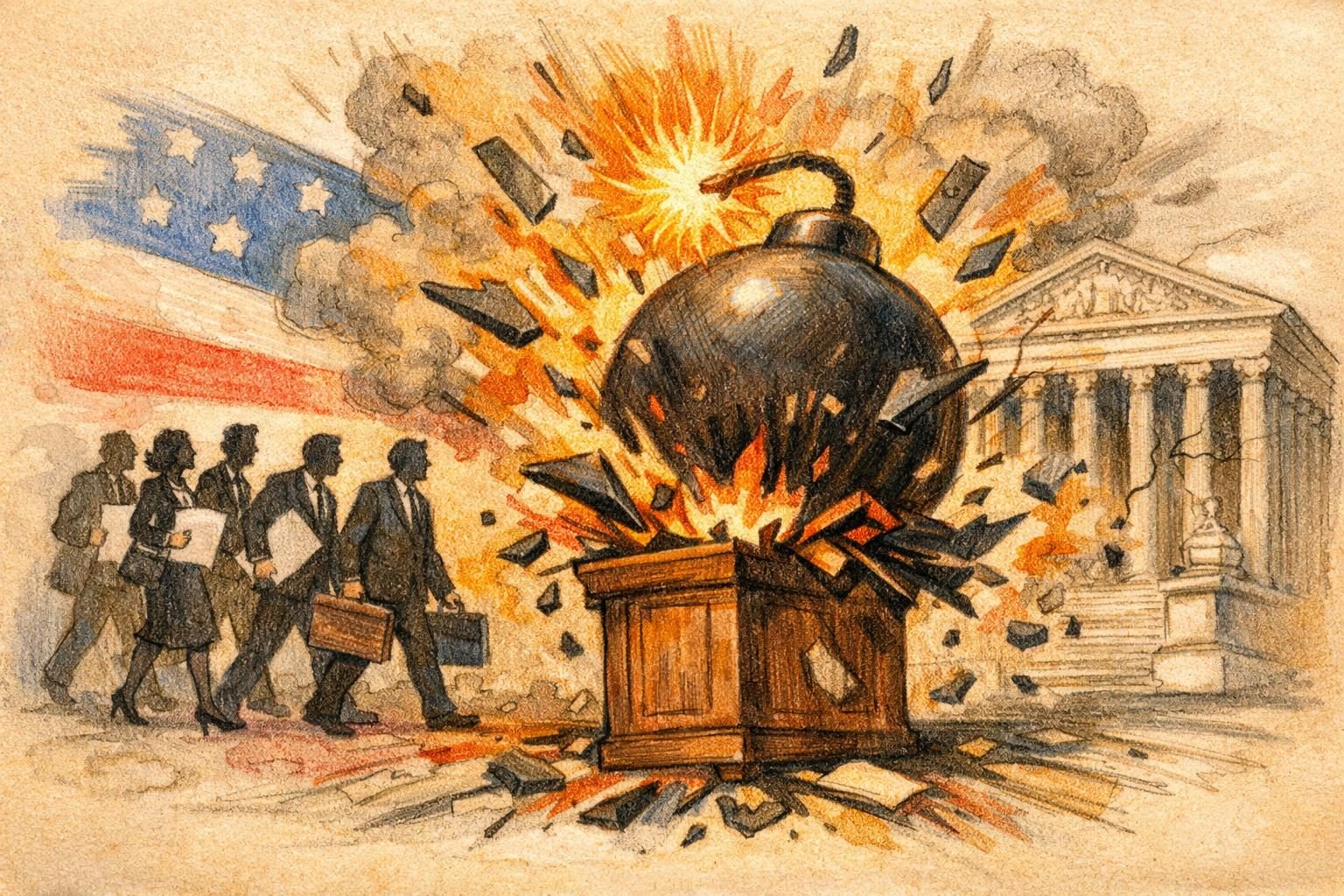
Twenty-five states sued the Trump administration on Monday, saying the White House is trying to resurrect a tariff policy that has already been knocked down and relabeled just enough to survive another day. The complaint challenges the administration’s newest import-tax push, arguing that the government is not unveiling a genuinely new legal approach so much as repackaging a defeated one after running into a wall at the Supreme Court earlier this year. At the center of the dispute is a forced-labor tariff mechanism that the states say is being used as a workaround to keep tariffs flowing even after the earlier version of the policy faced judicial rejection. That puts the case well beyond a routine trade fight. It is now a test of whether the executive branch can keep imposing economic penalties first and sorting out the legal basis later.
The states involved are framing the issue as both a constitutional and pocketbook problem. Their argument is that tariffs function like taxes, and that when the federal government expands them through executive action, the costs do not stay at the border. They move through supply chains, land on retailers, and eventually show up in the prices paid by households and businesses. State attorneys general say that makes the tariff regime a direct hit to consumers and a burden on state economies that have no control over the policy but have to deal with its consequences. They are also arguing that the administration is leaning on the language of national security and labor enforcement to justify a much broader economic squeeze. In their view, the legal labels are changing faster than the policy itself, but the result is still the same: higher import costs and more uncertainty for everyone downstream.
The lawsuit also reflects how aggressively the administration’s trade agenda has been tested in court. When a White House keeps pressing ahead after losing a major legal battle, it invites opponents to argue not only that a policy is wrong, but that the government is openly trying to evade the consequences of losing. That is the posture the states are taking here. They are effectively telling the court that this is a rerun with a new title card, not a distinct regulatory program. The administration, by contrast, has signaled that it sees room to keep pressing its tariff strategy and that the latest move is grounded in a different legal theory tied to forced labor concerns. Whether that distinction holds up will now be for a judge to decide. For now, the case sets up another confrontation over the limits of presidential power in trade, an area where administrations of both parties have often tried to move quickly and dare the courts to catch up.
The practical stakes are already visible even before the first major hearing. Importers are left to guess whether the new duties will stay in place, be narrowed, or be wiped out, and those guesses can affect ordering decisions, inventory planning, and prices charged to customers. States say consumers will ultimately bear much of the cost, while businesses say they are stuck navigating a policy environment that changes whenever the legal footing shifts. The larger political impact is just as clear. Opponents of the administration see the case as proof that defeated policies are being revived through new terminology rather than new authority, while supporters are likely to argue that the government is simply using every available tool to police trade and labor abuses. Either way, the lawsuit gives critics a simple line of attack: the White House is trying tariff whack-a-mole, and the cost is being passed to the public. What comes next will depend on how the courts read the latest tariff design, but the immediate message from the states is unmistakable. They are no longer willing to let the administration treat a lost case as a temporary inconvenience on the way to the same result.
Comments
Threaded replies, voting, and reports are live. New users still go through screening on their first approved comments.
Log in to comment
No comments yet. Be the first reasonably on-topic person here.