
White House vaccine guidance reopens a public-health wound it didn’t need
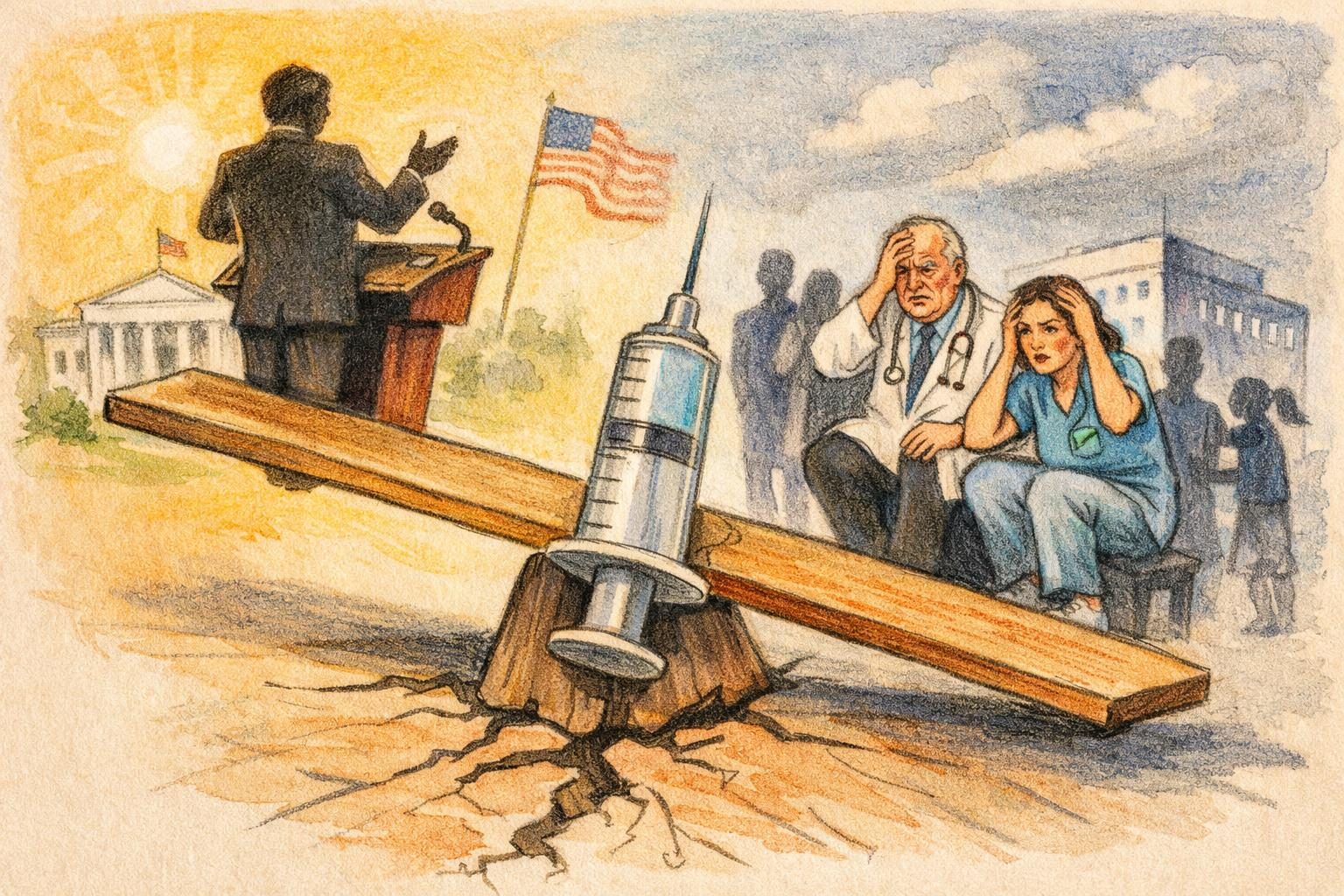
The White House on Monday unveiled new childhood vaccine guidance that would space out some shots and narrow the list of routine immunizations recommended for children, a move that immediately reopened one of the country’s ugliest and most exhausting public-health fights. On paper, the administration cast the change as a matter of flexibility and reconsideration. In practice, it lands like a shove into a debate that most doctors thought had already been settled by years of evidence, childhood disease surveillance, and the plain fact that vaccines work best when schedules are built around how infections spread, not around political fashion. The timing matters because the country is already awash in confusion about vaccines, especially anything touching on autism misinformation, parental choice rhetoric, and the broader effort by anti-vaccine activists to turn basic immunization into a culture-war prop. By revisiting a core public-health framework without broad support from major medical groups, the White House has created a new round of uncertainty where there was no obvious need for one. That uncertainty is not theoretical, either. It can affect how parents read guidance, how pediatricians explain it, and how quickly children get protected against diseases that do not wait politely for ideological debates to end.
The practical objection from public-health experts is straightforward: vaccine schedules are not random clusters of appointments. They are designed around age-specific risk, immune response, and the timing needed to keep children protected before they are most vulnerable. Spacing out shots may sound harmless to people who have never had to think about outbreaks, but delaying routine immunizations can leave gaps in protection longer than necessary. That matters for babies, toddlers, and school-age children whose immune systems rely on timely coverage, especially when exposure can happen in daycare, classrooms, playgrounds, or anywhere else kids gather. Doctors have spent years trying to convince skeptical parents that the schedule is already the result of careful balancing, not bureaucratic overreach. The administration’s decision to meddle with that balance invites the exact kind of confusion clinicians hate most: parents asking whether they should follow the government, the pediatrician, or the loudest person they saw online. Even if the new guidance is not immediately enforced everywhere, it still sends a message that the old consensus is optional, and optional public-health consensus is how preventable problems become real ones. When federal power starts freelancing around medical standards, the damage can show up long before any law changes. It shows up in hesitancy, delays, missed appointments, and a wider sense that settled science is up for negotiation if the politics are loud enough.
The political risk is bigger than the medical one because the two are now tangled together. A new federal vaccine posture gives anti-vaccine activists a fresh opening to claim they were right all along, or at least that the government itself is finally validating their doubts. That alone is enough to do harm, even if the guidance is framed narrowly or presented as merely advisory. Once a White House starts talking as if core childhood immunizations are a matter of preference rather than a public-health baseline, it becomes much easier for misinformation to borrow the authority of government language. Parents who already feel overwhelmed by conflicting advice are left with one more reason to hesitate, and hesitation in vaccination is not some harmless pause. It can mean delayed immunity, more room for outbreaks, and more work for doctors and schools that are already tired of policing a debate that should have stayed in the realm of medicine. The administration may argue that families deserve more say over the pace of childhood shots, but the reality is that so-called flexibility can become a political slogan that masks real risk. And because vaccines are one of the few places where individual choices affect the community, the fallout never stays purely personal. A decision framed as empowering parents can instead make everyone else less safe if it encourages more delay, more confusion, or more distrust in the routine that has protected generations of children.
What makes this episode especially damaging is that the consequences of vaccine uncertainty do not stop at the White House briefing room. Federal guidance helps shape how schools think about admission rules, how insurers interpret coverage, and how state and local health systems explain their own policies to families. Once the government blesses the idea that the standard immunization schedule is negotiable, the argument spreads well beyond the original announcement and starts altering the ecosystem around it. Pediatricians then have to spend more time undoing political messaging, and parents have to decide whether they trust a medical consensus or a shifting government line that may change again after the next internal fight. That is why this feels less like a careful policy update than a deliberate reopening of a wound that had only partially healed. It is one thing to debate how best to deliver care or how to improve access to pediatric medicine. It is quite another to introduce fresh ambiguity into one of the most basic and successful public-health systems the country has. The White House may present the move as thoughtful and responsive, but the more plausible effect is to create a new layer of noise around a routine that should be boring precisely because it saves lives. When the federal government starts making ordinary immunization sound controversial, it does not just complicate the paperwork. It makes another preventable mess sound like a principled position, and that is a costly mistake in a place where clarity should be the whole point.
Comments
Threaded replies, voting, and reports are live. New users still go through screening on their first approved comments.
Log in to comment
No comments yet. Be the first reasonably on-topic person here.