
Alabama holds special primary after redistricting mess
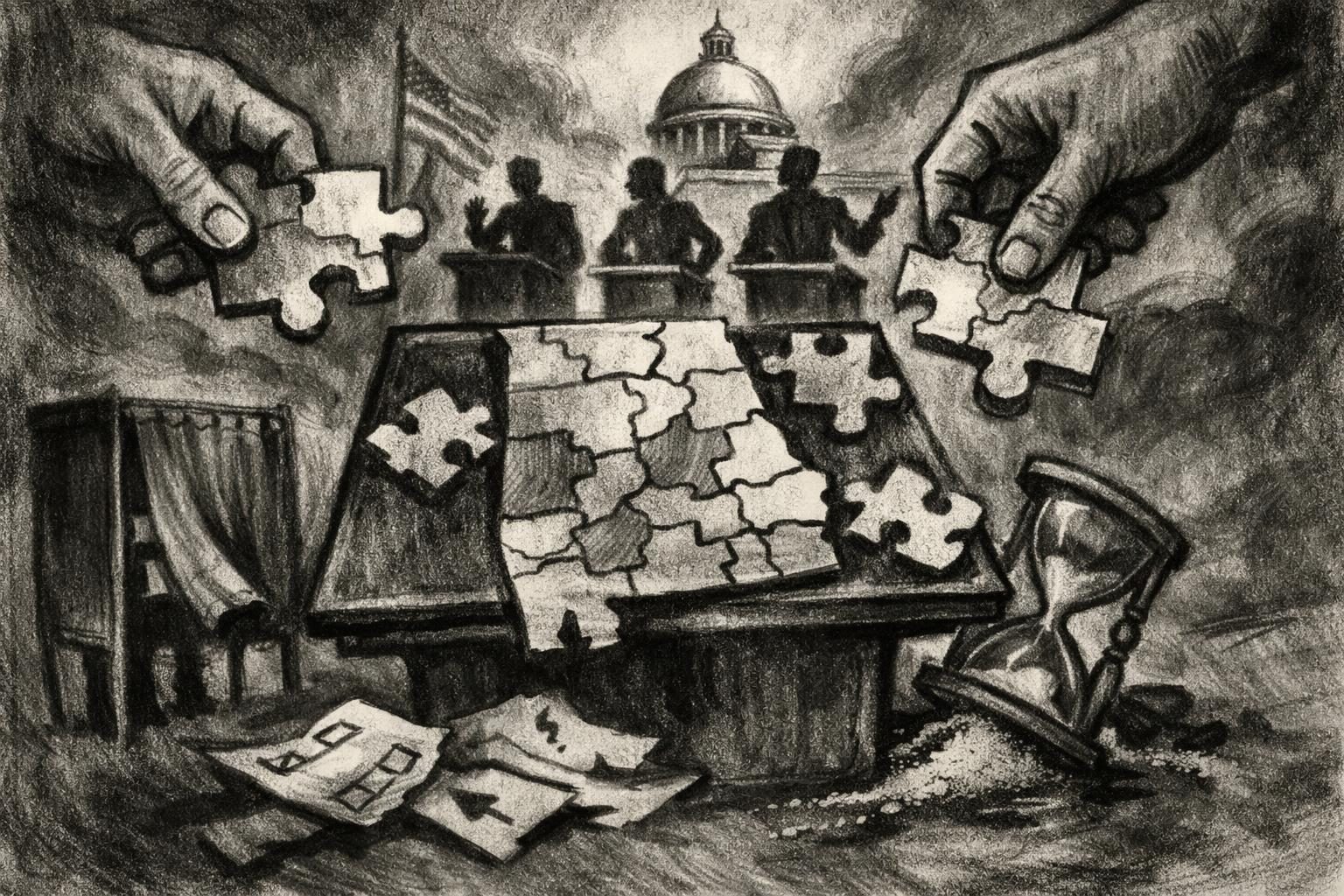
Alabama’s special primary election for several state Senate districts went ahead on August 11, bringing the state’s redistricting fight out of the courtroom and onto the ballot. What could have remained an abstract legal dispute over lines on a map has now become a practical problem for voters, candidates, and election officials who had to adjust to a new district configuration and a new calendar. The special election was set after the state’s map was altered in response to litigation over whether the old districts complied with voting-rights requirements. In other words, the consequences were never limited to legal filings and courtroom arguments; they now show up in the basic mechanics of democracy, including who can run, which voters are grouped together, and when people are asked to cast a ballot. That is why this contest matters beyond the narrow boundaries of a few Senate seats. It is a reminder that redistricting cases do not just decide theory, they decide political reality.
The governor had already called the special primary months earlier, which gave the state time to prepare, but it did not make the process any less disruptive. Once the map changed, the election machinery had to follow, and that meant resetting filing expectations, rebuilding district-level election plans, and informing voters that the ground underneath them had shifted. Special elections are always a headache, but special elections created by a redistricting correction are a different kind of headache because they carry the extra burden of proving that the new districts are the ones that actually count. Alabama now has to manage not only the race itself but also the administrative consequences of a legal ruling that forced officials to discard the old arrangement. That is a costly and time-consuming exercise, and it is one that tends to expose how much work goes into fixing unlawful maps after the fact. Candidates who had organized for one district had to adapt to another, while local election offices had to keep pace with the changes and make sure the contest was run under the revised rules. The result is an election that looks ordinary on the surface but is actually the endpoint of a long and messy legal detour.
The broader significance of Alabama’s special primary is that it illustrates how redistricting disputes shape politics in ways that are often ignored until the damage becomes impossible to miss. Voting-rights litigation is frequently discussed as though it were mainly about appellate briefs, constitutional theory, or the slow churn of federal procedure, but the people affected by those fights experience them as changes to ballots, deadlines, and district boundaries. When a court says a map cannot stand, that ruling can force candidates to refile, campaigns to rewrite plans, and election administrators to redraw their paperwork almost overnight. It can also influence turnout, since voters are less likely to engage fully when district lines, polling expectations, and election dates keep moving. Alabama’s situation shows how a single legal decision can ripple through the entire political calendar. It is not just a question of who wins a case; it is a question of how much public money, staff time, and civic attention gets spent repairing a system that should have been lawful from the start. For that reason, the special primary is best understood not as a side note but as evidence that redistricting fights have direct and sometimes expensive consequences for the democratic process.
There is also a deeper political context here, especially in a state where mapmaking battles have repeatedly intersected with questions about Black voting power and civil-rights enforcement. Even without turning the special primary into a symbolic referendum, the case underscores how often Black voters and advocacy groups have had to rely on courts to make states draw districts that comply with basic protections. That process tends to be slow, adversarial, and exhausting, and it rarely ends with a clean victory for anyone involved. Instead, it produces stopgap elections, revised calendars, and another round of disputes over whether the new lines truly solve the problem or merely postpone it. Alabama’s special primary is therefore part of a larger pattern: when partisan or legally vulnerable maps are challenged, the consequences are not confined to lawyers and judges. They reach local officials, party operatives, and ordinary voters who are left to navigate a political landscape that has been rearranged midstream. If the purpose of hard-fought district lines is to lock in power quietly, this election is a reminder that the lock can be broken in full view of everyone involved. And once that happens, the state still has to run the election, tally the votes, and live with the fallout that follows a map no court was willing to leave in place.
Comments
Threaded replies, voting, and reports are live. New users still go through screening on their first approved comments.
Log in to comment
No comments yet. Be the first reasonably on-topic person here.