
Court of International Trade calendar shows the trade wars still chewing up the docket
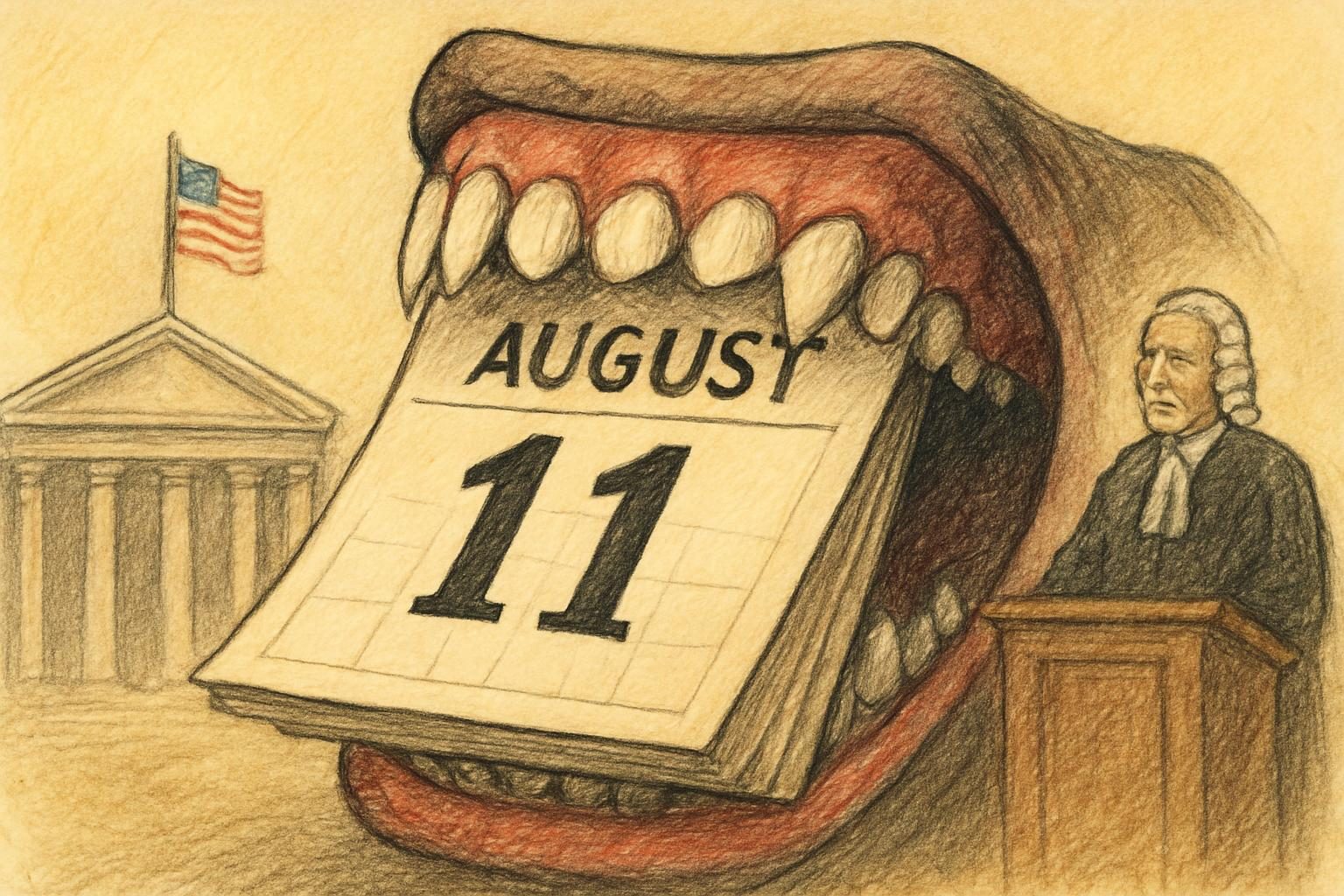
The Court of International Trade’s public calendar for August 11, 2026 is the kind of document most people will never read and most policymakers would probably prefer they could ignore. But it is also a tidy reminder that the trade wars did not end when the slogans got quieter. The docket remains full of matters that turn on tariffs, imports, customs classification, and the endless administrative mess that follows when the federal government decides trade policy should do more heavy lifting than diplomacy. A calendar entry is not a headline-grabbing ruling, and it does not pretend to be one. Still, the fact that the court is scheduled to hear trade-related business on a random mid-August date says something useful: these disputes are still alive, still active, and still demanding time from a specialized federal tribunal built to deal with exactly this kind of fallout.
That matters because the Court of International Trade is where a lot of the friction in modern trade policy becomes impossible to dismiss as abstract theory. Tariffs are often sold as leverage, toughness, or national self-defense, but once they are imposed they produce a trail of disputes that has to be sorted case by case, shipment by shipment, and statute by statute. Importers challenge classifications, exporters challenge restrictions, and companies across the supply chain end up arguing over who owes what, when, and why. None of that is glamorous, but it is where policy becomes cost. It is also where delay becomes leverage of its own, since even a temporary change in duties or customs treatment can reshape orders, pricing, inventory decisions, and contracts. The court is not making the trade policy, but it is one of the places where the consequences of that policy are measured in filings and hearings instead of talking points.
The larger backdrop here is the continued push for a more interventionist economic posture, one that treats trade as a battlefield for industrial strategy and political signaling. That approach can produce real advantages in some sectors, at least in theory, but it also tends to create a long tail of uncertainty that businesses have to absorb whether they like it or not. Companies rarely get the luxury of waiting for a clean final answer before they have to place orders, set prices, and keep goods moving. When customs rules tighten or tariffs shift, somebody along the chain eats the cost, and it is not always the party that policymakers imagine they are targeting. Workers can feel the effects through disrupted production and slower investment. Consumers can feel them through higher prices or thinner choices. Even firms that think they are protected by the new rules often discover that protection is just another word for a more complicated invoice. The court calendar does not resolve those tensions, but it shows they are still being fought through the legal system instead of disappearing into the background.
There is no single dramatic judgment attached to the August 11 docket entry, which is why this stays in the lower-severity range rather than turning into a bigger alarm bell. But dismissing it entirely would miss the point. A functioning court calendar is evidence of an ongoing institutional process, and in the trade arena that process has become one of the main ways the country manages the wreckage of economic nationalism. Each listed matter implies that someone still has enough skin in the game to show up and argue over a customs decision, a tariff consequence, or a trade-related enforcement action. That kind of procedural churn may look dull compared with executive announcements or campaign rhetoric, but it is often where the real costs accumulate. The boring part is the part that lasts, and the boring part is the part that keeps generating invoices, delays, and legal uncertainty long after the original political moment has faded. In that sense, the August 11 calendar is less a dramatic development than a receipt, proof that the trade fight is still working its way through the machinery of government and still leaving someone to sort through the wreckage.
Comments
Threaded replies, voting, and reports are live. New users still go through screening on their first approved comments.
Log in to comment
No comments yet. Be the first reasonably on-topic person here.