
Courts keep trimming tariff power
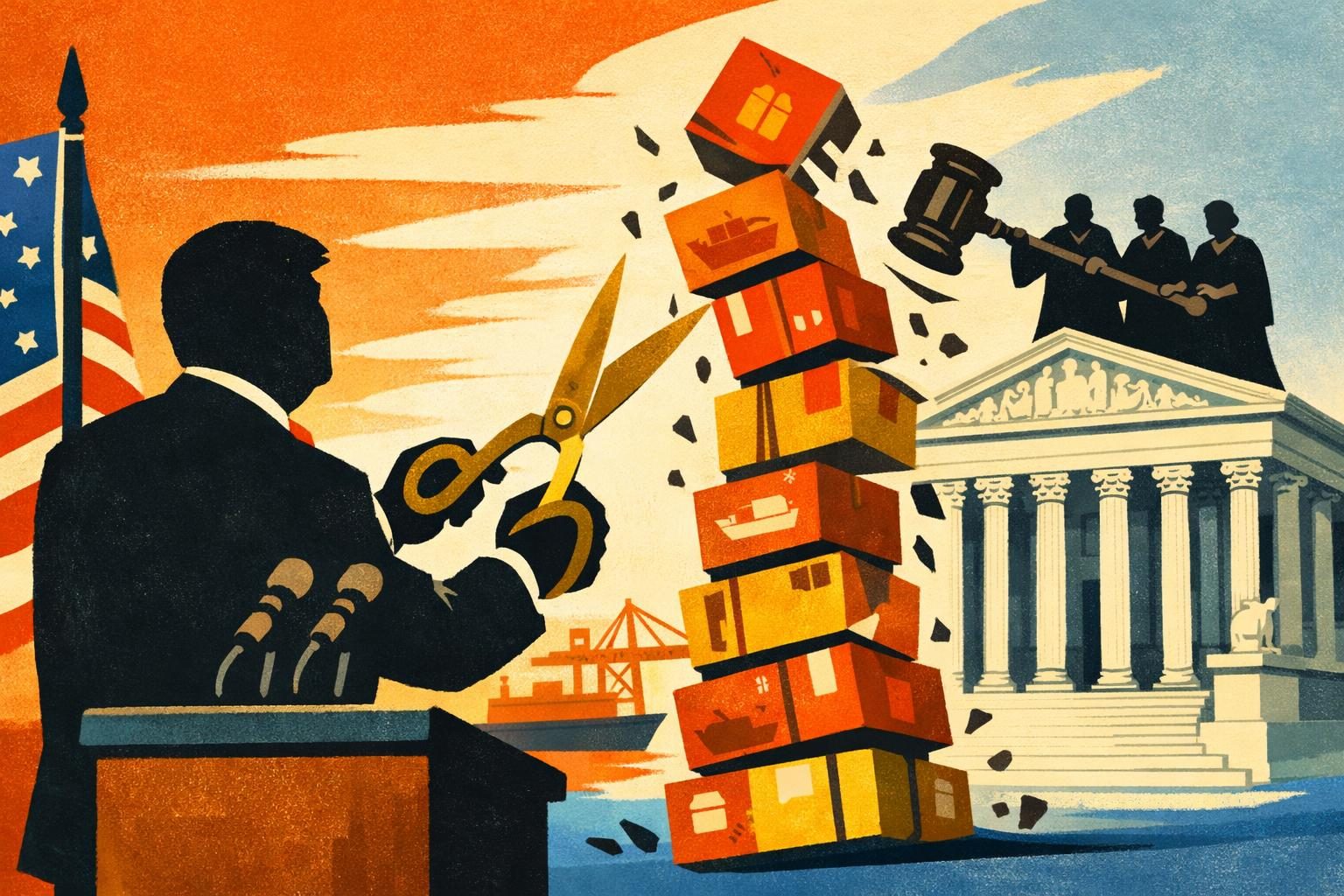
The tariff fight was still echoing through the federal system on August 11, long after the Supreme Court’s earlier ruling cut back the president’s ability to rely on emergency powers for sweeping trade action. What might have looked like a settled legal issue has instead continued to ripple through filings, administrative records, and related court proceedings, keeping the tariff machinery in a state of uncomfortable suspension. The practical effect is that the government is still dealing with the consequences of a policy architecture that was never as secure as its defenders claimed. Even as the news cycle has moved on, the legal and bureaucratic aftershocks have not. For importers, manufacturers, and customs officials, that means the tariff picture remains unsettled in exactly the way businesses hate most: by leaving them to guess which rules will hold and which ones may be revised, paused, narrowed, or unwound.
That continuing uncertainty matters because tariffs are not just a political talking point or a symbolic show of toughness. They affect prices on everything from industrial inputs to consumer goods, and they can force companies to rework supply chains that were built around a more predictable trade environment. When the legal basis for those tariffs comes under strain, the disruption does not disappear with the court decision; it often gets worse as companies try to determine what applies, what might change, and how far back any correction could reach. The current posture of the case suggests that the administration’s earlier broad use of emergency authority is still being processed through the system rather than cleanly resolved. In practical terms, that means more compliance work, more uncertainty for importers, and more pressure on agencies responsible for enforcing whatever remains of the tariff regime. The government may have wanted to move quickly and decisively, but the courts have made clear that speed does not substitute for lawful authority.
The deeper problem is that the tariff program was built on a shaky legal foundation from the start, and now the paperwork is catching up to that reality. The Supreme Court’s earlier action did not simply create a political embarrassment; it forced a reassessment of how far the executive branch can go when invoking emergency law to reshape trade policy. That kind of judicial narrowing can be messy even when a government is acting in good faith, and this case has not exactly been an advertisement for restraint. Federal materials and court-related actions on August 11 show that the issue is still alive in the ordinary machinery of government, where legal limits have to be translated into actual instructions, classifications, and enforcement choices. This is where big claims about leverage and sovereignty run into the dull but unavoidable discipline of administrative law. If a tariff scheme cannot survive contact with the legal system, then the real work becomes not expansion but cleanup, and cleanup is never as politically satisfying as announcement day. That may be why the current phase feels less like a dramatic turning point than an institutional hangover.
The broader significance is that courts are not only checking the tariff policy itself, but also forcing the government to live with the consequences of stretching emergency power beyond what the law can support. That has implications beyond one set of duties or one trade strategy. It sends a signal to businesses that the rules governing imports may not be as stable as they ought to be, and it tells agencies that policies built on aggressive readings of executive power may have to be revised after the fact. The continuing filings and related court actions on August 11 are therefore important not because they introduced a brand-new tariff shock, but because they confirmed that the earlier ruling is still working its way through the system. The damage from overreach is often cumulative rather than explosive: higher costs, delayed decisions, and a lingering need to unwind or reinterpret what was put in place too quickly. For now, the tariff fallout remains active, the legal cleanup is unfinished, and the import system is still absorbing the cost of a policy that promised leverage and delivered a pile of administrative chores instead.
Comments
Threaded replies, voting, and reports are live. New users still go through screening on their first approved comments.
Log in to comment
No comments yet. Be the first reasonably on-topic person here.