
DHS waives more legal requirements for Texas border construction, cueing the same old environmental and accountability fight
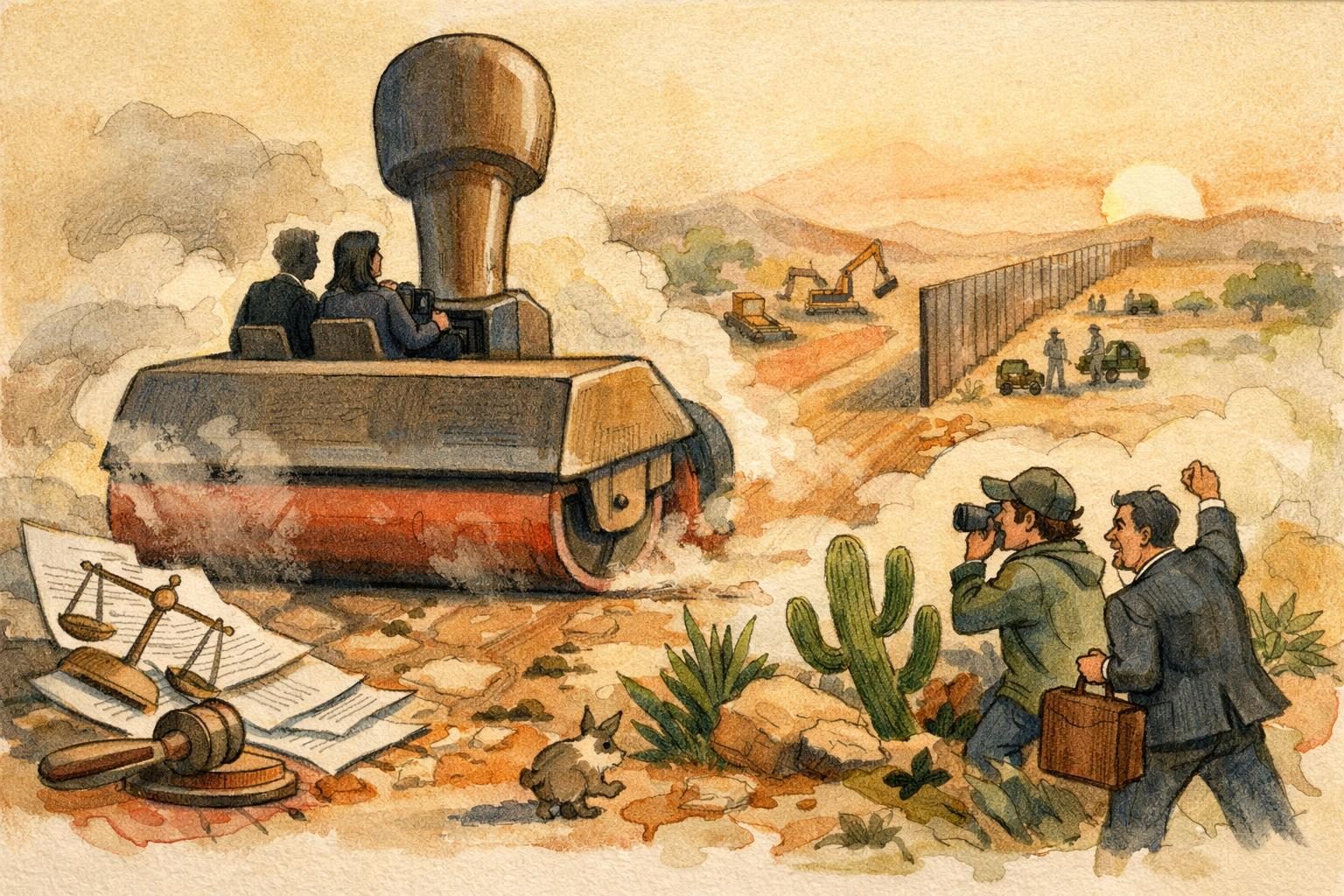
Homeland Security has again reached for the waiver pen on the Texas border, determining on August 11 that it was necessary to waive certain laws, regulations, and other legal requirements so construction of barriers and roads could move faster. The move is not some ceremonial flourish or vague bureaucratic note. It is an immediate administrative action with real consequences for land use, environmental review, and the legal fights that usually follow major border construction. In plain terms, the government is saying that the project’s pace matters more than the ordinary process that would normally slow it down, document it, and expose it to more scrutiny. That choice, on its face, tells you a lot about how border policy is being handled: not as a patient public works effort, but as a race against procedure. The result is another familiar round of the same old tension between speed, authority, and accountability.
The broader significance is both practical and political, and the two are hard to separate anymore. The waiver helps clear the path for barriers and roads near the Texas border, which means it can alter where work gets done, what reviews are required, and how much room opponents have to challenge the project before equipment is already on site. That is exactly why these waivers matter so much: once the government has decided to move quickly, every skipped step becomes a separate point of conflict. Supporters are likely to read the action as proof of seriousness, a sign that the administration is willing to use every available tool to show it is responding forcefully at the border. Critics, meanwhile, will see the same action as a warning label, evidence that ordinary legal constraints are being treated as an inconvenience rather than a safeguard. Neither reading is hard to understand, and both are baked into the politics of border construction at this point. The government gets to claim decisiveness, but it also accepts the burden of explaining why the usual rules should be set aside.
That is why this kind of waiver keeps landing in the same familiar fight over environment, land, and oversight. Construction of barriers and roads does not happen in a vacuum, even when the paperwork is trimmed down to speed things along. Projects like this can trigger concerns about habitat disruption, water and drainage issues, property access, local consultation, and the broader question of who gets to decide how borderland spaces are used. When legal requirements are waived, those concerns do not disappear; they just get pushed into later stages, where they often return in the form of litigation, protest, or both. The government may gain time up front, but it also increases the chance that the project becomes entangled in challenges about what was ignored, what was rushed, and what should have been reviewed before construction began. That is the recurring trade-off here, and it is rarely a clean one. What looks like administrative efficiency in the short term often becomes a long, expensive argument over the consequences.
This also says something uncomfortable about the style of governance now attached to border enforcement. The administration appears to favor the kind of action that produces a strong visual and political signal, even if that signal depends on sidestepping the normal process that would make the decision easier to defend. Border barriers have long been used as a symbol of toughness, urgency, and control, but the repeated reliance on waivers exposes how much of that symbolism rests on shortcuts. The public sees an administration moving decisively, while courts, landowners, advocates, and local communities are left dealing with the aftereffects and the legal paper trail. That is why the episode qualifies as more than a routine procedural note. It is another example of a policy approach that prizes immediate motion over durable planning, and then acts surprised when the costs show up later in courtrooms and on the ground. If the point is to prove that the government can act quickly, it succeeds. If the point is to build something that can withstand scrutiny without constant emergency-style exemptions, the record looks much shakier. And that, in the end, is the real story: not just that the border wall machinery is still grinding forward, but that it still seems to need legal force to outrun the law itself.
Comments
Threaded replies, voting, and reports are live. New users still go through screening on their first approved comments.
Log in to comment
No comments yet. Be the first reasonably on-topic person here.