
Federal appeals court blocks Wisconsin from scrambling its voter rolls again
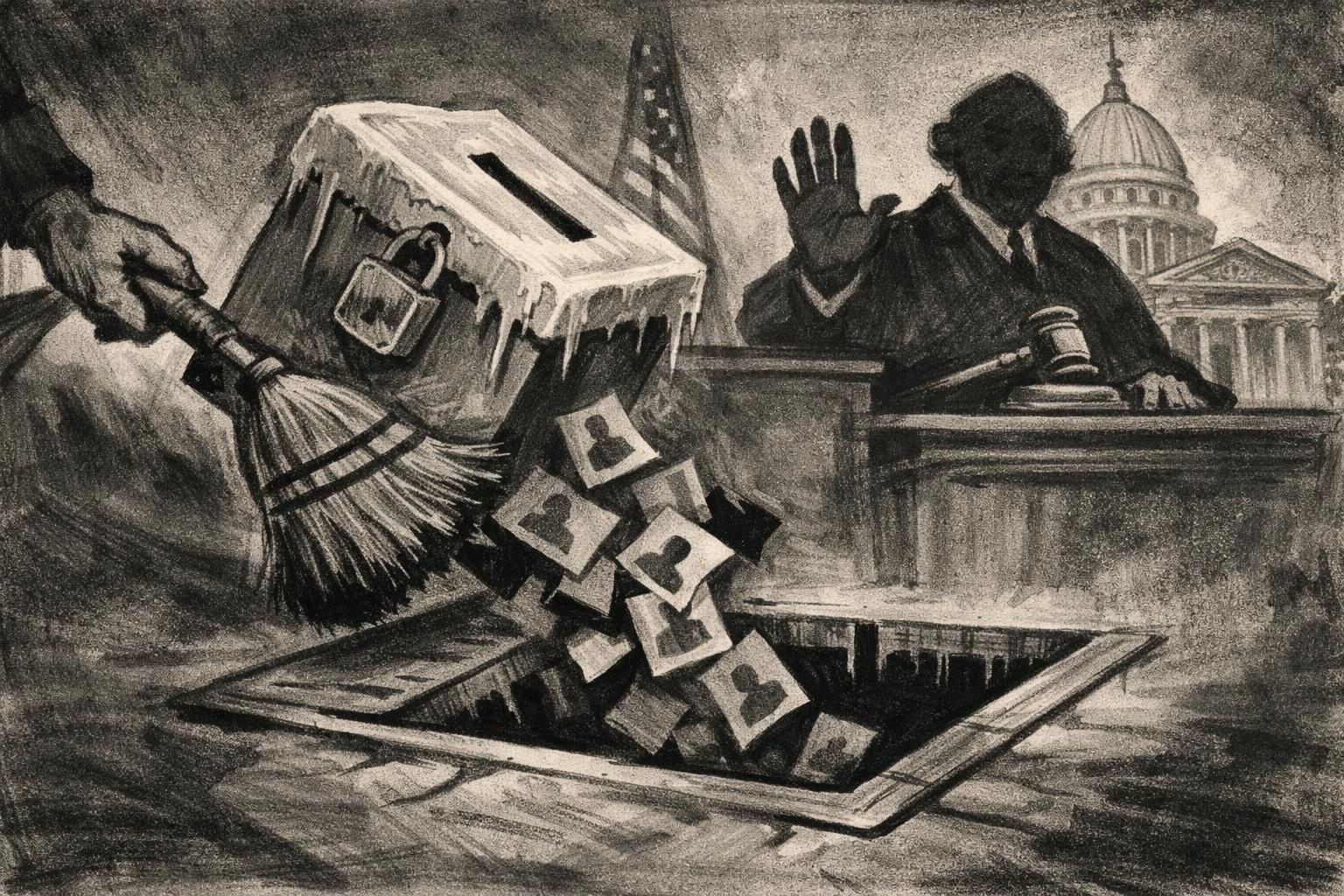
A federal appeals court has put the brakes on Wisconsin’s latest attempt to move ahead with disputed voter-roll changes, leaving in place lower-court protections while the underlying legal fight continues. The ruling, issued Aug. 11, means state election officials cannot immediately use the maintenance dispute to force another round of purge-style action or a freeze that could unsettle registrations already on the books. For now, the practical effect is straightforward: voters stay registered, election workers are spared a sudden procedural overhaul, and the state has to wait for the courts to finish sorting out whether its interpretation of the maintenance rules can stand. In a fight where timing often matters as much as the legal theory itself, that delay is not a small thing. It prevents a contested policy choice from turning into an immediate administrative problem for counties, clerks, and the people who show up expecting to remain on the rolls.
The broader dispute is part of a familiar pattern in election law: state officials or allied litigants push for a stricter reading of voter-maintenance requirements, while opponents warn that aggressive enforcement can push eligible voters into unnecessary uncertainty. The court’s decision suggests it was not convinced the record justified the level of disruption Wisconsin wanted. That matters because roll maintenance is often framed as a dry technical matter, when in practice it can become a blunt instrument. A bad match, an outdated address, a missed notice, or a narrow administrative rule can create a cascade of problems for voters who are not doing anything wrong. The difference between careful list management and overreach is often whether the state has evidence strong enough to support the step it wants to take, and whether the remedy it seeks is proportionate to the problem it claims to see.
That is why voting-rights advocates tend to view these cases as more than procedural disputes. They argue that voter-roll fights are really fights over how much risk a state can impose on eligible voters in the name of integrity. The concern is not that voter lists should never be maintained; it is that maintenance can slide into disenfranchisement when officials rely too heavily on assumptions, loose data, or inflated fears about fraud. Courts have repeatedly been asked to draw that line, and they often end up telling states that suspicion alone is not enough to justify sweeping changes. Wisconsin’s case fits squarely into that larger tension. The state wanted a tougher path, but the appeals court’s ruling signals that judges are still demanding a concrete legal foundation before allowing a change that could affect who stays registered and who has to fight to prove they belong there.
The decision also arrives in a political climate where election administration is under constant pressure from competing demands. On one side are officials and activists who treat more aggressive maintenance as proof of seriousness about election security. On the other are voting-rights lawyers and local administrators who worry that every extra layer of scrutiny increases the odds of confusion, delay, and unnecessary voter anxiety. Wisconsin now sits in the middle of that clash, with the court effectively telling the state to slow down and make its case the hard way. If officials had hoped to use litigation as a shortcut to a broader purge posture, that avenue is now narrower than before. The case is still unresolved, and the state may continue to press its arguments, but the ruling lowers the chances that election workers will be forced to improvise under a cloud of legal uncertainty. For voters, the immediate message is less dramatic but more important: their registrations remain intact unless and until the courts say otherwise, and any attempt to change that will need more than a political appetite for hardball. It will need a record that can survive close judicial scrutiny.
Comments
Threaded replies, voting, and reports are live. New users still go through screening on their first approved comments.
Log in to comment
No comments yet. Be the first reasonably on-topic person here.