
Justice Department’s immigration court fee rule remains a live headache
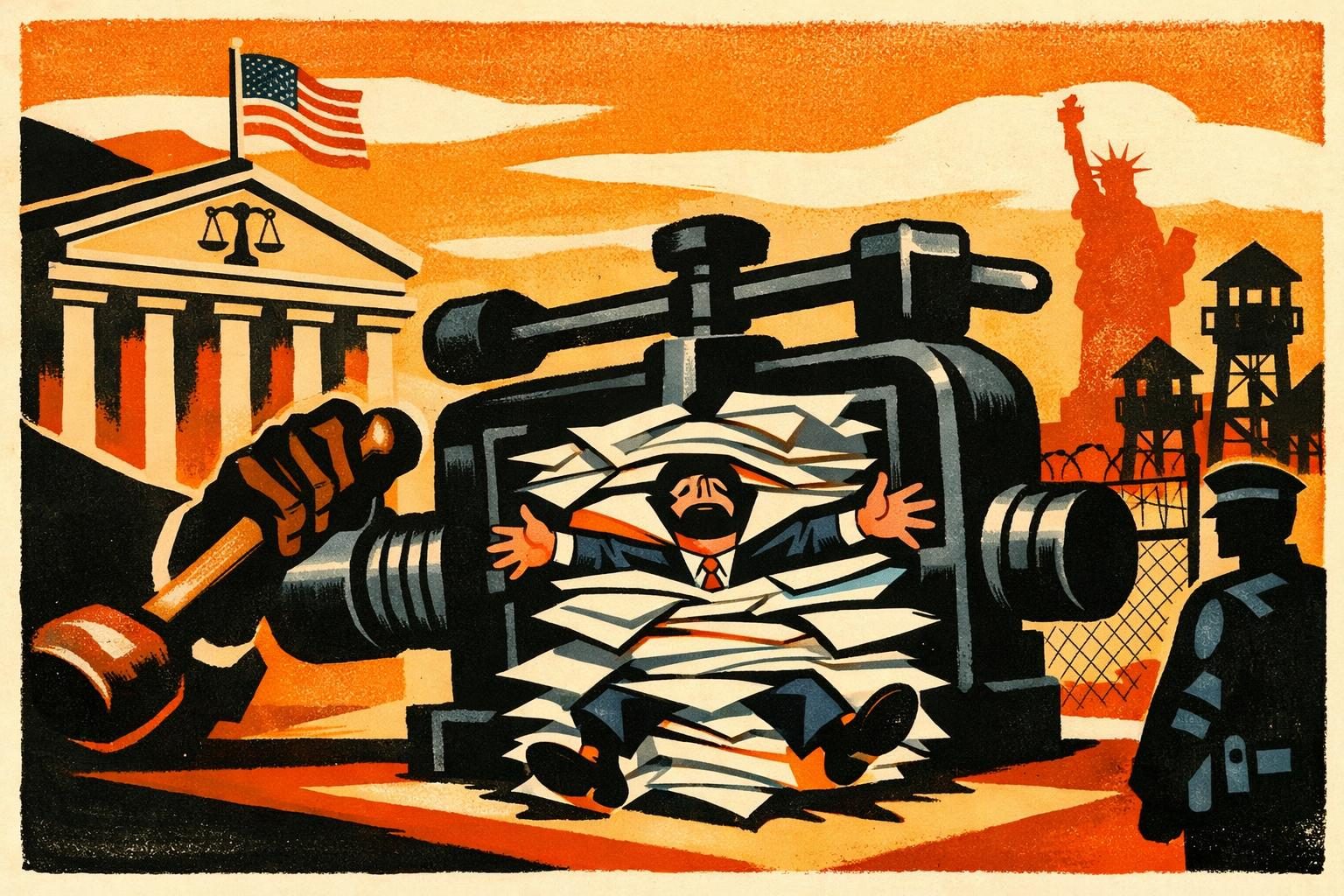
The Justice Department’s immigration court fee rule is still sitting there like a half-finished repair job on a building everyone depends on but nobody seems able to fully fix. The agency’s 2026 Federal Register notice list continues to show work tied to fee changes for immigration court filings, which is a small administrative detail on paper and a much larger signal in practice. It means the machinery behind the immigration system is still being adjusted even as the political fight over immigration gets louder, harsher, and more expensive by the day. That kind of paperwork may not have the drama of a courtroom showdown or a border confrontation, but it can be just as consequential. In a system that already runs on delay, missed deadlines, and procedural traps, even modest fee changes can alter who gets through the door and who gets stuck outside it. The fact that the rulemaking remains active tells you the bureaucracy is still in motion, and not in a way that suggests calm or stability.
That matters because immigration courts are not operating in a vacuum. They sit at the intersection of enforcement priorities, legal access, staffing shortages, and a backlog that has become part of the structure rather than an exception to it. When the department revisits fees, filing requirements, or other administrative rules, it is not just rearranging line items. It is deciding how much friction people face when they try to file a document, challenge a decision, or keep a case alive long enough to be heard. The difference between a workable process and a punishing one can come down to something as unglamorous as a form, a deadline, or a fee that suddenly needs to be paid. Supporters of the changes tend to frame them as an effort to organize a strained system and make it function more efficiently. Critics see something else entirely: another layer of pressure on people who are already trying to navigate a maze while the walls keep shifting. Those two interpretations are not mutually exclusive, which is part of the problem. The government can be trying to manage the system and, at the same time, make it harder for the least resourced people to use it.
The bigger picture is a Justice Department and White House still trying to project control over immigration enforcement while also pushing for faster outcomes. That combination has a predictable side effect. It puts constant pressure on the rulebook, because the government keeps returning to the administrative mechanics that determine how immigration cases actually move. Fees, notices, filing requirements, and procedural changes may sound bureaucratic, but they are the gears that determine whether a case advances, stalls, or collapses under its own weight. The public debate usually focuses on the visible pieces of immigration policy, such as arrests, removals, border encounters, and broader enforcement rhetoric. The quieter pieces get less attention, even though they often decide the outcome. A notice on a Federal Register list will not generate the same headlines as a speech or a court ruling, but it can still shape the real-world path of thousands of cases. That is why a live fee-rule item deserves notice even if it does not read like a major event. It is evidence that the system is still being rewritten from the inside while everyone else argues about it from the outside.
For immigrants, attorneys, advocates, and immigration judges, the practical effect is another round of adjustment in a system that has offered very little breathing room. Every administrative shift creates fresh uncertainty, and uncertainty is exactly what an overloaded court system does not need. A case that might have been manageable under one set of procedures becomes harder to track under another. A family already stretched thin by legal costs may have to decide whether it can afford another filing or another delay. Lawyers have to keep up with the moving parts, courts have to implement the changes, and people with cases in the system have to absorb the consequences whether they understand the rulemaking or not. That is the hidden cost of paperwork politics. It rarely shows up as a dramatic policy announcement, but it accumulates in missed opportunities, extra expense, and a growing sense that the rules are not just difficult but constantly under construction. For an administration that wants to look tough, efficient, and in control, the ongoing need to tweak the machinery is a reminder that the machinery itself still has serious problems. The system keeps being patched because it keeps failing in ways that cannot be ignored, and the patching itself becomes part of the story. In that sense, the fee rule is not a side note at all. It is another sign that immigration court remains an institution where the paperwork is still chasing the crisis, and the crisis is still winning.
Comments
Threaded replies, voting, and reports are live. New users still go through screening on their first approved comments.
Log in to comment
No comments yet. Be the first reasonably on-topic person here.