
Rights groups sue over U.S. crackdown on the ICC
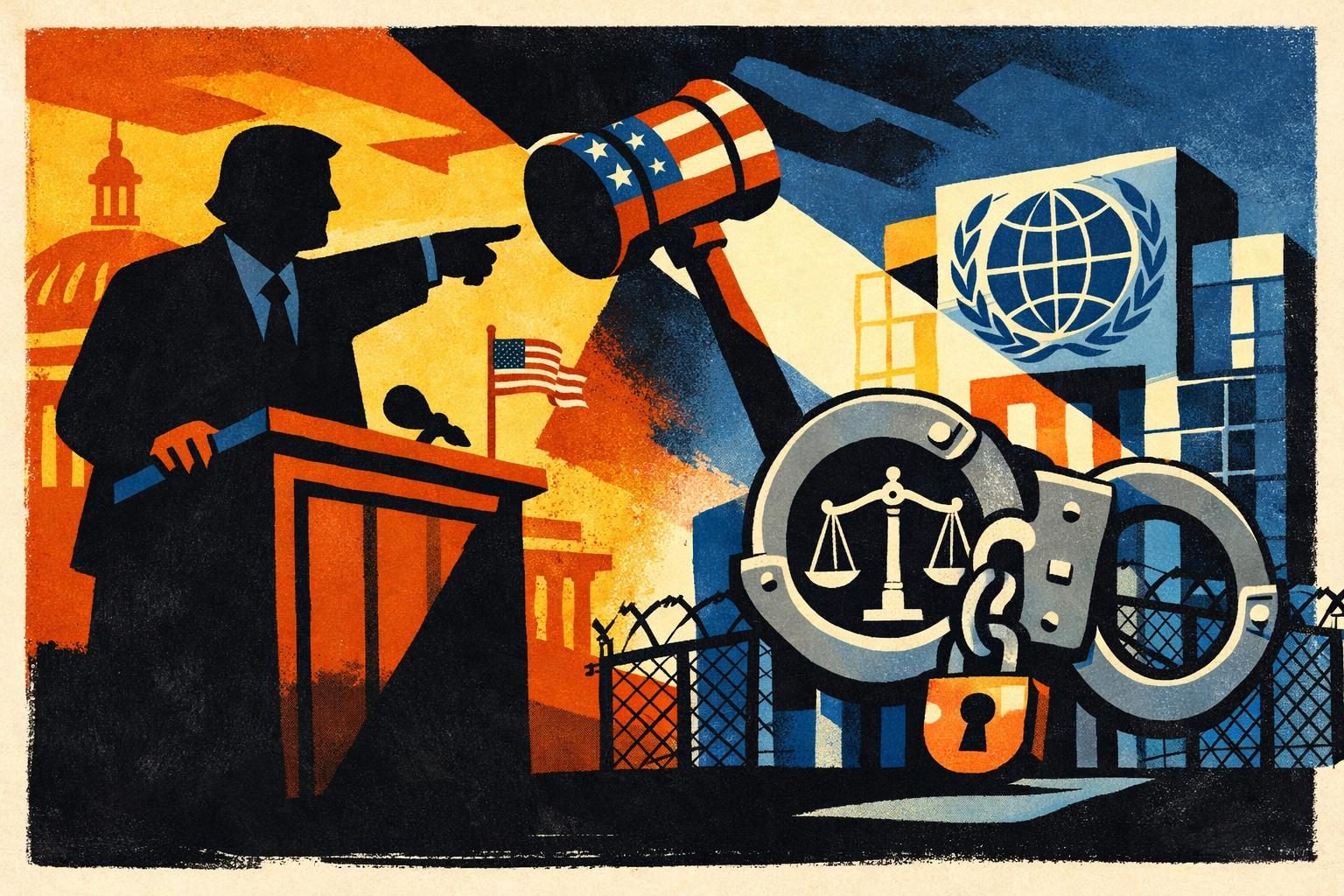
Human Rights Watch and three other advocacy organizations have taken the Trump administration to federal court over its campaign against the International Criminal Court, turning a widening fight over sanctions and foreign policy into a direct legal challenge. The suit, filed on August 11, argues that the White House has gone beyond tough talk and into an unlawful effort to punish judges, prosecutors, and allied human-rights actors connected to the court. The plaintiffs say the administration’s approach is not a legitimate use of executive power but a calculated attempt to interfere with international accountability efforts. They are asking a judge to strike down the sanctions and stop any further retaliation tied to the ICC. The case arrives as the administration’s confrontation with the court has already raised alarms among human-rights advocates who see the move as part of a broader pattern of hostility toward institutions that constrain political power.
At the center of the complaint is the claim that the sanctions are meant to shield impunity rather than enforce the law. The ICC was created to pursue cases in which domestic systems fail, are unwilling, or are too compromised to deliver justice on their own, and the plaintiffs say the administration is targeting that mission directly. According to the challenge, the White House has used sanctions and executive actions to pressure not only court officials but also related human-rights figures who may be involved in documenting abuses or assisting investigations. That kind of pressure, the groups argue, can have immediate consequences for lawyers, investigators, witnesses, and advocates who depend on being able to work without fear of financial punishment or political retaliation. Even when sanctions are announced as symbolic, they can chill communications, disrupt travel, and make people think twice before participating in evidence-gathering or legal analysis. For organizations that focus on accountability, that chilling effect is not abstract at all; it can shape whether a case moves forward or stalls out entirely.
The filing also raises a broader concern about how the administration is using state power. Human-rights groups say sanctions are supposed to be a foreign-policy tool, not a weapon for settling scores with institutions that are doing uncomfortable work. The complaint suggests that the White House has treated the ICC less like a legal body and more like an adversary, especially when its investigations touch politically sensitive subjects. The case is especially notable because the sanctions are reported to affect people and organizations connected to efforts involving Palestinian rights groups and U.N. experts, which the plaintiffs say shows the administration is reaching beyond a narrow dispute with the court itself. That matters because it suggests the campaign is not only aimed at a single tribunal but at a wider ecosystem of accountability advocates. Critics say that if the government can punish one set of international legal actors today, it may be easier to intimidate others tomorrow. In that sense, the lawsuit is about more than one court; it is about whether the executive branch can use economic coercion to redline disfavored accountability work.
The political backdrop is hard to miss. Trump has long cast independent institutions as hostile when they challenge his agenda or his allies, and critics see the ICC fight as a familiar version of that reflex. The strategy can energize a hard-right base that views international bodies as meddlesome or anti-American, but it also carries legal and diplomatic costs. If Washington is willing to punish international judges and prosecutors one week, it becomes harder to argue credibly for the rule of law the next time U.S. officials criticize another government’s abuses. That credibility gap is what gives the lawsuit broader significance: it forces the administration to defend a policy that looks, at least on its face, like punishment first and explanation later. Whether the court accepts that argument will depend on the legal basis for the sanctions and the administration’s claimed authority, but the plaintiffs are clearly betting that the measures cross a line. For now, the case gives opponents of the crackdown a formal venue to press that claim and puts the White House on the spot to explain why a campaign against international justice should be treated as lawful statecraft rather than political retaliation.
Comments
Threaded replies, voting, and reports are live. New users still go through screening on their first approved comments.
Log in to comment
No comments yet. Be the first reasonably on-topic person here.