
Immigration crackdown keeps getting dragged back into court
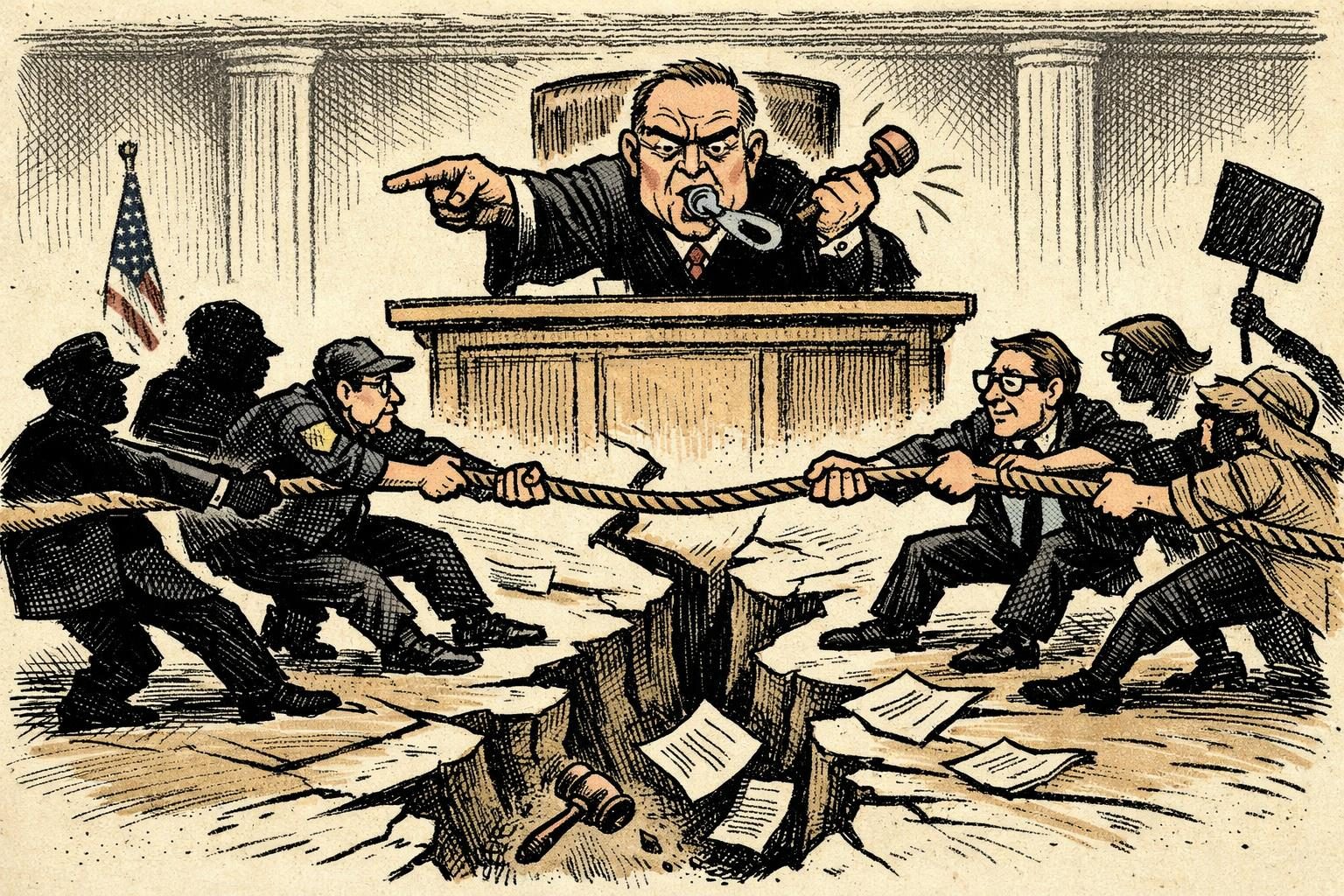
Immigration policy is once again sitting at the center of a legal and political pileup, and the latest round of court action on August 11 only underscored how little room the administration has to move without drawing immediate challenges. The broader crackdown has already produced a steady stream of lawsuits, emergency motions, and warnings from judges, and the newest fight arrives on top of that backlog rather than in place of it. That matters because this is not an isolated dispute over one narrow rule. It is part of a larger pattern in which the White House keeps trying to press ahead with aggressive immigration restrictions while opponents keep arguing that the government is overstating its authority and undercutting longstanding legal protections. The result is a familiar kind of Washington dysfunction: policy announced in a burst of force, followed almost immediately by courtrooms being asked to sort out the boundaries. The administration appears intent on treating immigration as a test of executive muscle, but the legal system keeps reminding it that even a hard-line agenda has to survive constitutional and statutory review.
The latest controversy builds directly on the administration’s August 6 push to narrow birthright citizenship and to tighten other rules governing who can enter, remain in, or receive benefits in the United States. That move set off immediate resistance, and the same legal aftershocks are still reverberating in the edition window. Even before the courts have fully digested the earlier filing, the administration is already facing fresh complaints that it is overreaching in a domain where the law has long been both consequential and heavily litigated. The underlying issue is not simply whether the government wants to enforce immigration law more aggressively; it is whether it can reshape the ground rules so quickly, and with so little apparent consensus, that the changes survive judicial scrutiny. That question is especially fraught when birthright citizenship is involved, because any effort to alter its scope touches deep constitutional assumptions and invites instant challenge from a wide range of plaintiffs. The administration may see the issue as a political winner with its base, but legally it is walking into one of the most unforgiving arenas in federal law. Every new push seems to widen the gap between the government’s ambitions and the courts’ appetite for careful justification.
The practical effects of that mismatch are already spreading well beyond the courtroom. Immigration rules do not sit quietly on a shelf while judges argue about them; they affect real people and real institutions right away. Families trying to plan their status, employers trying to hire or retain workers, universities handling foreign students and researchers, asylum applicants waiting for decisions, and local agencies trying to follow federal guidance all get pulled into the confusion when policy is changed abruptly and then challenged just as quickly. That is what makes legally shaky immigration moves so disruptive even before anyone reaches a final ruling. Applications can freeze, agency staff can receive contradictory instructions, and ordinary people are left trying to figure out whether a new rule applies, will survive, or will be suspended before anyone can rely on it. When the government moves as though sweeping restrictions can be normalized overnight, the administrative mess multiplies. Agencies are then forced to defend half-implemented shifts in real time, often while the rules themselves are still being contested. The administration may prefer the political theater of toughness, but the operational reality is much messier: every aggressive announcement risks creating confusion on the ground, and every new lawsuit makes that confusion harder to clean up.
Critics of the administration’s approach say this is the same structural problem that has shadowed the immigration agenda from the beginning. The rhetoric is maximalist, but the legal grounding often looks narrow, brittle, or both. Civil-liberties lawyers, immigrant advocates, and affected applicants have repeatedly argued that executive power is being stretched beyond recognition, with policy goals presented as if they were self-executing simply because they are politically popular with the administration’s supporters. The courts, however, are not in the business of rewarding rhetorical force. They want records, statutory authority, and constitutional arguments that can withstand scrutiny. That is why the legal fights keep coming back: each new restriction risks reopening the same basic question of how far the executive branch can go before it runs into the limits of the law. The confidence level around the current situation is solid but not absolute because the immediate event is part of an ongoing legal sequence rather than a clean, self-contained policy announcement. Still, the larger picture is hard to miss. Immigration remains the administration’s favorite stress test, and the courts keep sending it back with corrections, reminders, and, in some cases, outright skepticism about whether the government is trying to make sweeping policy by force of habit instead of by law.
Comments
Threaded replies, voting, and reports are live. New users still go through screening on their first approved comments.
Log in to comment
No comments yet. Be the first reasonably on-topic person here.