
Judge blocks Trump’s mail-voting order again
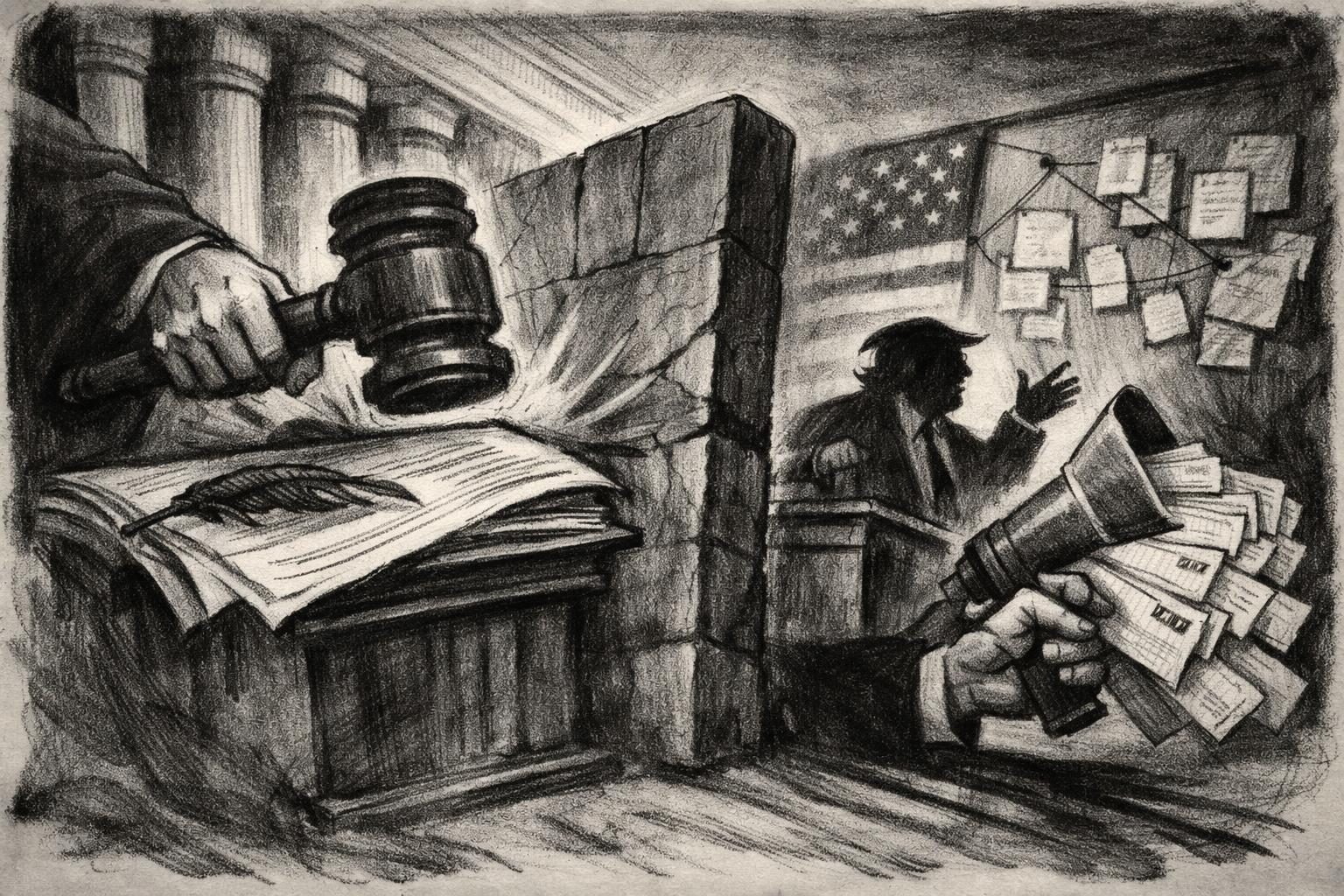
A federal judge in Boston has again put a hard stop on the Trump administration’s effort to impose nationwide limits on mail voting, dealing the White House another clean courtroom setback in a fight that has quickly become a test of how far presidential power can stretch over elections. The ruling keeps the administration’s order frozen while the broader case works its way forward, and it sends the same basic message the court has now delivered more than once: the president cannot simply declare new election rules into existence by executive order. Voting rights groups that challenged the policy argued that the Constitution does not hand the White House authority to redesign how ballots are cast across the country, and the judge agreed enough to keep the order blocked for now. The administration had cast the move as a fraud-prevention measure, but the legal theory behind it appears to have run straight into a wall of federalism and longstanding election law. For the moment, that wall is holding, and the White House is left with another embarrassing reminder that election administration is not a space where presidential impulse automatically becomes national policy.
The immediate legal significance is straightforward, but the political significance is even harder to miss. Trump has spent months trying to turn mail voting into a central campaign issue, repeatedly presenting it as a symbol of weakness, abuse, or hidden manipulation even as states have continued to treat absentee and mail ballot systems as ordinary parts of election administration. The problem for the White House is that American elections are not run from the Oval Office, and they were not designed to be. The Constitution leaves substantial authority over elections with the states, while Congress holds certain powers to regulate aspects of federal elections, which means a president trying to set a nationwide mail-voting policy is already moving into territory that looks legally suspicious before the arguments even begin. That matters especially in an election year, when any attempt to change voting rules can feel less like routine governance and more like a strategic attempt to tilt the playing field. The court’s latest action strengthens the basic case that the administration is not acting within a blank check. It also gives voting-rights groups a sharper, simpler argument to make to the public: if the president wants new election rules, he has to work through the law, not over it.
The administration’s defenders have tried to frame the order as an anti-fraud measure, suggesting that tighter national rules around mail voting are necessary to protect election integrity. But the court’s repeated intervention suggests that argument is not yet strong enough to survive the kind of immediate judicial scrutiny that comes when a federal executive order collides with established constitutional boundaries. Critics of the policy have long said it looked less like a neutral administrative fix and more like political theater aimed at energizing the president’s base and keeping election skepticism in the spotlight. The judge’s decision does not settle every legal question in the case, but it does undercut the White House’s effort to present the order as an ordinary exercise of executive authority. In practical terms, it means the administration has now been told more than once that it cannot use the machinery of the federal government to unilaterally rewrite a major part of election procedure. That is a particularly awkward outcome for a White House that has tried to package the policy as simple housekeeping. The ruling suggests the courts are not buying that description, at least not yet, and perhaps not at all.
Even though the case is still active, the consequences are already spreading beyond the courtroom. States and local election officials now have another federal ruling signaling that they remain the primary operators of election machinery, not the president, and campaign lawyers have one more reason to treat the administration’s mail-voting gambit as an unstable legal position rather than settled law. The decision also deepens the broader pattern surrounding Trump’s election agenda: dramatic declarations, immediate pushback, and a judiciary that keeps reminding the White House that constitutional structure does not bend just because the political stakes are high. For election administrators, the ruling offers at least temporary clarity during a volatile year, even if that clarity comes wrapped in more litigation and more uncertainty than anyone would prefer. For the administration, it is another wasted round in a fight that has already consumed time, attention, and credibility without producing the national rule change it wanted. And for everyone else watching, the lesson is hard to miss. Mail voting may be a political target, but it is still governed by law, not by mood, and certainly not by a president’s personal preferences about how elections should look."}]}
Comments
Threaded replies, voting, and reports are live. New users still go through screening on their first approved comments.
Log in to comment
No comments yet. Be the first reasonably on-topic person here.