
Republicans pick a nominee in an Alabama House seat redrawn by the courts
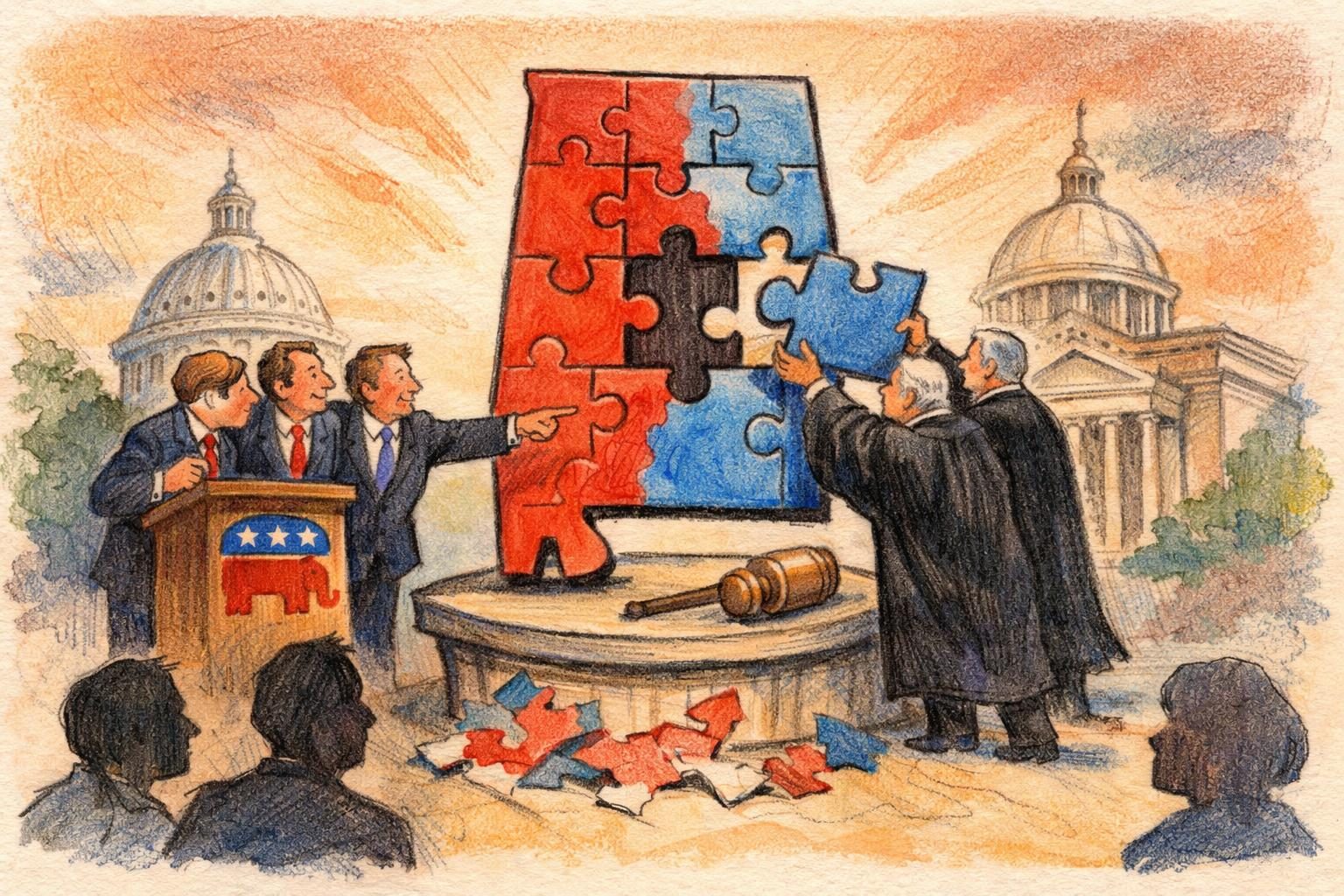
Republicans in Alabama picked their nominee on Aug. 11 in a special House race that exists because a federal court ordered the state’s congressional map to be redrawn. On the surface, that may look like one more date on a crowded political calendar. In practice, it is a vivid reminder that the courts are still capable of forcing major changes into a political system that had been built to resist them. The result lands squarely in the middle of a redistricting fight that has already changed how Alabama voters are grouped, how candidates have to campaign and how both parties talk about representation. It also keeps alive a question that has never really gone away in the state: whether Black voters have a fair opportunity to influence the outcome in at least some districts.
The immediate significance of the primary is straightforward. A seat that once seemed bound to follow a predictable pattern is now operating under a different set of rules because the old map could not survive legal scrutiny. That is not just a technical adjustment; it is a political reset. Candidates who thought they knew where their votes would come from, which neighborhoods would matter and which communities could be taken for granted now have to build new coalitions under new boundaries. For Republicans, that means choosing a nominee in a race shaped by a map they did not design on their own terms. For Democrats and voting rights advocates, it offers evidence that litigation still has force when lawmakers push redistricting too far. The special primary is therefore not only about one nomination. It is a concrete example of how a court order can rearrange the terrain in a way that changes both the strategy and the meaning of a congressional contest.
That is why the Alabama race has significance well beyond the district itself. In recent years, map-drawing has become one of the most consequential and bitterly contested parts of American politics, with states using redistricting to try to lock in partisan advantage for a decade at a time. When a court steps in and changes those lines, it does more than correct a legal problem on paper. It alters who has to appeal to whom, which voters are suddenly pivotal and which communities are forced to adapt after being carved out of a familiar political arrangement. Those changes ripple outward. They affect turnout operations, fundraising, candidate recruitment and the messages that campaigns decide to emphasize. They also shape the broader national argument over whether redistricting is a necessary act of representative democracy or a form of elite manipulation that leaves voters with fewer meaningful choices. In a closely divided House, even a single court-driven seat can matter more than it would in a less competitive year, especially if the balance of power ends up coming down to a handful of districts where the rules were rewritten by judges rather than legislators.
The fallout in Alabama is political as well as procedural. Republicans now have to compete in a district that was not drawn to their liking, and that alone changes how the party approaches the seat and how much confidence it can place in old assumptions. The court-ordered redraw also gives voting rights advocates a tangible example to point to when arguing that legal challenges are not abstract exercises but tools that can force actual changes in who gets represented and how. At the same time, the episode underscores how much damage can be done before a court ever intervenes. A map can shape political outcomes for years before a judge finally says it cannot stand, and by then candidates, donors and voters have already spent a great deal of energy operating within the old framework. So while the new district lines show that the system can push back against overreach, they also highlight the lag between abuse and correction. That delay is one reason redistricting fights remain so bitter: the winners of the old map lose real power when the lines change, and the communities that were squeezed for years do not regain that ground overnight. The practical consequences are larger than the symbolism, and the Alabama primary makes that plain.
What happens next will help determine whether this is simply an Alabama-specific upheaval or a preview of how other redistricting battles may play out in the 2026 cycle. If court intervention continues to reshape maps, more candidates may find themselves campaigning in districts they never expected to face, with new voters to persuade and old assumptions left behind. That could make the coming election season more fluid than either party prefers, but it could also make representation more responsive if the new lines better reflect the legal standards courts are enforcing. For now, the main lesson is that mapmakers do not always get the last word. Voters are being handed a different ballot because a court said the old arrangement could not remain in place, and one party that benefited from the prior lines now has to improvise in response. Whether that becomes a one-off correction or a broader pattern will depend on how many more maps get challenged, how aggressively courts continue to intervene and whether state leaders keep testing the boundaries of what they can do with a pen and a redistricting plan.
Comments
Threaded replies, voting, and reports are live. New users still go through screening on their first approved comments.
Log in to comment
No comments yet. Be the first reasonably on-topic person here.