
The tariff refund mess is back in court, and the government says the judge went too far
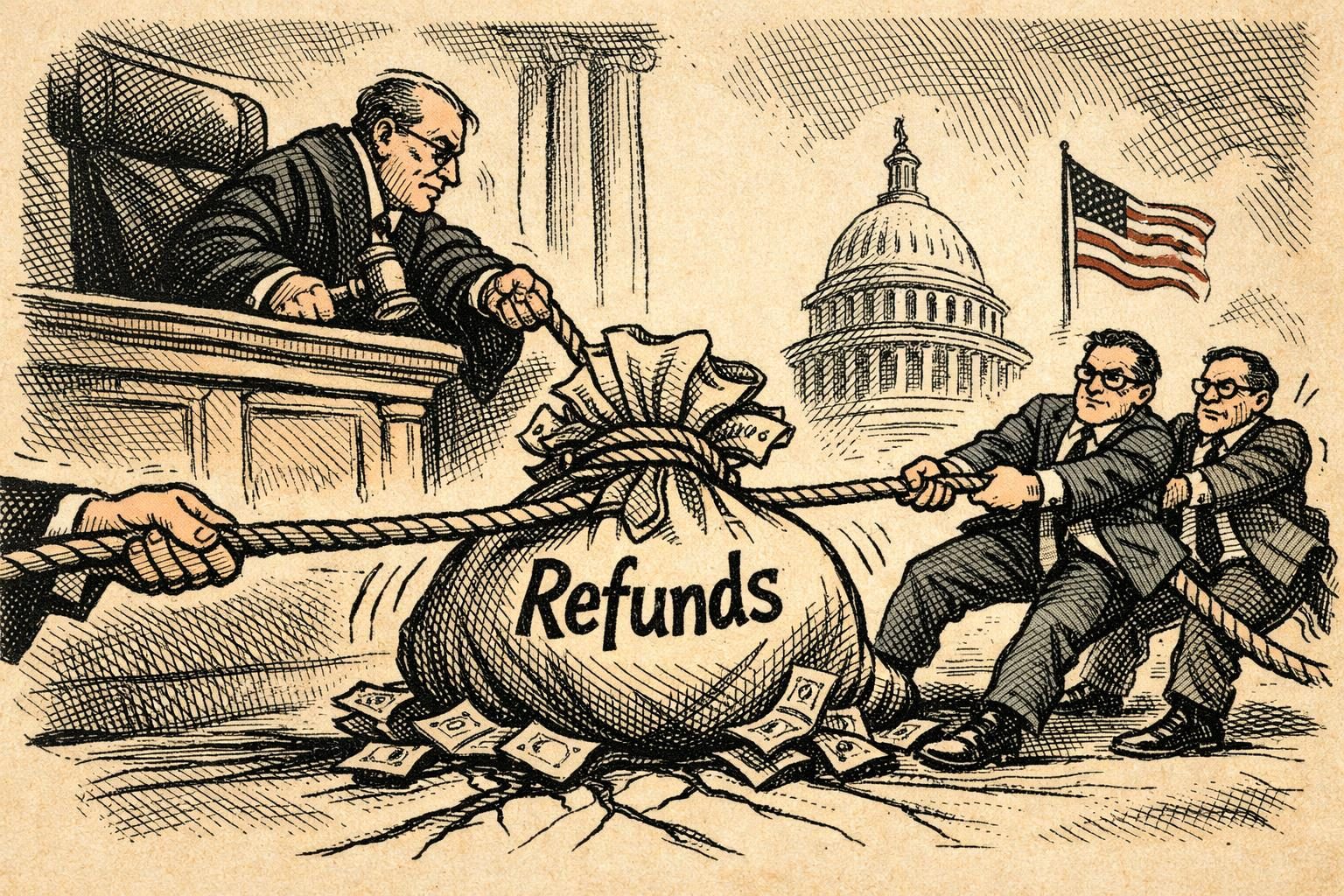
The administration’s tariff mess is back in front of a court, and this time the fight is not just over whether the import taxes were illegal. It is over what happens after a judge says they were. Government lawyers on Tuesday asked a federal trade court to back off an order that would force refunds to every importer that paid the tariffs the court already found unlawful earlier this year. Their argument is simple enough on paper: the judge reached too far when he tried to make the remedy cover the entire tariff program instead of limiting relief to the companies and groups that actually brought the lawsuit. But simple arguments rarely stay simple once they get wrapped around billions of dollars, trade policy, and a president’s favorite economic weapon.
At the center of the dispute is a question that could shape how far judges can go when they unwind a government policy they conclude was illegal. The administration is urging the court to treat the refund order as a kind of universal injunction in disguise, something the Supreme Court has recently warned lower courts not to use lightly. The trade judge, however, has already signaled that he does not see the case that way, and that distinction is now doing a lot of work. If the government wins, the refund obligation may shrink dramatically, helping limit the cost and the administrative burden of paying back importers. If it loses, the court could open the door to a far wider payout, one that reaches businesses that never filed their own suits but still ate the tariff costs. That makes the case much more than a technical disagreement about remedies. It is a test of whether courts can fully unwind an unlawful tariff regime once they decide the underlying policy should never have stood.
The stakes are especially high because tariffs are not some abstract lever hidden inside a memo. They are taxes that ripple through supply chains, pricing decisions, and contracts, often leaving importers to absorb costs up front while they wait for the legal and political system to sort itself out. For companies that paid the challenged tariffs, the practical questions are immediate: Will they get their money back, how much, and through what process? The answer could depend on whether the court insists on a narrow remedy for only the named plaintiffs or approves a broader order that treats all affected importers alike. That difference matters because many businesses do not sue on their own, either because the cost is too high or because they assume a favorable ruling will eventually reach them anyway. If the administration succeeds in narrowing the relief, those companies may be left to chase refunds through separate claims, administrative procedures, or more litigation. If the broader order stands, the government could face a much larger bill and a faster reckoning.
For the White House, the case is another reminder that aggressive tariff policy can create as many legal liabilities as political headlines. The administration has relied heavily on sweeping trade measures and then, when challenged, has argued just as hard to keep any court loss from spreading beyond the original plaintiffs. That strategy can work in the short term, especially when the goal is to project toughness and force foreign partners or domestic businesses to react. But it also leaves the government exposed when a court concludes the policy overstepped the law. The government’s latest filing leans on Supreme Court precedent that has narrowed the availability of broad injunctions, while the trade court appears unconvinced that those cases control this particular dispute. That leaves the issue in a legally murky place where the details of the remedy may matter almost as much as the underlying legality of the tariffs themselves. It is one thing for a court to say a tariff program was unlawful. It is another to decide whether the government can be made to put everyone back where they were before the tax hit.
The broader political problem is that tariff chaos has stopped being a theoretical debate about industrial policy and turned into a live money fight with real deadlines and real losers. Businesses that spent months adjusting invoices and absorbing higher import costs now have to wait and see whether the courts will make them whole. The administration, meanwhile, is left defending a policy that has already been rejected in part by a judge and is now being asked to explain why the consequences should be limited. That is not a comfortable posture for a government that has marketed tariffs as a source of leverage, strength, and economic discipline. The court fight also underscores a larger pattern: when a broad economic policy is imposed first and litigated later, the eventual unwind can be messy, expensive, and politically humiliating. Whether this particular order survives may determine who gets paid back, but the bigger lesson is already clear. If you build a tariff regime like a bluff, someone eventually asks for the chips back.
Comments
Threaded replies, voting, and reports are live. New users still go through screening on their first approved comments.
Log in to comment
No comments yet. Be the first reasonably on-topic person here.