
Another Tariff Fight Lands in Court, Because Of Course It Does
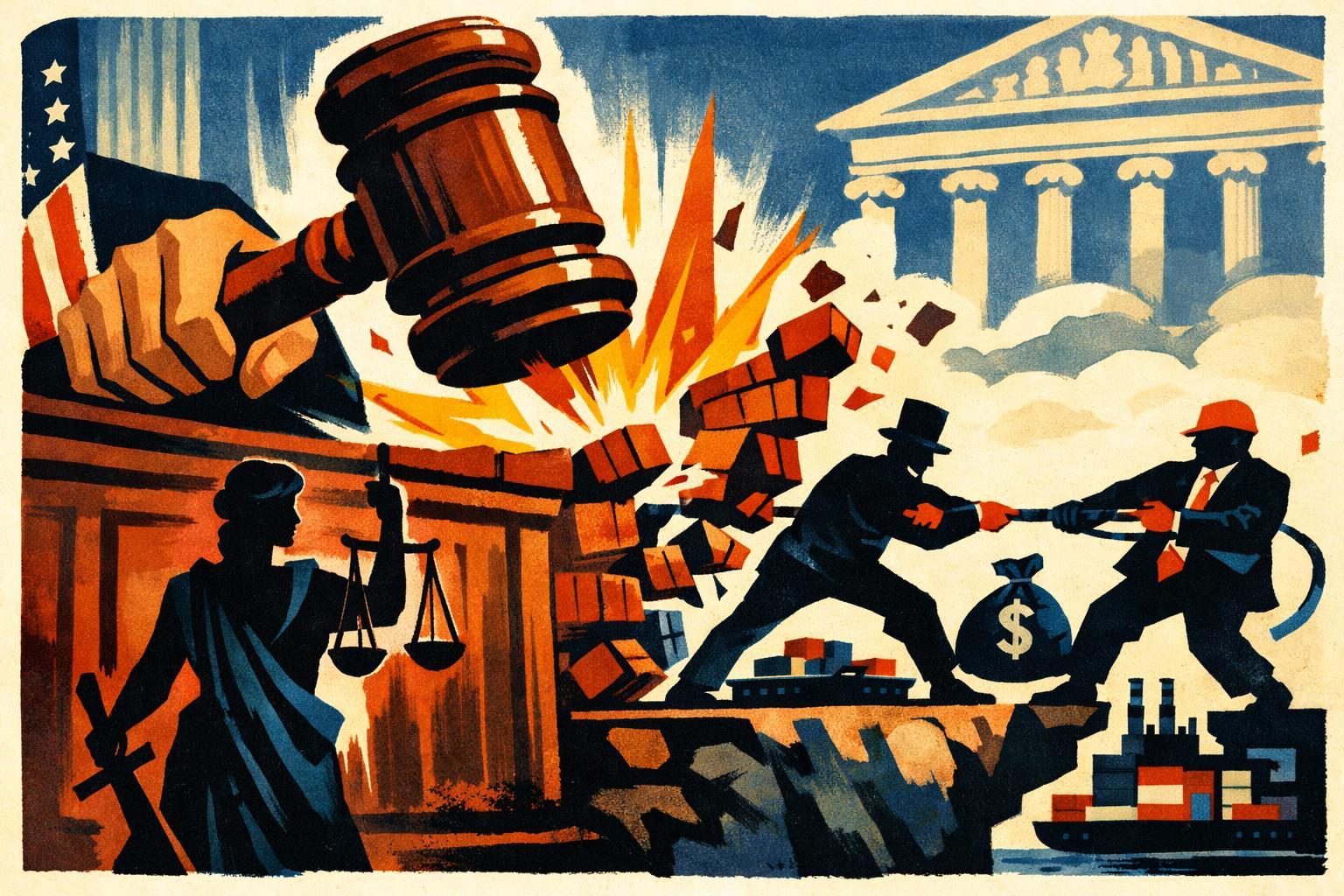
Another round of tariff litigation is pushing the administration back into court and again forcing judges to decide how far emergency trade powers can be stretched before they snap. The latest challenges do not appear to be a surprise so much as the latest installment in a fight that has become a permanent feature of the Trump trade agenda. The White House continues to treat tariffs as both a policy instrument and a political signal, while businesses, importers, and trade groups keep responding with the same blunt objection: the law does not say what the administration keeps insisting it says. That mismatch is the engine of the dispute, and it is why the cases keep coming back under slightly different captions even when the underlying argument is unchanged. When tariff policy is built on a claim of perpetual emergency, litigation stops being an exception and becomes the normal operating environment.
The immediate stakes are not abstract, and they go well beyond the sort of courtroom theater that tends to make political advisers feel strong for a news cycle or two. Tariffs affect the real-world mechanics of business, including pricing, contract negotiations, shipping schedules, inventory decisions, and long-range investment plans. Importers cannot easily absorb a sudden duty increase and pretend it is just another line item when those costs ripple outward through supply chains and into consumer prices. Companies trying to plan for the next quarter, let alone the next year, need to know whether a tariff regime is stable or whether it might be overturned, narrowed, expanded, or rebranded after the next court filing. That is why repeated legal fights matter even before any final ruling arrives. A policy that is perpetually in litigation makes it harder for anyone to treat the rules as durable, and uncertainty is itself a cost that businesses eventually pass along wherever they can.
The administration’s defenders argue that the president needs broad flexibility to respond to unfair trade practices and protect domestic industry, and there is a long-standing political constituency for that argument. Supporters also say the executive branch cannot realistically react to global trade disputes if it is forced to move at the pace of ordinary legislation every time another market issue appears. But those defenses get weaker when the emergency rationale begins to look less like a temporary tool and more like a standing invitation to bypass the normal limits of the statute. Courts are being asked to decide whether the White House has relied on emergency authorities in ways that Congress never intended, and that question sits at the center of the present round of litigation. Even if some tariffs ultimately survive judicial scrutiny, the repeated challenge process itself is evidence that the legal foundation remains contested. A strong policy usually does not require this much judicial maintenance to stay alive.
The broader political problem is that the administration’s tariff agenda has become a test of credibility as much as legality. Allies, investors, and businesses are all being told to treat tariff threats as serious and durable policy, yet the courtroom record keeps suggesting that the footing is shakier than the rhetoric implies. That gap weakens confidence in the administration’s broader economic messaging, especially when tariff announcements are sold as proof of resolve rather than as part of a coherent industrial strategy. Critics have long argued that the White House leans on tariffs to compensate for the absence of a more comprehensive domestic economic plan, and the litigation gives them fresh material for that charge. The White House may still win some of these fights, or at least delay the consequences long enough to declare victory in public, but that does not eliminate the larger problem. Each new case reinforces the same uncomfortable lesson: tariff power is not absolute just because the president speaks about it that way, and the courts keep reminding the administration that laws remain laws even when the politics are loud.
Comments
Threaded replies, voting, and reports are live. New users still go through screening on their first approved comments.
Log in to comment
No comments yet. Be the first reasonably on-topic person here.