
Trump Signs Vaccine Order, Then Immediately Runs Into the Science Wall
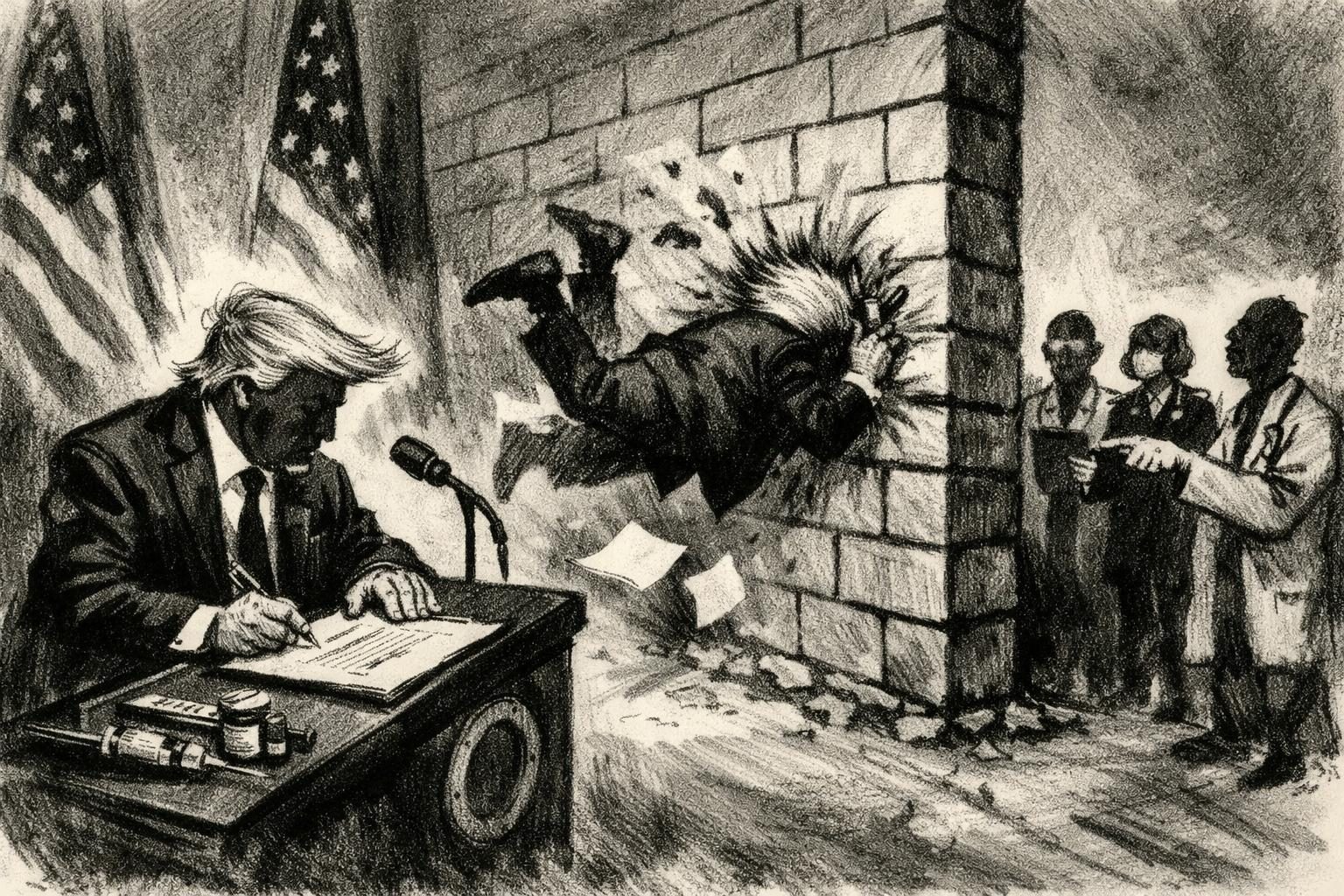
President Trump on Monday signed an executive order that would push federal childhood vaccine recommendations toward a long-disputed theory: that children should get separate shots, or staggered appointments, rather than the standard combined immunizations routinely used in the United States. The order directs the Health and Human Services Department to revisit vaccine research and develop a plan for separate measles, mumps and rubella shots, even though that combined vaccine is not currently available in the country in individual-component form. In practice, the document reads less like a straightforward public health directive than an attempt to reopen arguments that medical experts say were settled long ago. It also arrives with the unmistakable whiff of political vindication for vaccine skeptics who have spent years insisting that routine immunization schedules are hiding something sinister. Trump’s move does not change state mandates on its own, but it does put the federal government’s weight behind a view that has repeatedly been rejected by mainstream medicine.
The timing makes the order especially combustible. Children are heading back to school, a period when immunization requirements and outbreak concerns tend to collide, and measles is still circulating in the United States. At the same time, federal data show that childhood vaccination rates have been trending downward while exemption rates reached a record high in the 2024-25 school year. That is hardly the moment to inject more confusion into vaccine guidance or to elevate a theory that has already done significant damage in the public square. Public health officials have spent years trying to rebuild trust after outbreaks and misinformation campaigns, and the president chose this moment to press the gas in the opposite direction. The result is not just another policy document, but a national signal that could encourage hesitation where urgency is needed. When families are already navigating school forms, clinic availability and a flood of conflicting online advice, official uncertainty has consequences. The order may be framed as an effort to reconsider old assumptions, but the setting makes it look more like a deliberate challenge to basic immunization norms.
Medical groups and public health advocates quickly made clear that they see the order as both medically unsound and socially reckless. Their central concern is straightforward: separating vaccines on an ad hoc basis can create confusion for families, complicate schedules and make it easier for children to miss protection altogether. Combined vaccines were designed in part to simplify the process, reduce missed doses and improve compliance, not to hide risks. Experts also note that school-entry vaccination policies depend on consistency, and federal recommendations matter even in states that ultimately control their own mandates. Those recommendations help shape what insurers cover, what doctors advise, and what parents come to understand as standard care. If the federal government signals that routine immunization should be treated as negotiable, that message can ripple far beyond Washington. It gives vaccine opponents something they have long wanted: the appearance of institutional legitimacy. Once a fringe claim is translated into a presidential order, it becomes harder for clinicians and educators to reassure parents that the science has not suddenly changed. The practical damage can show up quietly, in more missed appointments, more delays and more children left vulnerable during an outbreak season.
Politically, the order fits neatly into Trump’s long-running pattern of turning health policy into a contest over loyalty, identity and suspicion. Supporters may describe the move as expanding “choice” or demanding “more research,” but the concrete effect is to elevate a debunked idea at the exact moment when the country is struggling to keep vaccination rates from sliding further. Public health officials now have to spend time and resources responding to a message the president intentionally sent, rather than focusing only on outbreak control and routine prevention. Parents are left to sort through yet another round of uncertainty, with no clear benefit on the other side of the confusion. Even if the administration insists the order is merely procedural, the symbolism matters because it tells people who distrust vaccines that they have allies at the highest level of government. That does not just color the debate; it changes the permission structure around it. In an era when misinformation spreads faster than disease can be contained, the White House has chosen to authorize more of the noise.
The larger danger is that the order treats a public health question as if it were a political grievance, when vaccine schedules are built on years of evidence, clinical experience and practical necessity. Separate shots may sound harmless in theory, but the system in place is designed to maximize protection while minimizing the chances that a child misses part of the series. Federal policy can certainly review research and update guidance when evidence warrants it, but nothing in the available record suggests that the combined approach has suddenly become dangerous or unworkable. What has changed is the administration’s appetite for revisiting ideas that have already been thoroughly discredited. That is what makes the move so troubling to doctors and scientists: it is not grounded in a new discovery, but in an old allegation that has survived by feeding distrust. The executive order may not immediately rewrite school rules or clinic protocols, but it can still do real harm by muddying the waters. And at a time when measles is present, exemptions are climbing and confidence is already fragile, that is a risk the country can ill afford.
Comments
Threaded replies, voting, and reports are live. New users still go through screening on their first approved comments.
Log in to comment
No comments yet. Be the first reasonably on-topic person here.