
Justice Department keeps the immigration-crime pipeline moving with another scheduled court step
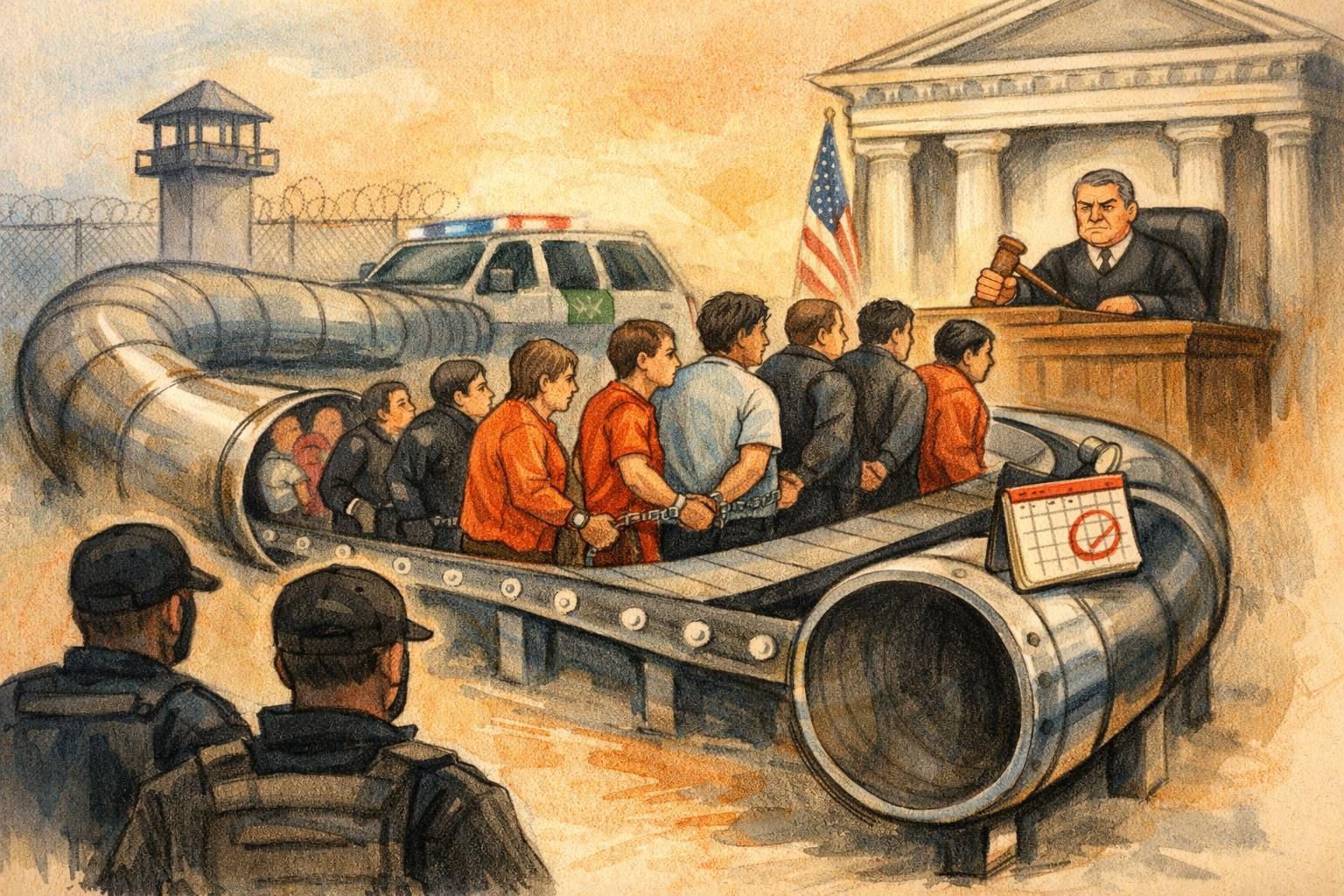
A federal court in Puerto Rico has set an August 12, 2026 sentencing hearing in a Homeland Security Task Force case, turning what might otherwise have been just another line on a crowded docket into a fresh marker of how the Justice Department is packaging immigration enforcement and criminal prosecution together. The hearing is a procedural step, not a verdict on the larger policy debate, but it arrives inside a broader federal campaign that has been built around visible task-force branding and steady courtroom activity. In practice, that means prosecutors, agents, and court staff keep moving cases through the system while the department uses those cases to signal momentum. The result is a legal process that is easy to describe as routine and difficult to separate from the politics surrounding border enforcement. For now, the record shows only that a sentencing date has been scheduled, but even that modest development fits the administration’s preferred narrative of continuing pressure and measurable action.
The Homeland Security Task Force label matters because it is not just a bureaucratic tag attached to isolated prosecutions. It is part of a wider federal effort to link immigration enforcement, organized crime, public safety, and prosecution strategy into one message. Supporters of that approach argue that the country needs a coordinated response to illegal crossings, smuggling networks, and cross-border criminal activity, and that combining resources under a common banner makes the federal government more effective. Critics say the same structure risks collapsing distinct policy areas into a single enforcement story, one that treats immigration as a criminal problem first and a civil or administrative issue second. That criticism does not depend on the facts of any single case, and it is not answered by one sentencing hearing. But the existence of the hearing shows how the department’s enforcement machinery keeps producing concrete events that can be pointed to as proof that the operation is active and advancing.
This is also why a date on the calendar can carry more political weight than the docket entry itself would suggest. Each hearing, plea, conviction, or sentencing becomes an opportunity for the Justice Department to present the case as part of a larger public-safety effort rather than as an isolated prosecutorial routine. That framing can be effective because it transforms ordinary court administration into a continuing demonstration of initiative. It also invites scrutiny, because any ambitious enforcement campaign creates its own record of what was charged, what was proven, and what was left unstated. If the underlying case is strong, the department gets to point to another successful step in the chain. If the case exposes weaknesses, the same public posture can make those weaknesses more visible. Either way, the courtroom schedule is doing more than keeping time. It is helping the department convert a stream of individual proceedings into a broader narrative about immigration, order, and federal authority.
At this stage, the visible consequences are institutional rather than dramatic. Prosecutors continue to file cases, judges continue to set hearings, and the department continues to present Homeland Security Task Force work as evidence that its strategy is operational, not merely rhetorical. That steady motion matters because it gives the administration something concrete to show even when the political debate remains abstract or polarized. It also creates a factual record that can be examined later by defense attorneys, judges, advocates, and policymakers who disagree about the wisdom of the approach. A sentencing hearing can produce a severe punishment, a lenient outcome, or a result that reveals limits in the government’s theory of the case, and any of those outcomes could influence the broader argument over how immigration and crime enforcement should be structured. For the moment, though, the main point is simpler: the system is still moving, the hearing is real, and the Justice Department is still using task-force prosecutions as building blocks in a larger enforcement story that shows no sign of slowing down.
Comments
Threaded replies, voting, and reports are live. New users still go through screening on their first approved comments.
Log in to comment
No comments yet. Be the first reasonably on-topic person here.