
Justice Department Escalates Fight Over the D.C. Guard Deployment
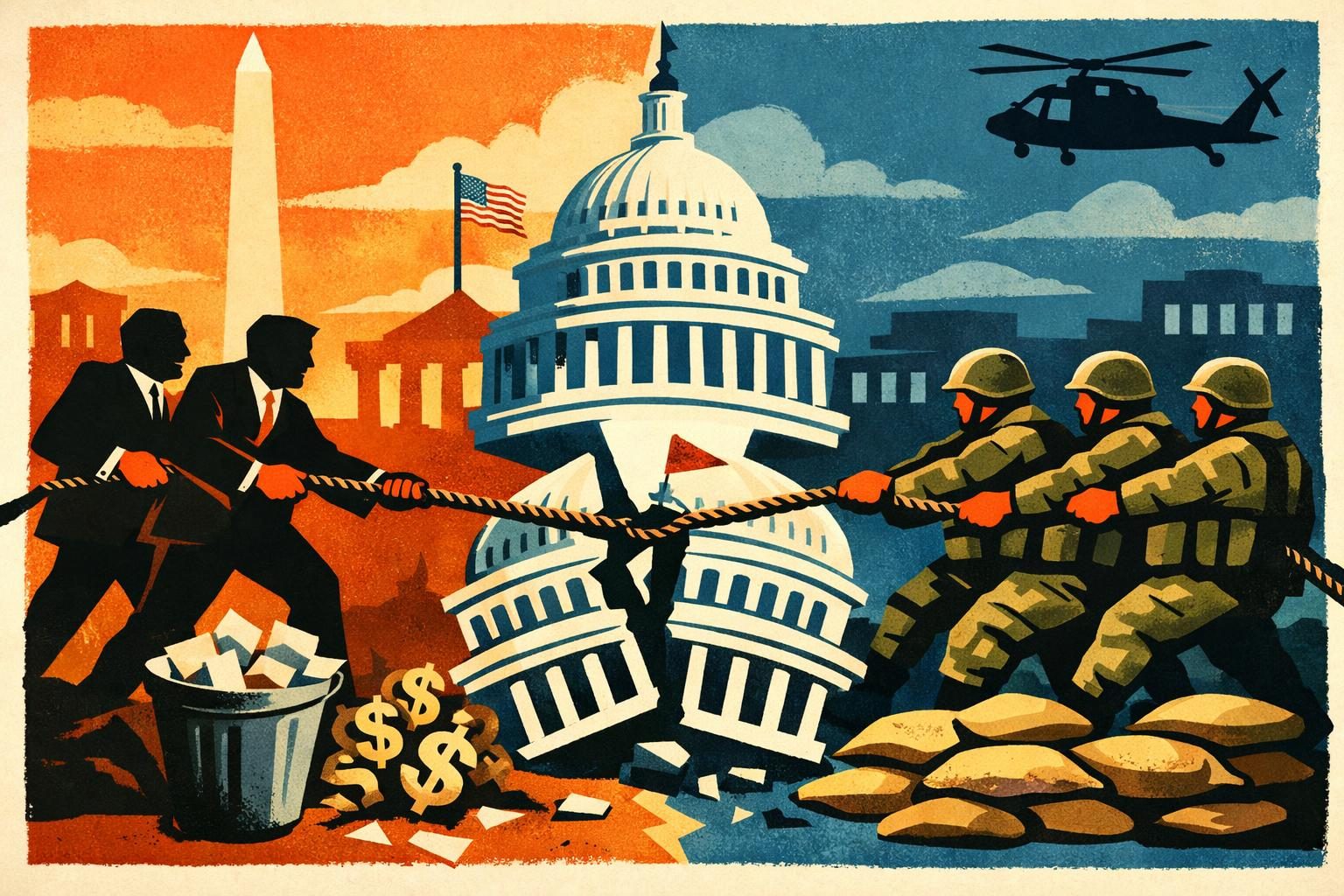
The Justice Department has stepped squarely into the latest Washington, D.C., fight over the National Guard presence in the capital, sending city officials a letter that defends the deployment and dismisses the argument that it is no longer needed. The message, delivered Wednesday, pushed back against the D.C. Council’s effort to narrow or end the military operation by insisting the city remains safer with the Guard in place. In language that is unusually blunt for an intergovernmental legal dispute, the department rejected the council’s position that crime had already been falling and that the emergency posture should wind down. The letter’s tone made clear that this is not a routine disagreement over budgeting or policing strategy. It is a political and legal standoff over who gets to define danger in the nation’s capital.
At the center of the conflict is the deployment launched after President Donald Trump’s crime emergency declaration last year, a move that gave the administration a broad rationale to increase federal force in a city with limited self-rule. Local leaders have long argued that the operation is costly, disruptive, and unsupported by the conditions that originally justified it. They say the city is paying millions of dollars a day for a military presence that does not match the reality on the ground. The Justice Department’s letter effectively rejects that framing and keeps the administration’s emergency argument alive. That matters because the longer the deployment continues, the harder it becomes to treat it as a short-term response rather than a standing feature of governance in Washington.
The wording of the letter also reveals how little room there is left for compromise. Rather than acknowledging the city’s objections and trying to narrow the scope of the operation, the department appears to have chosen confrontation. That approach suggests the White House and its legal team see value in maintaining the optics of toughness, even if the underlying legal theory is under pressure. Supporters of the deployment describe it as a necessary protection for federal institutions and functions in a city that houses the government, major landmarks, and a constant flow of visitors. Critics see something else entirely: a power grab dressed up in public-safety language, one that turns emergency authority into a tool for routine political control. Both arguments are now competing not just in public remarks, but in writing that could matter if the dispute deepens in court or in the budget process.
What makes the fight especially significant is the larger precedent it threatens to set. Washington has always occupied a strange place in American government, with local leaders responsible for day-to-day management but with Congress and the executive branch retaining extraordinary leverage over the district’s affairs. A deployment that can be justified as a response to a crime emergency in the capital can quickly become something more durable, especially if federal officials continue to assert that conditions remain dangerous regardless of what local data or officials say. That creates obvious tension for residents and city government alike, because it affects spending, authority, and basic autonomy. It also raises the question of whether emergency logic is being used to normalize federal intervention in a city that lacks the full protections of statehood. For now, the immediate reality is that the confrontation is still active and still escalating. The city wants the troops home, the administration is signaling that it will not be rushed, and the result is a prolonged contest over power, safety, and the meaning of control in the country’s most symbolically important city.
Comments
Threaded replies, voting, and reports are live. New users still go through screening on their first approved comments.
Log in to comment
No comments yet. Be the first reasonably on-topic person here.