
Federal court keeps the voter-data fight alive as states push back on Washington’s appetite for personal information
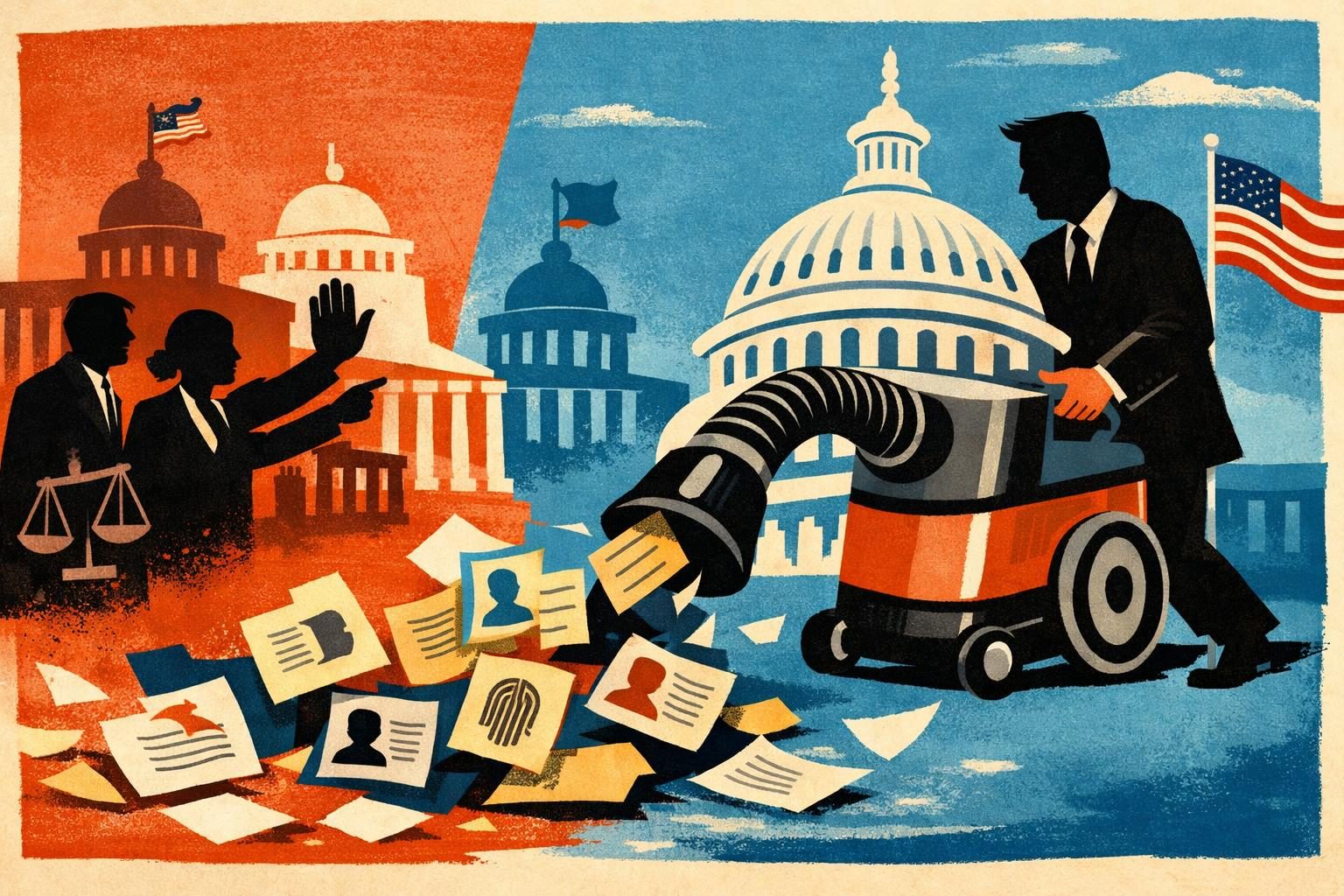
A federal court move on August 12 kept alive the latest confrontation over the Trump administration’s push for voter information, ensuring that a dispute that began as a fight over records is now firmly a fight over authority. States and civil-rights groups challenging the effort say Washington has not offered a clean, public legal theory for why it needs the material or how far it intends to go with it. That objection is doing more than slowing the request down. It is turning the case into a test of whether the federal government can treat sensitive election data as something it may gather first and explain later. The answer matters not only for this administration, but for any future one that wants to make a broad claim of election oversight.
The immediate question is not especially abstract. Voter files contain information that state election officials collect and maintain for specific administrative purposes, and those records can include details that people do not expect to be swept into a central federal demand. That is one reason the push has drawn pushback from states that may disagree politically but share a practical concern about protecting the boundaries of their own systems. Officials are wary of what happens when a federal request is not clearly tied to a narrow statutory purpose. They worry about privacy, but they also worry about precedent: if the government can ask for one broad set of voter data without demonstrating a tightly limited need, then the line separating legitimate election oversight from open-ended data collection becomes much easier to blur. Even a request framed as routine can look very different once states are asked to hand over large-scale records under pressure from Washington.
That concern has only deepened because of the way the dispute fits into a larger pattern. The administration has tried to centralize power in areas that states have traditionally guarded, including elections and policing, and opponents argue that this is another example of federal muscle being used to force cooperation without first earning trust. In that sense, the litigation is about more than who gets which database. It is about whether the federal government is treating election administration as a cooperative federalist system or as an information source to be mined when politically convenient. Critics say the latter approach would naturally chill cooperation, especially among election workers who are already operating in an atmosphere of suspicion and partisan accusation. If local officials start believing that every data request could become a political weapon, they are less likely to be forthcoming, less likely to collaborate, and more likely to see federal contact as something to be managed defensively rather than accepted as oversight.
The administration’s defenders may argue that information-sharing is part of responsible governance and that public confidence in elections depends on scrutiny, not avoidance. But the litigation puts the burden back on Washington to explain why this particular demand is necessary and what legal basis supports it. That is not a trivial problem when courts are increasingly skeptical of broad administrative assertions that are not clearly anchored in statute. Even if the government ultimately prevails on a procedural point, it still has to contend with the political and institutional damage already done. The mere existence of the case invites states to harden their position, civil-rights advocates to frame the demand as a privacy threat, and election administrators to treat the request as something closer to coercion than coordination. In practical terms, the court fight is teaching everyone involved to think less about a single data submission and more about who controls the terms under which Americans’ personal information can be pulled into a federal file.
That is why the stakes reach beyond the current dispute. A ruling that narrows the government’s ability to demand voter data would not just resolve one fight; it would signal to agencies across the federal bureaucracy that there are real limits on how aggressively they can seek information from the states. A ruling that leaves the door open wider would likely trigger more resistance and more accusations that Washington is using election integrity as cover for something broader. Either outcome will be read as a political signal as well as a legal one. And because election administration has already been battered by years of warfare over legitimacy, fraud claims, and partisan distrust, another round of litigation only deepens the sense that the system itself is becoming the battlefield. That may be the most consequential part of the story: the fight is not just over a dataset, but over whether Americans can trust that sensitive election records will remain under strict, limited control unless Congress clearly says otherwise.
Comments
Threaded replies, voting, and reports are live. New users still go through screening on their first approved comments.
Log in to comment
No comments yet. Be the first reasonably on-topic person here.