
A federal judge just turned DHS’s election scare tactics into a court problem
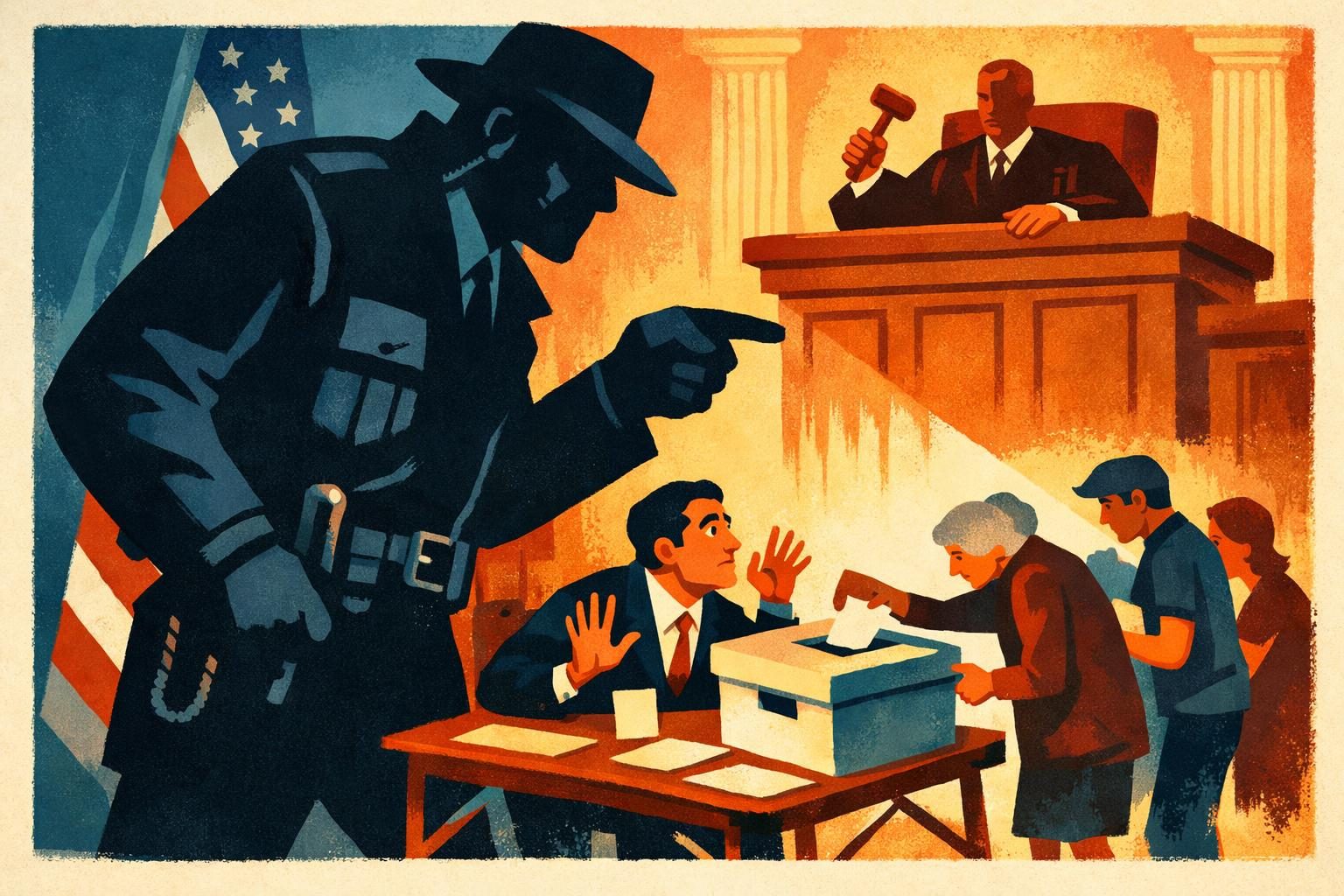
A federal judge’s Aug. 12 ruling handed the Trump administration a fresh problem in its escalating clash with state and local election administrators: one more court order that undercuts the idea that federal officials can bully their way through election governance by treating every disagreement as an emergency. The decision did not end the larger fight, but it created something far more useful to critics than another round of rhetoric or threats — a live legal ruling they can point to when arguing that the Department of Homeland Security and its allies have gone too far. That matters because the conflict is not happening in the abstract. It is landing in county offices, on the desks of election workers, and in the daily operations that keep ballots moving, voters informed, and local systems functioning without constant interference from Washington. When federal officials start talking about local election administration as if it were a test of loyalty or a matter of national security theater, the people doing the actual work notice quickly. So do the clerks, registrars, and board members who now have to decide whether a routine procedure could turn into the next target of a federal campaign.
The ruling arrives after weeks of increasingly aggressive pressure from federal officials aimed at state and local administrators, and critics say the pattern has been obvious: take ordinary election procedures, dress them up as threats, and then use the resulting alarm to intimidate compliance. That approach may create headlines and force some quick concessions, but it also invites judicial pushback when the government appears to blur the line between enforcement and coercion. The new order gives opponents a concrete legal opening to argue that this is not sober oversight but a deliberate attempt to strong-arm election officials into submission. Supporters of the lawsuit are already framing the decision as evidence that the courts are still willing to distinguish between lawful regulation and what they see as partisan spectacle. Even if the ruling is narrow, the symbolism is not. A judge has now put the administration on notice that it cannot simply impose pressure on local election workers and expect the courts to treat that pressure as business as usual.
That has immediate practical consequences. State and local election officials, already operating under intense scrutiny, are likely to lean even harder on outside counsel, compliance reviews, and defensive paperwork in response to the uncertainty. Advocacy groups and election-law critics are warning that this kind of pressure can distort the way jurisdictions prepare for the fall, because administrators who fear being singled out may overcorrect, delay, or avoid taking reasonable steps simply to stay out of the crosshairs. That kind of chilling effect is exactly what opponents say the administration has been trying to manufacture by recasting routine disputes over procedures as if they were criminal misconduct or national-security events. The point of such tactics, critics argue, is not merely to win a policy argument but to create fear that spreads from one jurisdiction to the next. Once a few local officials believe they might be made an example of, the message travels fast. Every county clerk watching the situation gets the same lesson: proceed carefully, document everything, and assume the federal government may decide to turn an administrative dispute into a spectacle.
The political cost is substantial even before the legal one is fully resolved. If the administration loses this fight in a meaningful way, the damage will not be limited to one temporary setback or one blocked tactic. It could weaken a broader effort to federalize election anxiety as a political weapon, especially if other courts begin applying the same reasoning. A ruling like this gives challengers something they can cite in parallel cases and makes it harder for the government to argue that its posture is routine, measured, and purely administrative. It also forces the administration to spend time and credibility defending the legitimacy of its own enforcement approach rather than advancing it. That is a real operational drag, particularly for a White House and a DHS operation that appear to have wanted compliance to arrive by fear and momentum, not by persuasion or durable legal authority. The harder the courts push back, the more the administration has to litigate the optics of intimidation itself.
For election workers and local officials, the broader lesson is grim but familiar: even when a ruling does not settle the underlying fight, it can change the terrain by making the government slow down, narrow its claims, or reconsider the scale of its threats. That may be the point of the lawsuit’s backers, who say the administration has been trying to turn local election administration into an obedience drill instead of a civic function. If the federal government wants deference, it will now have to get it in court, one filing at a time, rather than through public pressure campaigns and political posturing. And if more judges follow this logic, the administration’s strategy of making examples out of election officials will look less like strength and more like overreach with a paper trail. The immediate result is more litigation, more caution, and less room for bluffing. The larger result is that local election officials — the people who actually keep the machinery moving — may have gained at least a little more judicial cover to do their jobs without staring down the threat of becoming the next target in a federal scare campaign.
Comments
Threaded replies, voting, and reports are live. New users still go through screening on their first approved comments.
Log in to comment
No comments yet. Be the first reasonably on-topic person here.