
Federal Reserve independence gets dragged into a fresh removal fight
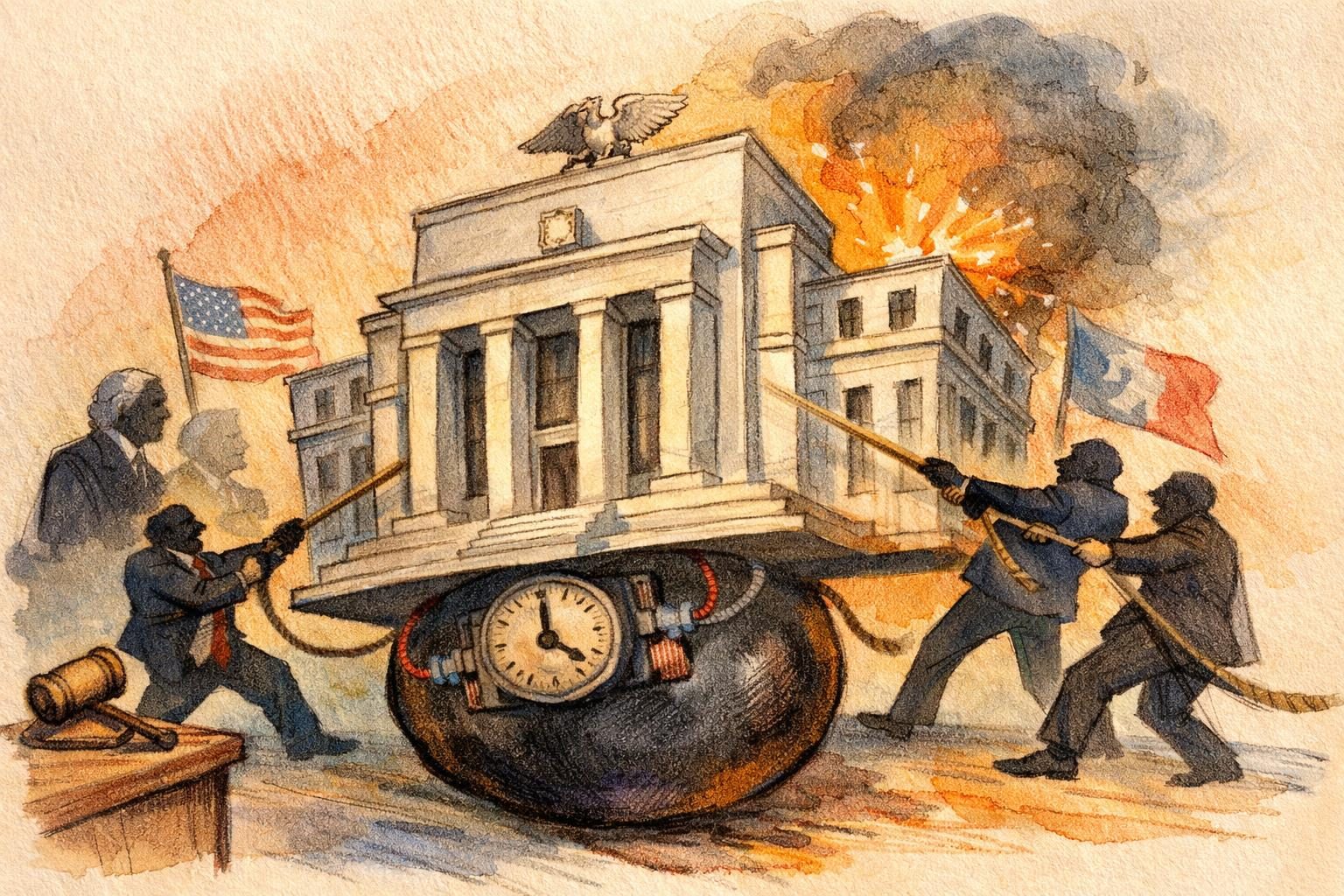
A fresh legal and political confrontation over Federal Reserve independence has pushed the central bank back into the center of a familiar Washington obsession: who gets to control the machinery that is supposed to stand apart from day-to-day politics. The immediate dispute is about removal power, but the larger fight is about whether the president can treat a Fed governor like any other appointee who serves at the pleasure of the White House. That may sound like a dry question of administrative law, yet it carries consequences that are anything but dry. If the White House can meaningfully loosen the limits on firing Fed officials, then the central bank’s claim to political insulation starts to look conditional rather than foundational. And once that happens, every interest-rate decision becomes a little less about inflation, employment, and financial stability, and a little more about raw political leverage.
That is why the latest clash has set off alarms well beyond legal circles. The Fed’s independence is not a ceremonial flourish; it is part of the basic architecture that lets the central bank make unpopular decisions without taking instructions from elected officials who would rather have easier money, lower rates, or a quick economic sugar high before the next election. Remove that insulation, and the practical question is no longer whether the Fed can do its job, but whether markets will believe it can do its job. A central bank that looks vulnerable to presidential pressure invites speculation about how far that pressure could go, and how quickly. That uncertainty matters to borrowers paying mortgages, businesses deciding whether to invest, and workers whose wages and job security are tied to inflation expectations that the Fed is supposed to help anchor. The criticism from Democrats and other institutionalists is straightforward: when the monetary referee starts looking like an extension of the political team, everyone else ends up paying for the loss of trust.
The legal backdrop makes the fight even more combustible. Recent Supreme Court decisions expanding presidential removal authority have already reshaped the way lawyers, judges, and political operators think about the separation between the executive branch and independent agencies. What used to be treated as a settled guardrail is now being tested as if it were just another obstacle to be cleared with the right case and the right argument. Supporters of broader removal power frame that shift as simple accountability: if an official exercises significant authority in the name of the federal government, they say, then the president should have more latitude to remove that official. Opponents see something much more dangerous, namely an end run around the entire point of building independent institutions in the first place. The Fed is especially sensitive terrain because it manages the most important interest-rate decisions in the country, and because even the appearance of political interference can change how investors, lenders, and foreign governments interpret U.S. policy. Technical legal doctrine can sound abstract until it starts influencing bond yields, currency moves, and the cost of credit.
What makes this episode especially revealing is the broader pattern it fits. The administration has repeatedly shown a willingness to treat independent institutions as inconveniences rather than guardrails, and that habit now extends into one of the few agencies whose credibility depends almost entirely on public confidence in its distance from political pressure. The central bank is not supposed to be one of the settings on a political dashboard that can be toggled whenever it becomes inconvenient. Yet the removal fight suggests exactly that kind of mindset is now being tested, if not embraced. If the dispute escalates, the damage will not be confined to the courtroom. It could show up in market pricing that assumes political interference is part of the normal operating environment, in lawmakers trading accusations about who is undermining the economy, and in the slow erosion of the Fed’s ability to speak with authority. The danger is not just that one official might be removed. It is that the precedent would tell everyone else that the rules protecting monetary independence are negotiable, which is another way of saying the country is willing to tax its own credibility for short-term political gain.
Comments
Threaded replies, voting, and reports are live. New users still go through screening on their first approved comments.
Log in to comment
No comments yet. Be the first reasonably on-topic person here.