
Supreme Court’s summer docket calendar puts another batch of politically explosive cases on the runway
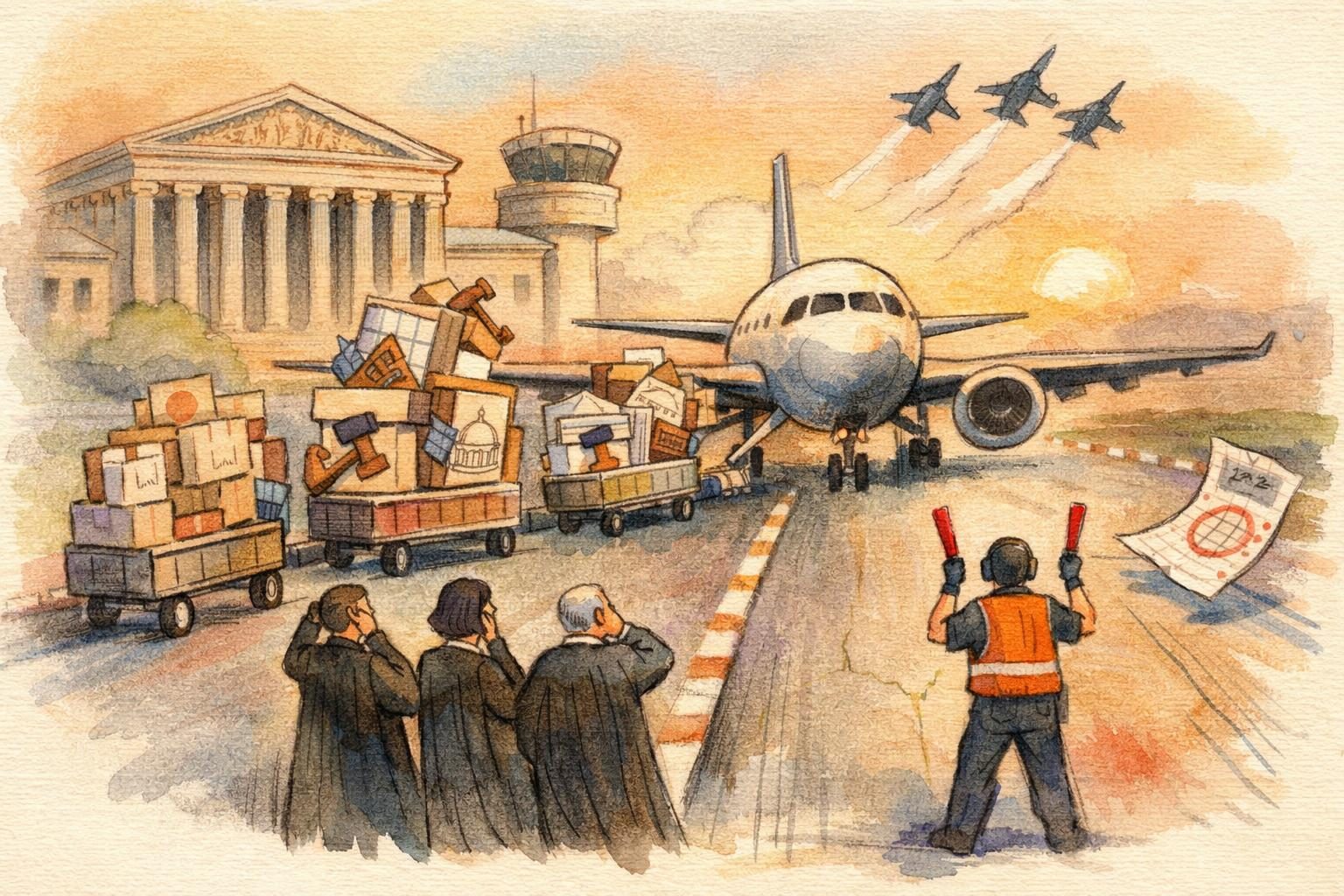
The Supreme Court’s summer distribution schedule is a reminder that the modern Court does not just announce its biggest decisions from the bench; it also telegraphs them through paperwork. The next conference is set for September 28, 2026, and that date now sits like a pressure point on a docket already crowded with disputes that could alter the balance of power in Washington and beyond. On its face, the schedule is routine administrative housekeeping, the kind of internal calendar item most people never see and almost no one would call dramatic. But the cases moving through that pipeline are anything but mundane. They include questions touching executive authority, election administration, copyright, and ballot access, all of which can become politically explosive long before the Justices issue a single line of reasoning.
That matters because the Court’s calendar is often the first public clue about what kind of legal firestorm may be next. A distribution schedule does not signal how any petition will come out, and it certainly does not guarantee that the Justices will take up a case at all. Still, the timing of a conference is not just clerical trivia; it determines when petitions get their first real look and when the machinery of review starts to move in earnest. For litigants, those dates can mean the difference between a dispute lingering in the background and a matter suddenly jumping into the center of national politics. For the public, they are a reminder that the Court’s most consequential work often begins far away from the marble-columned stage where opinions are eventually announced. A line on a schedule can mark the opening of a fight over who gets to govern, who gets to vote, and how much power federal officials can claim while doing both.
The docket pressure is especially notable because the Court has increasingly handled high-stakes disputes in fragments, often through emergency applications and other fast-moving procedural channels rather than the kind of full-dress argument that used to define the institution’s public profile. That shift has not made the cases less consequential. If anything, it has made them harder to follow and easier to underestimate until the consequences are already in motion. When a case involving executive power lands on the Court’s calendar, it can implicate how aggressively an administration may act, how much room lower courts have to rein it in, and whether the Justices want to let disputed policies stay in place while litigation continues. When election-related petitions are in the mix, the stakes can be even more delicate, because deadlines do not wait for legal theory to settle itself. Copyright and other regulatory disputes may sound less overtly partisan, but they can still reach into politics through the broader fight over who controls information, technology, and the boundaries of federal authority. The common thread is not ideology alone; it is the possibility that a procedural step in late summer can shape real-world power before the public even understands the question.
The September 28 conference therefore lands in a moment when the Court’s docket is not just full, but heavily freighted. The posted schedule is not a ruling, a signal of agreement, or a preview of votes, and there is still substantial uncertainty about which petitions will survive the filtering process. Even so, the Court’s own calendar makes clear that a batch of politically sensitive cases is lined up for attention, and that alone has value for anyone trying to understand where the next round of constitutional conflict may emerge. The practical lesson is blunt: the Supreme Court’s influence often begins with timing, not doctrine. A summer distribution schedule may look like procedural boilerplate, but in a year packed with fights over executive authority, ballot access, and other institutional flashpoints, it is the kind of document that can tell you where the danger is headed next. The country may not hear oral argument tomorrow, and it may not see a final decision for months, but the runway is visible now, and the Court has already set several politically combustible cases on it.
Comments
Threaded replies, voting, and reports are live. New users still go through screening on their first approved comments.
Log in to comment
No comments yet. Be the first reasonably on-topic person here.