
Administration admits clean-energy grants were canceled for political reasons
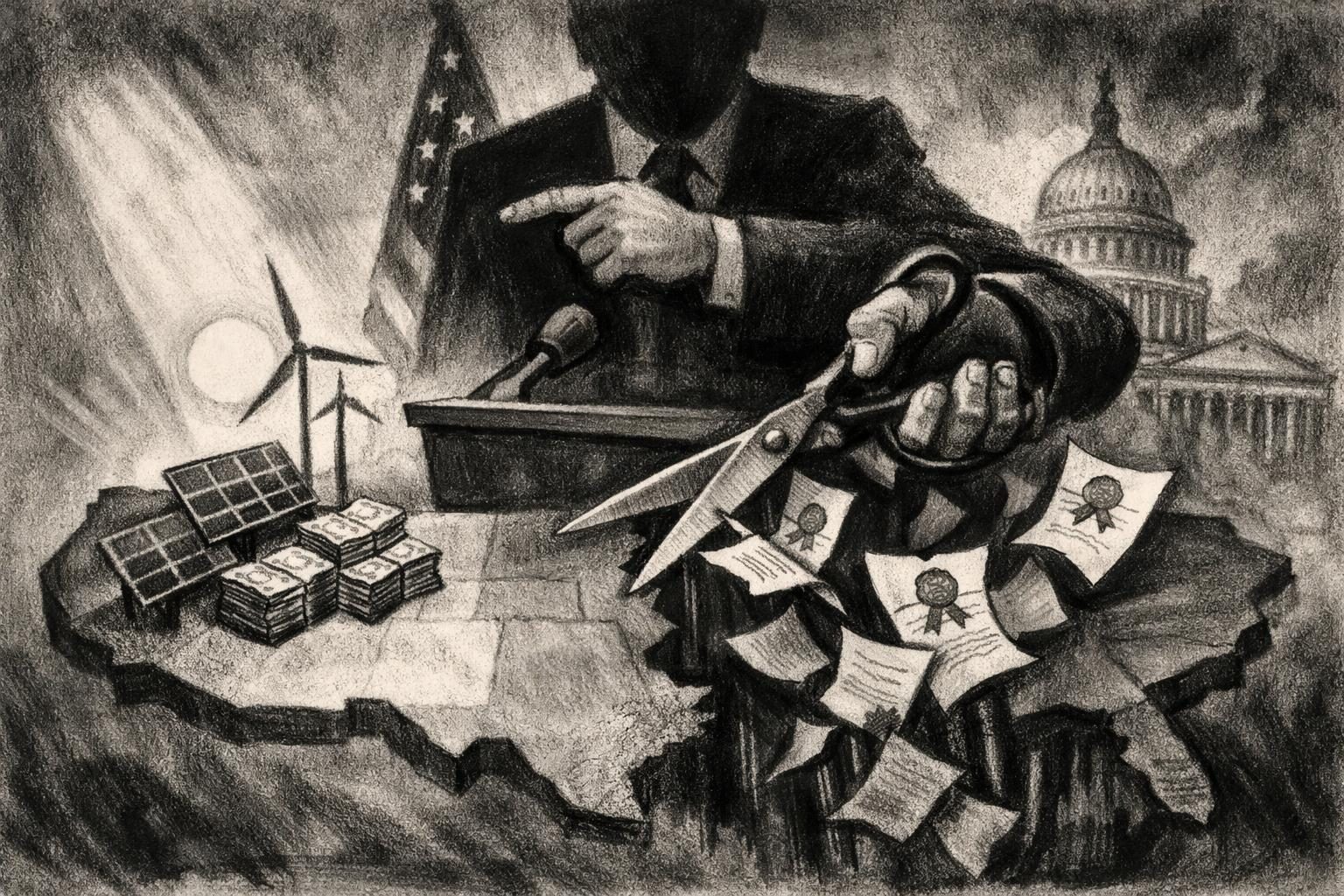
The Trump administration has now effectively said the quiet part out loud in court: it canceled $7.6 billion in clean-energy grants because of the political identity of the states that were set to receive the money. That admission transforms what could have been presented as a dispute over program management into something far uglier, because it suggests the cancellations were not driven by performance failures, legal defects, or even a narrow policy reassessment. Instead, the stated reasoning appears to track which states voted for Democrats in 2024, a fact pattern that makes the decision look less like governance and more like retaliation dressed up in bureaucratic language. For a White House that routinely casts itself as the champion of national interests, the logic here is strikingly sectarian. It implies that public money can be treated as a reward for political allegiance and a penalty for the wrong kind of voters.
That matters because federal grants are not supposed to function as partisan scorecards. In theory, agencies are expected to base their decisions on statutory authority, compliance with program rules, cost, feasibility, and the public interest, not on whether a governor’s state has the right color on the electoral map. If those standards can be overridden by political identity, then every future grant recipient has reason to wonder whether its funding is durable or simply contingent on which party controls the White House. That uncertainty is especially damaging in the clean-energy world, where projects often depend on long planning horizons, layered private investment, and state-federal coordination. A canceled grant is not just a line item disappearing from a spreadsheet; it can stall construction, freeze hiring, and undercut projects that were built around the expectation of federal support. The larger institutional problem is that once an administration admits partisan motive, it hands challengers a powerful argument that the decision-making process was contaminated from the start. That can matter both in court and in the broader public debate over whether the executive branch is still following neutral rules.
The political stakes are obvious, but the legal stakes may be just as significant. The administration can still try to argue that it had discretion to review, suspend, or terminate the awards for some supposedly technical reason, and it may point to compliance questions or policy priorities as a backstop. But the disclosed rationale is doing the damage here, because it suggests the operative standard was partisan identity rather than administrative merit. That is the kind of detail lawyers on the other side do not forget, especially when it is preserved in court filings and discoverable records. A judge reviewing the matter will likely care less about the administration’s messaging and more about whether the documented explanation matches the actual decision-making process. If the record shows that the states involved were targeted because they backed Democrats, then the government’s position becomes much harder to defend as neutral enforcement. Even if the administration attempts to reframe the cancellations as ordinary executive discretion, the appearance of viewpoint-based punishment may be enough to raise serious constitutional and procedural questions. At minimum, it gives opponents a clean factual hook for arguing that the administration crossed the line from policy disagreement into selective retaliation.
The practical fallout could reach well beyond the canceled grants themselves. States that rely on federal commitments to anchor infrastructure, energy, and economic development plans will have a reason to worry that those commitments can disappear if they end up on the wrong side of the president’s political ledger. That kind of uncertainty makes it harder for state agencies to negotiate with contractors, line up financing, or persuade local communities that promised projects will actually move forward. It also invites deeper judicial scrutiny, more aggressive discovery, and broader skepticism from lawmakers who already believe executive power is being used as a political weapon. Clean-energy programs in particular tend to require coordination among state governments, utilities, developers, and regulators, so even a temporary freeze can ripple through timelines and budgets in ways that are difficult to unwind. The administration’s defenders may insist that this is simply a hard-nosed policy reset, but the evidence disclosed so far makes that claim sound thin. What is left is the uncomfortable possibility that public dollars were wielded not as a tool of governance, but as leverage in a partisan fight. If that is ultimately how the record reads, the episode will stand as a warning to every state that depends on Washington: your funding may be subject not just to policy shifts, but to political revenge.
Comments
Threaded replies, voting, and reports are live. New users still go through screening on their first approved comments.
Log in to comment
No comments yet. Be the first reasonably on-topic person here.