
Federal courts head into Friday with active dockets but no marquee order list
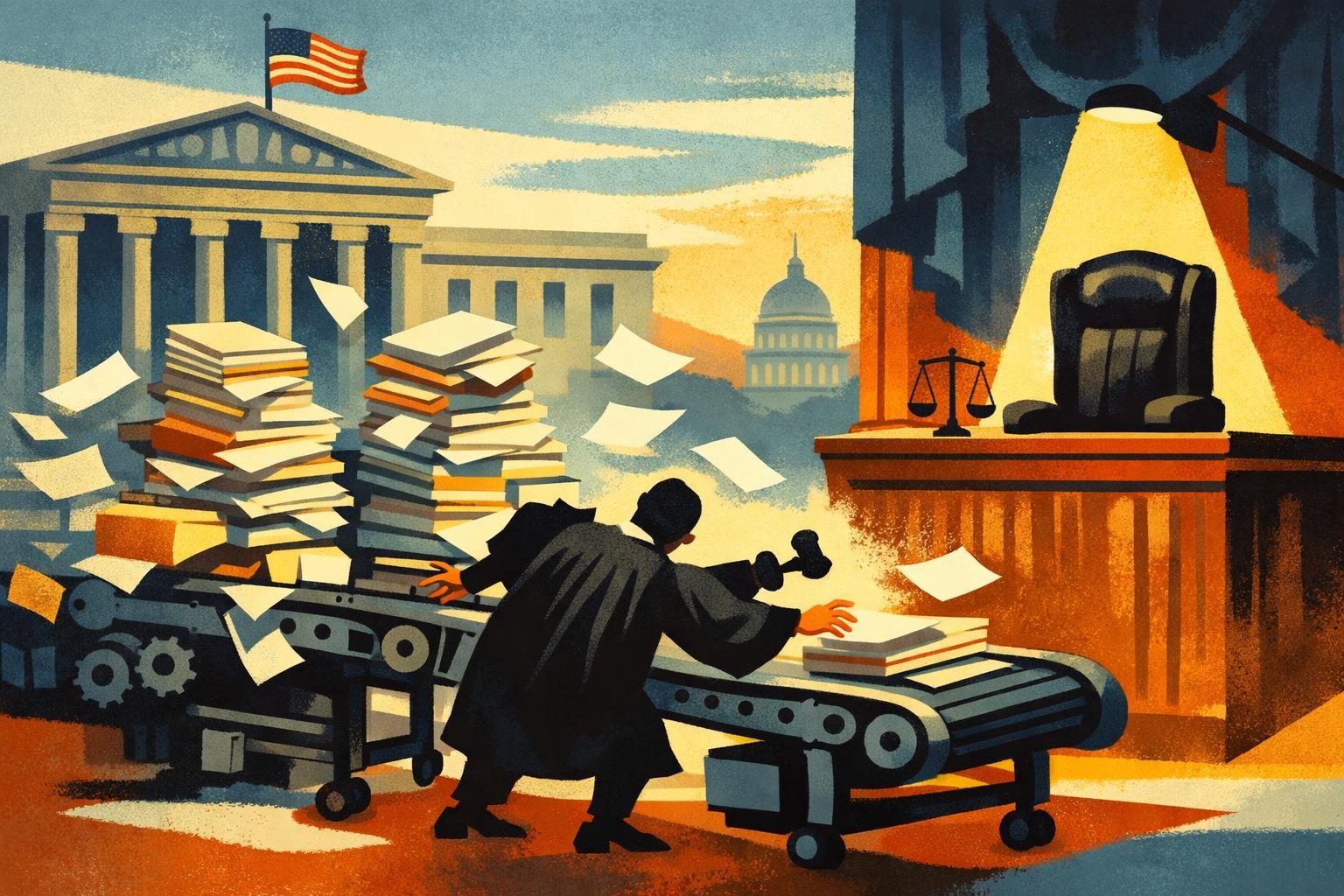
Federal court systems were visibly active heading into Friday, August 14, but the public-facing record did not offer the kind of fresh, unmistakable blockbuster order that would justify pretending otherwise. The Western District of Tennessee’s calendar page for August 14 was live and changing, and other federal court pages and dockets showed the familiar churn of a judiciary that never really seems to stop moving. That matters because the modern political calendar is increasingly shaped by what happens in court rather than in Congress or a press room, and a live docket can be the first hint that a fight is about to harden into a ruling, a temporary order, or another round of procedural delay. Still, there is a difference between a court being busy and a court producing a headline. On the evidence available here, this looks more like the first than the second.
That distinction may sound technical, but it is actually central to how a lot of policy conflict works in 2026. Immigration disputes, administrative fights, labor questions, and clashes over presidential power all keep arriving in federal court on compressed timelines, where the immediate question is often not who ultimately wins, but whether the next deadline gets paused, extended, or narrowed. A live calendar page can matter because it tells you the machinery is engaged and the next hearing may be close enough to change the political weather. Yet a live calendar is not itself a ruling, and process can get mistaken for substance when every docket update is treated like an event. In this case, the available record is telling us that the system is grinding along at full speed, not that it has just delivered a decisive national verdict. That may be less dramatic, but it is more honest.
The broader institutional picture is hard to ignore. Federal courts are operating under the strain of nonstop emergency litigation, and the sheer volume has become part of the story in its own right. When judges are juggling overlapping matters, the practical outcome is often slower resolution, more temporary fixes, and more opportunities for agencies to keep operating as though litigation is just another manageable cost of doing business. That kind of legal triage is not always a clean scandal with a single villain and a neat ending. More often, it is a feature of a system that has become accustomed to deciding high-stakes questions on the fly, under pressure, and with limited time to let anything settle. The result is a judiciary that remains central to national politics even when the day’s public record does not hand over a neatly packaged showpiece order.
There is also a more mundane but still important reason this kind of docket activity deserves attention. Many consequential developments now appear first as brief entries, scheduling updates, or procedural notes before they blossom into the policy fight that everyone else eventually notices. That means the real work of political reporting often starts with watching for signs that a matter is still alive, not just for the moment a judge announces the final answer. On August 14, the court pages suggest exactly that kind of continuing motion: active calendars, continuing case management, and the ordinary but meaningful churn of a system under load. It is not the sort of material that supports a splashy standalone declaration that something major has happened. But it does support a narrower and still useful conclusion: the federal judiciary remains the nation’s pressure valve, the valve is open, and the next burst of legal significance may only be a docket entry away.
Comments
Threaded replies, voting, and reports are live. New users still go through screening on their first approved comments.
Log in to comment
No comments yet. Be the first reasonably on-topic person here.