
Justice Department escalates immigration war by targeting New York’s local-cops crackdown
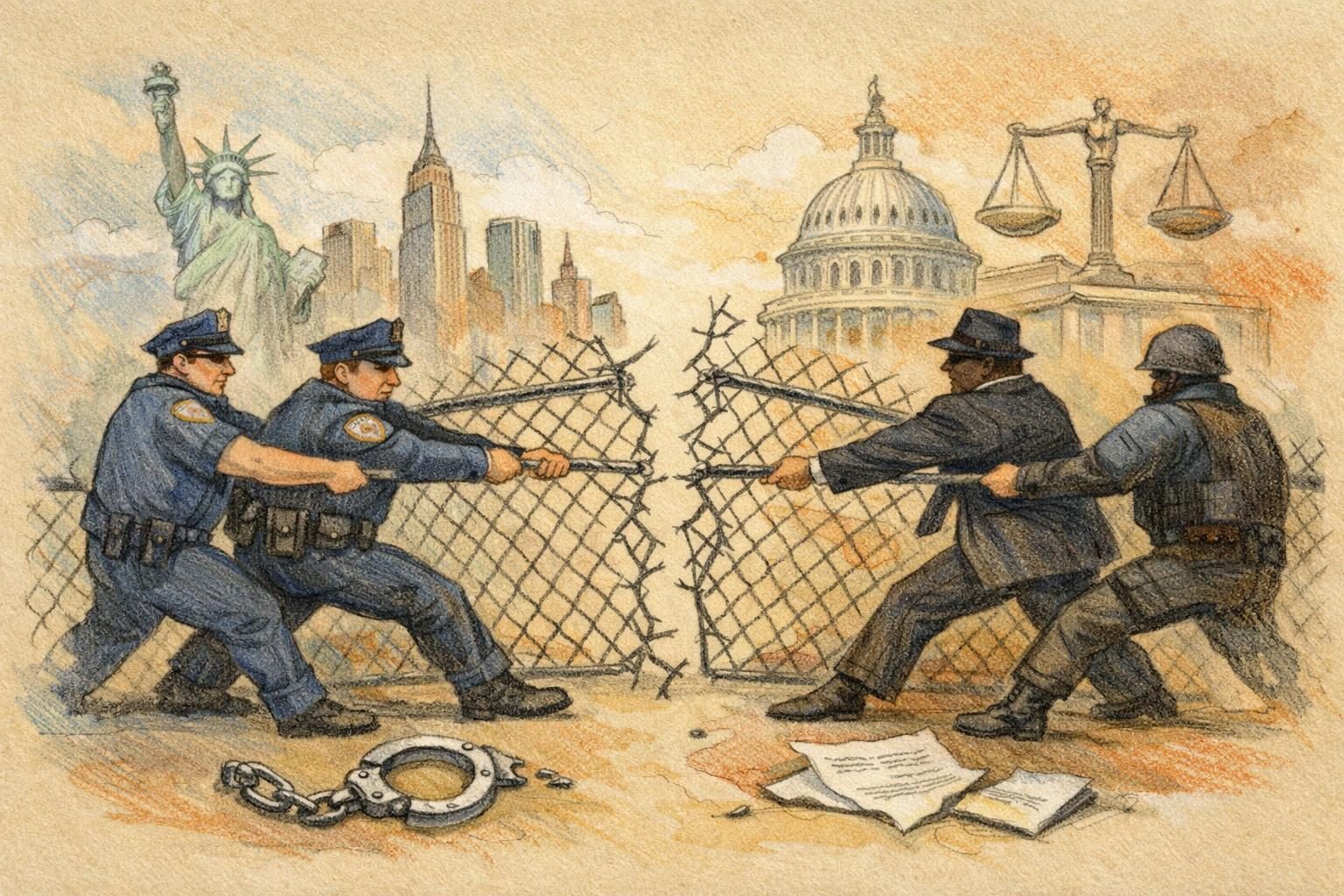
New York’s latest immigration fight is no longer just a political message in a press conference or a promise tucked into a state agenda. It has become an enforcement action, and that is what makes it matter. State officials said the first move from a newly created office is aimed at local law-enforcement agencies that, in the state’s view, have not been complying with the Local Cops, Local Crimes Act. The law was designed to keep local police from being turned into an extension of federal immigration enforcement, and the new action targets cooperation agreements that the state says run against that purpose. Agencies involved are being told to unwind those arrangements by August 25, 2026, which gives the dispute a concrete deadline instead of the usual fog of political threats and legal posturing. In a year already defined by aggressive immigration enforcement and resistance from states that do not want their police forces pulled into the process, the announcement is a clear sign that New York intends to use its own machinery to push back.
The state’s argument is straightforward enough: local police are supposed to focus on local crime, not function as a recruitment pool for federal civil immigration work. Attorney General Letitia James and Governor Kathy Hochul framed the action as an effort to force agencies to follow a state law meant to limit cooperation that can scare immigrant communities away from calling 911, reporting abuse, or cooperating with investigations. That concern has become one of the central claims in sanctuary-policy debates for years, and New York is now trying to convert it from principle into compliance. By launching what it describes as the first enforcement step under the new office, the state is signaling that the law is not just symbolic. It also appears to be warning local departments that they cannot quietly maintain side agreements or informal practices that amount to immigration work by another name. Whether every such arrangement can be unwound cleanly is another question, but the deadline itself raises the stakes immediately.
The federal side of the conflict has not been subtle either. Washington has spent much of the year treating state and local limits on immigration cooperation as an obstacle to be challenged, not a boundary to be respected. That is why this latest move lands as more than a bureaucratic disagreement between Albany and a handful of sheriffs or police chiefs. It sits inside a larger collision between state civil-rights and immigrant-protection laws on one side, and federal immigration enforcement on the other. The Justice Department’s own recent litigation posture elsewhere shows how ready it is to test state restrictions when they are seen as interfering with federal priorities, and that broader posture helps explain why New York’s decision is likely to be met with resistance. Federal officials can argue that immigration law is primarily a national responsibility and that states cannot carve out large areas where coordination is discouraged or forbidden. New York can answer that local police are not supposed to become deputized federal agents and that states still have authority over how their own law-enforcement systems are structured. The result is not just rhetorical sparring, but a test of where the line actually runs.
The practical effects may show up first in paperwork and policy revisions, but the larger consequences are likely to be felt in court. Agencies that have relied on immigration-related cooperation agreements now face a deadline, possible legal exposure, and the pressure of deciding whether to comply, challenge the order, or try to negotiate a narrower interpretation of the law. Immigrant-rights advocates are likely to welcome any move that reduces the chance local police will be used as a feeder system for deportation proceedings, especially in communities where fear of immigration consequences can suppress reporting of crimes. Critics will say the state is undermining federal law and making it harder to identify and remove people they believe should be in the country illegally. Both claims are familiar, and neither will disappear because of a press release. What is new is that New York has moved from general resistance to active enforcement, and that makes the conflict harder to ignore, harder to slow down, and much more likely to end up as a real legal test of whether states can meaningfully limit local cooperation when the federal government wants maximum immigration enforcement with minimum restraint.
Comments
Threaded replies, voting, and reports are live. New users still go through screening on their first approved comments.
Log in to comment
No comments yet. Be the first reasonably on-topic person here.