
Federal judge blocks the administration’s election-rule power grab
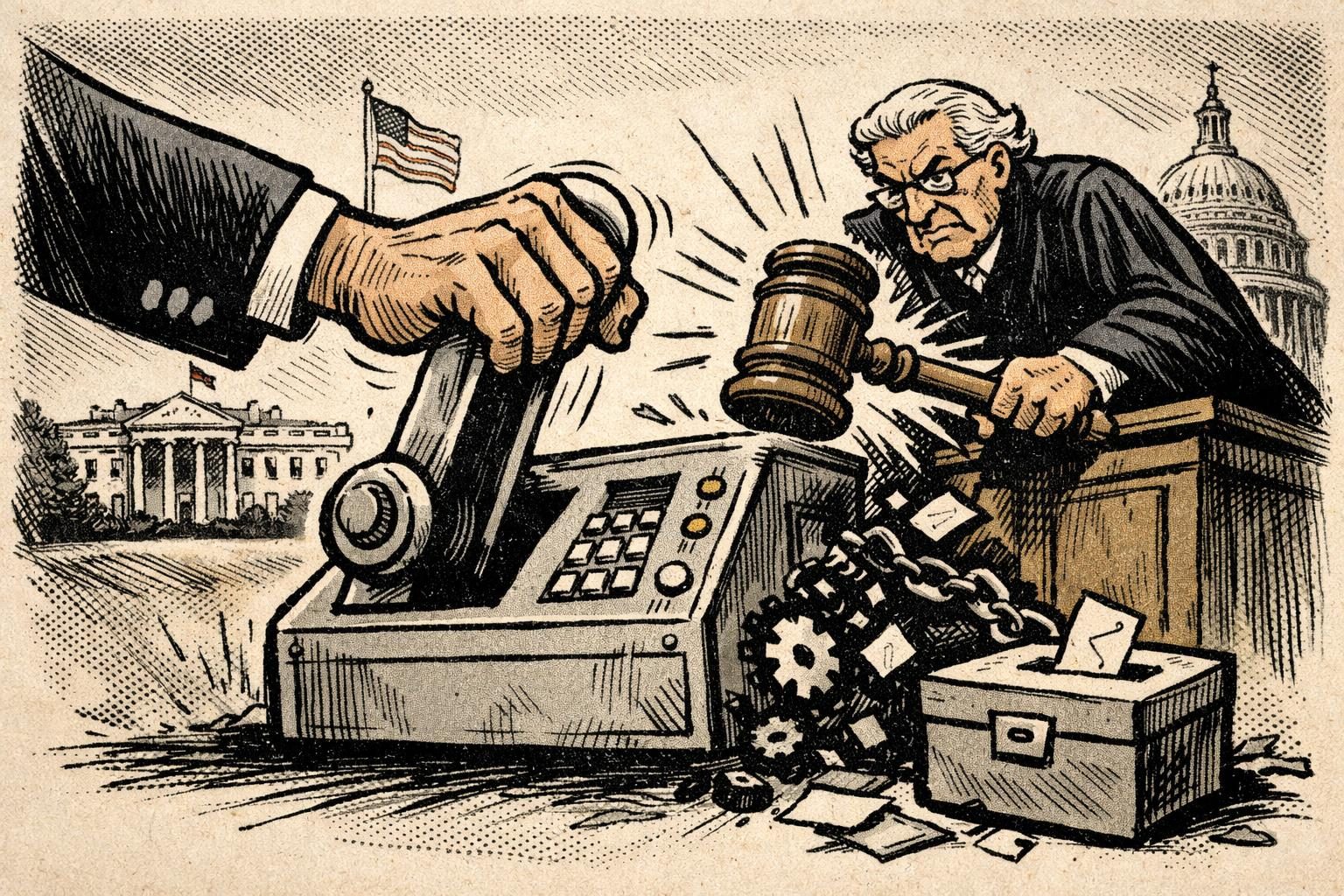
A federal judge on August 13 put the brakes on key parts of the administration’s effort to impose new federal election procedures on the states, dealing a significant setback to a plan that had already drawn sharp objections from state officials and voting-rights watchdogs. The ruling is important not just because it pauses the immediate effort, but because it reaffirms a basic constitutional line that the White House appears to have tested anyway: election administration is primarily a state responsibility, not a blank canvas for unilateral federal redesign. In practical terms, the court’s action means the administration cannot simply push ahead and expect the states to absorb the cost, confusion, and legal risk. The decision also signals that a judge was not persuaded that the government had shown enough legal authority to remake election processes on the timeline it wanted. For an administration that has increasingly treated institutional constraints as inconveniences, the ruling is another reminder that the courts still exist and can still say no.
The blocked effort touched on the kinds of election mechanics that sound dry until somebody tries to alter them all at once. States had warned that the order would force changes to voter-roll procedures and mail-ballot systems that are already governed by state law and administered by local officials working under tight deadlines. That warning was not rhetorical hyperbole; election offices do not have the luxury of improvising a new compliance regime in the middle of the run-up to a federal cycle. The 2026 election calendar is already moving, and every change to registration, recordkeeping, ballot handling, or chain-of-custody rules can ripple through county offices, vendors, and legal review processes. The administration’s plan, according to the public record surrounding the dispute, would have required states to scramble to comply with directives they did not ask for and arguably were never obligated to follow. The court’s intervention preserves the status quo for now, which may not be elegant, but it is far less dangerous than forcing a nationwide overhaul on an impossible schedule.
There is also a broader fight embedded in the legal one. The disputed directive was not presented as a narrow housekeeping measure or a modest federal clarification of existing law. It was cast instead as a sweeping assertion of federal power over how ballots are handled, how records are maintained, and how states manage the mechanics of elections. That is the sort of move that immediately raises alarms among state officials because it collapses the distinction between federal oversight and federal takeover. The source material indicates that state leaders and lawmakers pushed back hard, arguing that the administration was overstepping its authority and threatening to collide with established state legal frameworks. In one related development, state justice officials publicly challenged the order, underscoring that the matter was not just an abstract constitutional debate but a concrete dispute over who gets to run the machinery of democracy. When the executive branch tries to dictate election procedure without clear statutory backing, it invites exactly the kind of judicial skepticism that showed up here.
The legal and political stakes are compounded by the enforcement posture attached to the administration’s plan. The dispute was not limited to administrative guidance; it also carried implications for funding pressure and criminal enforcement, which made the order look less like an election-management correction and more like an attempt to compel obedience through threat. That distinction matters. States can live with federal standards that are authorized by law and built through ordinary process, but they are far less likely to accept a one-sided command that rewrites election operations and dares them to resist. Critics of the administration say this is a familiar pattern: identify a political problem, claim emergency authority, then act surprised when courts insist on actual legal authority before the government can start issuing commands. The judge’s ruling does not resolve every issue in the broader fight over election administration, and it may not be the last word if the administration appeals or revises its approach. But it is a meaningful check, and it suggests the government’s argument was too broad, too fast, or too thinly grounded to survive in its current form.
The bigger lesson is that election rules are not supposed to be improvised from the top down because a president or agency wants a cleaner political narrative. The source documents tied to the dispute point to a separate concern as well: preserving election records and respecting existing legal processes, which is a reminder that election administration depends on continuity, documentation, and trust. Once federal officials start forcing major procedural changes without broad legal consensus, they risk undermining both the practical operation of elections and public confidence in the results. That is why the court’s decision lands as more than a temporary procedural win for the states. It says the administration cannot use the language of administration to mask a power grab, and it cannot treat the Constitution’s division of authority as a nuisance to be worked around. For now, states keep their existing systems, local election officials avoid another round of emergency rewrites, and the White House gets a judicial answer it probably did not want: not this, not like this, and not without real legal authority.
Comments
Threaded replies, voting, and reports are live. New users still go through screening on their first approved comments.
Log in to comment
No comments yet. Be the first reasonably on-topic person here.