
The legal war on federal unions just got another ugly reminder that the administration’s anti-worker push is still in court
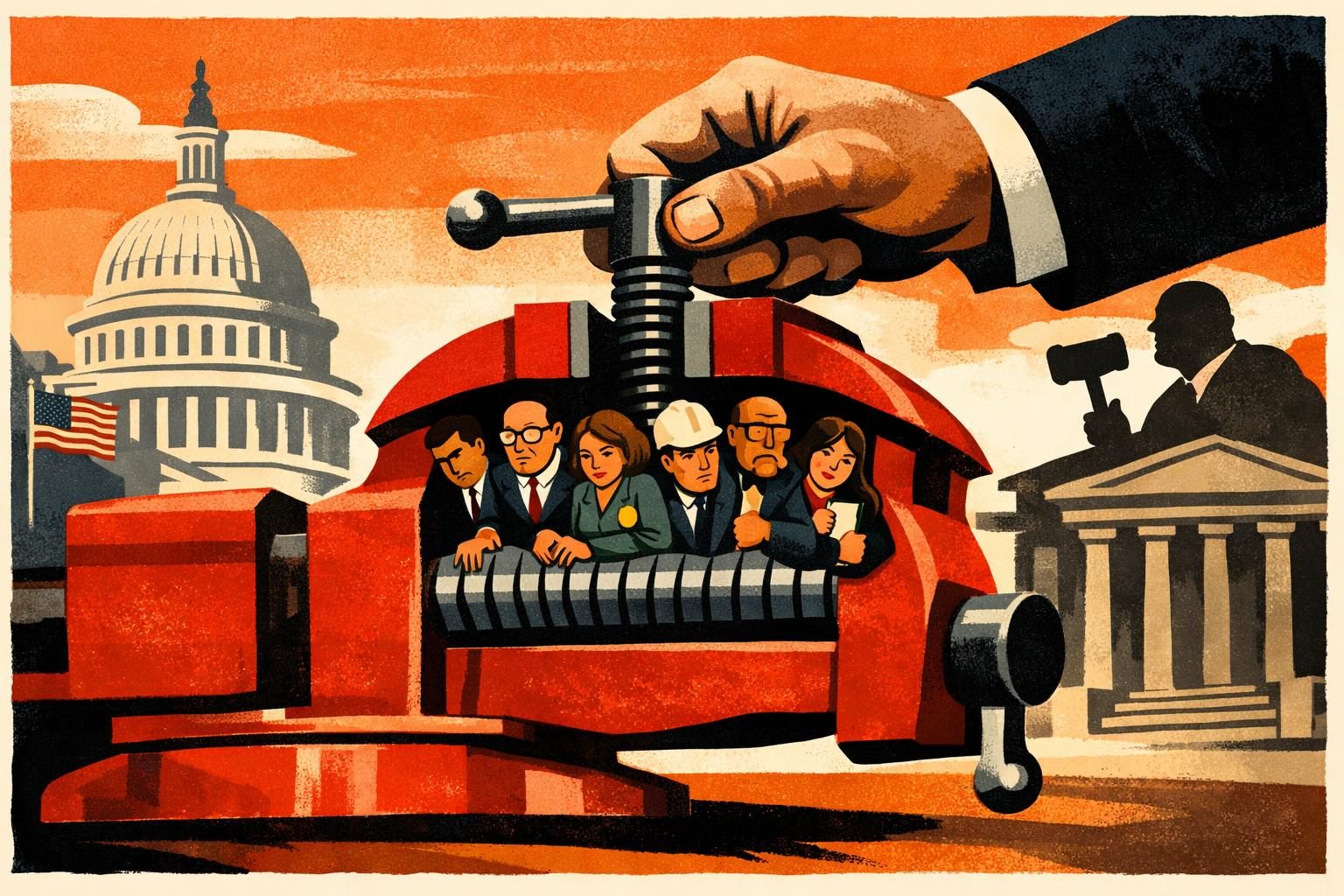
A federal appeals court on Aug. 13 kept in place a stay that allows the government to continue defending limits on collective bargaining rights for federal employees while the underlying legal fight moves forward. That may not sound like much on its face, but in a case this consequential, interim rulings matter because they shape what happens to negotiations, grievance procedures, and workplace representation in the meantime. The order did not resolve the merits of the dispute, and it did not hand the administration a permanent victory. Even so, it signaled that the fight over federal labor rights is still very much alive, and that the government’s effort to preserve those limits has not yet been knocked off course. For unions and workers affected by the policy, that means the uncertainty continues, and so do the practical effects of a dispute that has already disrupted day-to-day labor relations.
The case sits at the center of a broader clash over how far a president can go when invoking national security to narrow or suspend labor protections for federal workers. According to the record described in the litigation, the executive action at issue was framed as a security measure, but unions and agencies challenging it have argued that its actual effect was to strip bargaining rights from large parts of the federal workforce. That distinction matters because national-security authority is broad, but it is not unlimited, and the court fight is partly about whether this administration tried to use that language as a workaround around ordinary labor rules. The government has defended the policy as a management tool and a security necessity, while opponents say it was designed to freeze bargaining, weaken grievance handling, and reduce the ability of employees to defend themselves at work. The stay now in place does not answer whether the policy ultimately survives legal scrutiny, but it does keep the administration’s position in effect while the courts continue sorting through those arguments.
That is why this case has become such an ugly reminder of how aggressively the administration has pushed its anti-worker agenda inside the federal workforce. The policy’s critics have portrayed it as something more than a limited carveout for sensitive jobs or restricted settings. In their view, it is a broad attack on organized labor dressed up in the language of national security. The practical consequences matter here, because federal employees do not experience these fights as abstract constitutional debates. They experience them as slower bargaining, weaker representation, fewer avenues for resolving disputes, and a more lopsided workplace where management holds the leverage. If courts ultimately conclude that the government overreached, the argument that this was a targeted security measure will look thin. If the administration prevails, it will have established a much wider lane for using executive authority to override labor protections whenever officials decide the circumstances justify it.
The ruling also has institutional consequences that go beyond any one workforce dispute. Once the executive branch starts leaning on emergency-style reasoning to limit labor rights, litigation tends to become the default setting rather than the exception. That creates a feedback loop in which unions, agencies, and the courts spend months or years fighting over preliminary injunctions, stays, and jurisdictional questions instead of resolving workplace problems through bargaining. It also encourages repeated attempts to test the outer edge of presidential power, because a temporary loss is no guarantee that the issue is settled. For federal workers, that means their rights can be suspended or narrowed while the legal process drags on, which is often the same as losing the practical benefit of those rights altogether. The administration can insist this is disciplined management or a legitimate security measure, but to the employees living through it, the result looks a lot like union busting with legal paperwork attached. And because the fight is still in court, the final answer remains uncertain, even as the pressure on workers stays real.
Comments
Threaded replies, voting, and reports are live. New users still go through screening on their first approved comments.
Log in to comment
No comments yet. Be the first reasonably on-topic person here.