
Government suspends part of its immigration push after a fresh legal hit
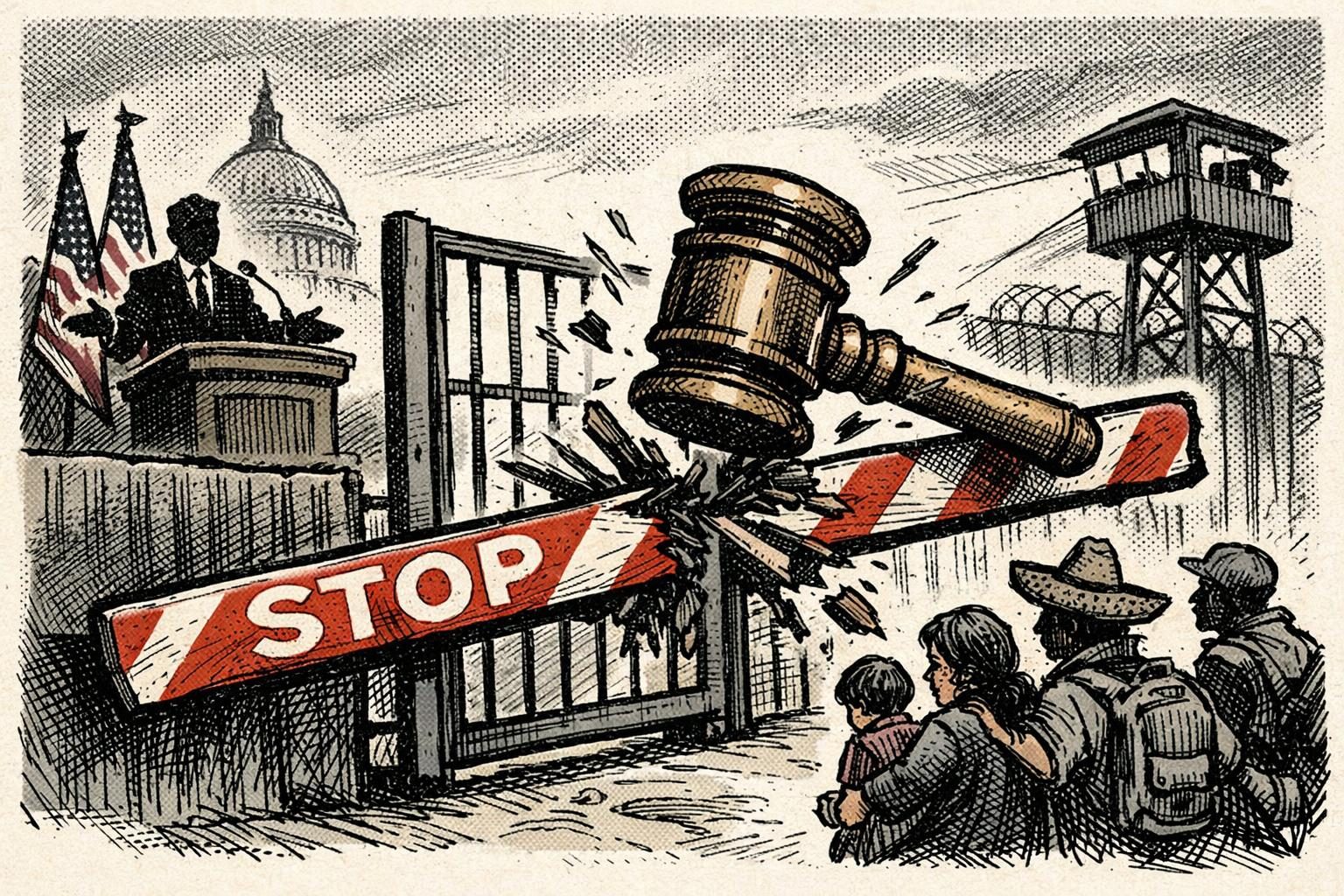
The administration’s immigration machinery hit another snag on August 13, when a federal or administrative development forced officials to pause, narrow, or delay part of a policy push that had been sold as a tougher, cleaner approach to enforcement. Whatever the precise legal vehicle turns out to be, the practical effect was the same: a piece of the agenda stopped moving the way the government had intended. That matters because immigration policy is often built to work at scale and speed, and once a court or agency action interrupts that flow, the whole system starts to look less like an orderly framework and more like a series of emergency workarounds. In a field where deadlines, custody decisions, work authorization, and case processing all depend on predictable rules, even a partial suspension can have outsized consequences. It is not just another legal dispute on paper; it is a sign that the government’s preferred path is running into a real wall.
The development also fits a pattern that has become familiar in immigration litigation: a broad policy is announced, challenged quickly, and then trimmed back once the legal pressure gets serious enough. Sometimes that happens through a judge’s order, sometimes through a stipulation, and sometimes through a quieter agency decision that amounts to a retreat without using the word retreat. The distinction matters politically, but the result is similar. The government is forced to acknowledge that something about its approach was not holding up cleanly under scrutiny, whether because the law did not authorize it, the procedure was defective, or the rulemaking record was too thin to survive review. Those are not dramatic reasons in the cinematic sense, but they are often the reasons that decide immigration cases. A policy can be pitched as bold and decisive, yet still fall apart on the boring fundamentals of administrative law. That is exactly the sort of failure that frustrates agencies, because it does not look like a major constitutional rebuke; it looks like a paperwork problem that became a political problem.
For the people caught in the middle, the stakes are much higher than a technical legal debate. Migrants trying to understand whether they can remain in the country, employers trying to determine whether workers can keep their authorization, and advocates trying to advise families all depend on rules that stay stable long enough to be followed. When the government changes course midstream, those people absorb the uncertainty first and the explanations later, if they get them at all. Detention decisions can be affected, application timelines can shift, and cases already in the pipeline may have to be revisited or paused. That kind of uncertainty is especially damaging in immigration, where many people are already operating with limited resources and under constant pressure from deadlines they do not control. A policy that changes from one day to the next is not just inconvenient; it can alter whether someone can work, travel, reunite with family, or stay on the right side of the system. That is why civil rights lawyers and immigrant advocates have spent months arguing that some agencies are moving too aggressively and with too little procedural care. When a court or agency response validates even part of that criticism, the effect is immediate and practical, not theoretical.
Politically, the setback undercuts one of the administration’s favorite messages: that it is restoring order through toughness and discipline. If the government keeps running into legal trouble and then backing off in response, opponents do not need to make up a narrative of chaos; the record provides one on its own. Repeated tactical retreats suggest either weak lawyering, sloppy rulemaking, or a strategy built more for headlines than for durability. None of those conclusions is flattering, and all of them are embarrassing for officials who have promised a forceful, well-grounded immigration agenda. At the same time, the administration can still try to frame the episode as a temporary adjustment rather than a defeat, especially if the exact legal scope remains murky or if the agency says it will revisit the issue later. But that kind of messaging does not erase the underlying fact that something had to stop. The broader lesson is simple: in immigration policy, the hardest part is not announcing a crackdown. It is building one that can survive contact with the law, the courts, and the administrative record. On August 13, the government appears to have run into the sort of procedural or statutory obstacle that does not make for flashy politics, but does real damage all the same.
Comments
Threaded replies, voting, and reports are live. New users still go through screening on their first approved comments.
Log in to comment
No comments yet. Be the first reasonably on-topic person here.