
Federal government unveils crackdown on high-risk life sciences research
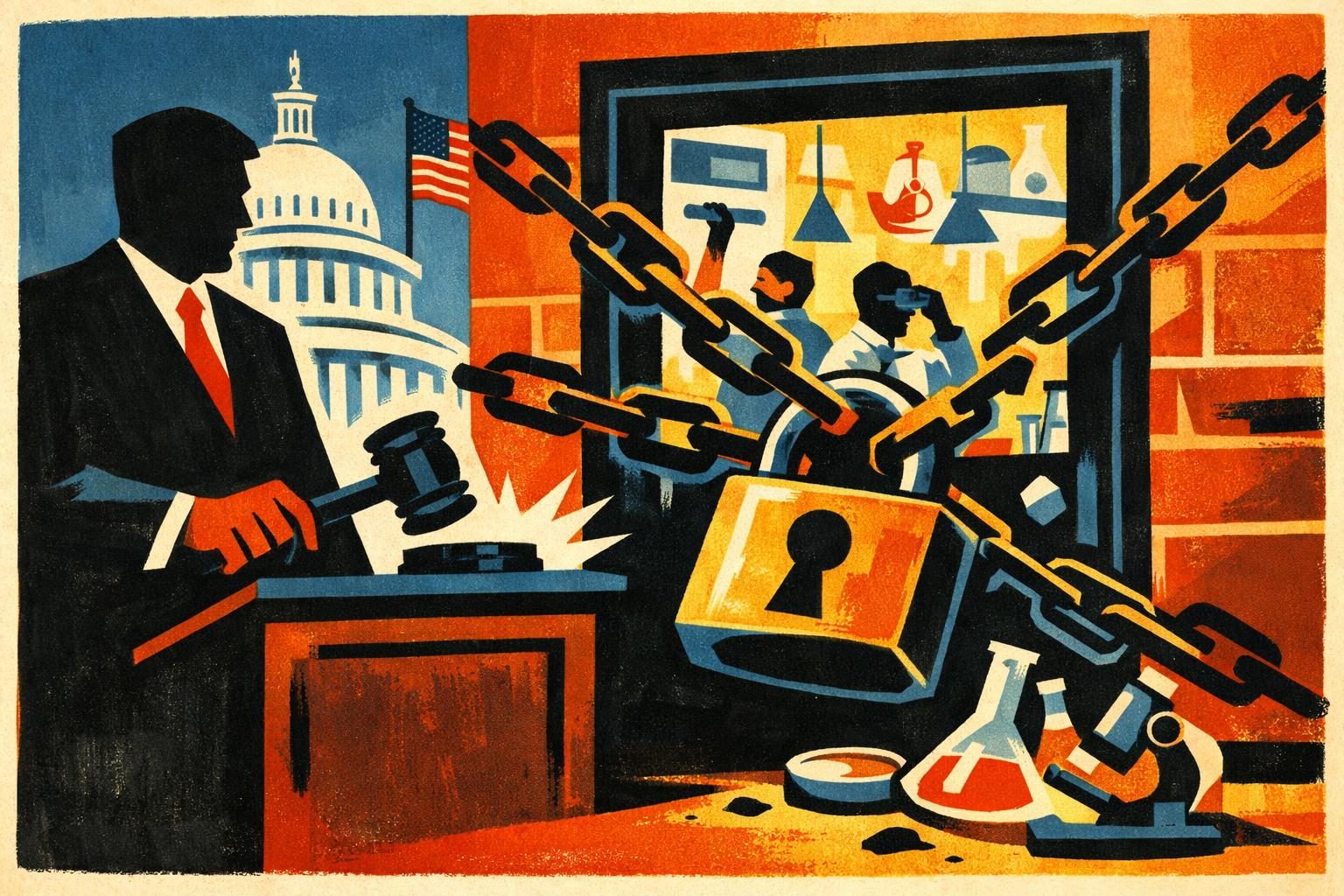
The federal government on Aug. 13 rolled out a new policy aimed at stopping what it calls high-risk life sciences research, a move that could rewire how Washington funds, reviews, and polices biomedical work with possible pandemic or security implications. The announcement frames the change as a government-wide effort built around stronger enforcement, more transparency, and tighter accountability. In practice, that means the rules of the road for researchers who depend on public money may be about to get a lot stricter. Federal agencies are not merely talking about guidance or best practices here. They are signaling that some lines in the lab will be treated as much more serious than they have been before.
The policy matters because it is not confined to a single grant program or one corner of the research bureaucracy. Instead, it points to a broader shift in how the government wants to evaluate biological work that could be dangerous if mishandled, misused, or simply pushed too far. That is a familiar argument in the world of biosafety: supporters say officials have every reason to be cautious after years of worries about lab accidents, dual-use research, and the possibility that well-intended experiments could create new problems faster than they solve old ones. The administration’s approach appears to lean heavily into that logic, suggesting that greater federal control is needed to reduce risk before it becomes a crisis. But the same logic can easily become a blunt instrument if the definition of “high-risk” is too broad or too politically convenient.
For universities, medical schools, research institutes, and private labs tied to federal dollars, the immediate effect is likely to be more paperwork, more scrutiny, and more pressure to justify what they are studying and why. Grant applications may face tougher review, compliance offices may be asked to do more, and institutions may need to document safety measures and oversight in far greater detail. Scientists working on pathogens, immune response, vaccines, or other areas of advanced biological research could find themselves under a closer federal lens even if their work is legitimate and aimed at prevention. That raises a classic tension in public health policy: the same research that can help prepare for future outbreaks can also look unsettling when viewed through a national security or biohazard frame. The government seems to be betting that the benefits of tighter control outweigh the costs of slower, more cumbersome science. Researchers may not see it that way, especially if they think caution is being converted into suspicion.
The political implications are almost as important as the scientific ones. A policy like this gives the administration a powerful language for talking about safety, responsibility, and oversight, especially at a time when public anxiety about biological threats remains easy to mobilize. It also gives critics plenty of room to argue that Washington is setting itself up as the final arbiter of which experiments are acceptable and which are too dangerous to permit. That could lead to real friction if agencies interpret the policy aggressively or if institutions begin to self-censor out of fear that ordinary work will be labeled high-risk. The result may be less a clean ban than a chilling effect, one in which researchers become more cautious not only about their methods but about the kind of science they are willing to pursue at all. At the same time, the policy reflects a genuine public concern that federal officials clearly believe cannot be left to voluntary standards alone.
That balancing act is likely to define the next phase of the rollout. The government says it wants stronger enforcement, transparency, and accountability, but those words can mean very different things depending on who is being asked to live under them. If the policy is applied narrowly and with clear standards, it could sharpen oversight around the kinds of experiments officials genuinely think pose unacceptable hazards. If it is applied broadly or unevenly, it could create confusion, slow useful research, and deepen distrust between scientists and the agencies that bankroll their work. The broader biomedical ecosystem will now have to adjust quickly, because even without a full picture of every implementation detail, the message is already unmistakable: Washington wants a far more assertive role in deciding which life sciences research is too risky to fund, too risky to defend, or too risky to let proceed without far tighter control.
Comments
Threaded replies, voting, and reports are live. New users still go through screening on their first approved comments.
Log in to comment
No comments yet. Be the first reasonably on-topic person here.