
Rubio and Bessent wind up on a decoy plane in a security scare
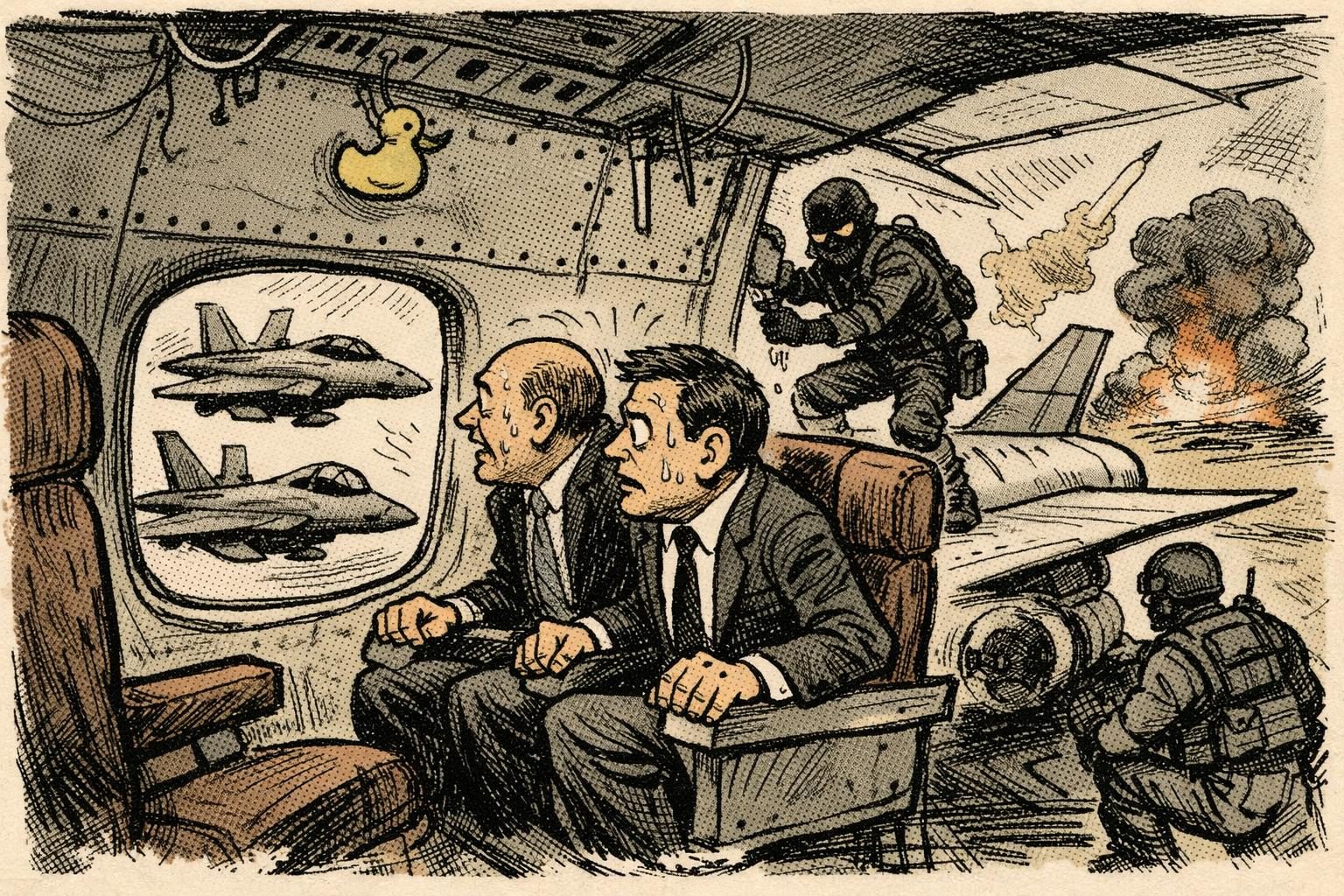
What was supposed to be a routine departure from last month’s NATO summit in Turkey apparently turned into a security improvisation that says as much about the current threat environment as it does about the government’s habit of wrapping sensitive decisions in opaque language. A senior U.S. official said Wednesday that Secretary of State Marco Rubio and Treasury Secretary Scott Bessent were sent home on what was effectively a decoy aircraft after an Iranian threat triggered heightened precautions. The president, according to the account, was shifted to a smaller military jet, while Rubio and Bessent remained on the other plane. That arrangement may sound like the plot mechanics of a low-budget espionage film, but the underlying premise is serious enough: when officials believe a threat is credible, they will do almost anything to complicate an attacker’s ability to track them. What the public gets afterward, though, is usually a vague summary and a fresh reminder that the government prefers to describe these episodes in the broadest possible terms.
The most immediate takeaway is not that anyone was in obvious danger on camera or that something catastrophic nearly happened. It is that the protection of senior officials can become a layered, shifting exercise in which even Cabinet-level travel may be rerouted or misrepresented for the sake of security. Presidential protection is built differently from the security envelope around a secretary of state or treasury secretary, and that difference appears to have mattered here. Still, the optics are odd, and the terminology is slippery. Calling one aircraft a decoy implies an intentional effort to mislead observers, but it also hints at how little else can be safely said when intelligence leads to protective measures. That is the paradox of modern security theater when it is not theater at all: the performance is designed to be invisible until the moment it suddenly becomes necessary. At that point, the public is asked to accept the result on faith and move along.
The episode also underscores how much depends on threat assessment, discretion, and institutional judgment that outsiders rarely get to inspect. Officials do not generally spell out when a threat is specific, when it is vague, or how much of the response is aimed at caution versus certainty. That secrecy can be reasonable, especially if the government believes disclosure would reveal tactics, compromise sources, or help adversaries refine future threats. But the same silence that protects operations can also create confusion once a story leaks or is eventually acknowledged. If one aircraft was used as a decoy, that suggests a deliberate effort to separate high-value targets and to keep any potential surveillance or attack planning from being straightforward. It also suggests that the risks were taken seriously enough to reorganize the travel plans of some of the administration’s most visible figures. When those details emerge only after the fact, the result is not just intrigue; it is a reminder that the public is being asked to trust a system it can only partially see.
There is also a political dimension that the White House can scarcely avoid. An administration that likes to project toughness, control, and constant readiness inevitably invites scrutiny when the underlying security picture looks improvised or improvised-looking, even if the operation itself was prudent and successful. A decoy plane is not a governing philosophy, and it is certainly not evidence of a solved problem. It is a workaround, and in the blunt language of crisis management, workarounds are what people use when the ideal option is unavailable. That does not make them wrong. It does, however, make them revealing. If top officials were separated by different aircraft because of an Iranian threat, the incident suggests both that adversaries are still being taken seriously and that the government’s response relies on a level of behind-the-scenes contingency planning the public rarely sees. For voters, that can cut two ways: it may inspire confidence that the security apparatus is alert, or it may deepen suspicion that the administration is selling certainty while operating in a fog of its own making. Either way, the image of two Cabinet secretaries riding home on one plane while the president shifted to another is unlikely to fade quickly, because it captures the strange blend of caution, secrecy, and improvisation that defines so much of high-level security in real time.
Comments
Threaded replies, voting, and reports are live. New users still go through screening on their first approved comments.
Log in to comment
No comments yet. Be the first reasonably on-topic person here.