
Senate confirms Todd Blanche, cementing Trump’s hold on DOJ
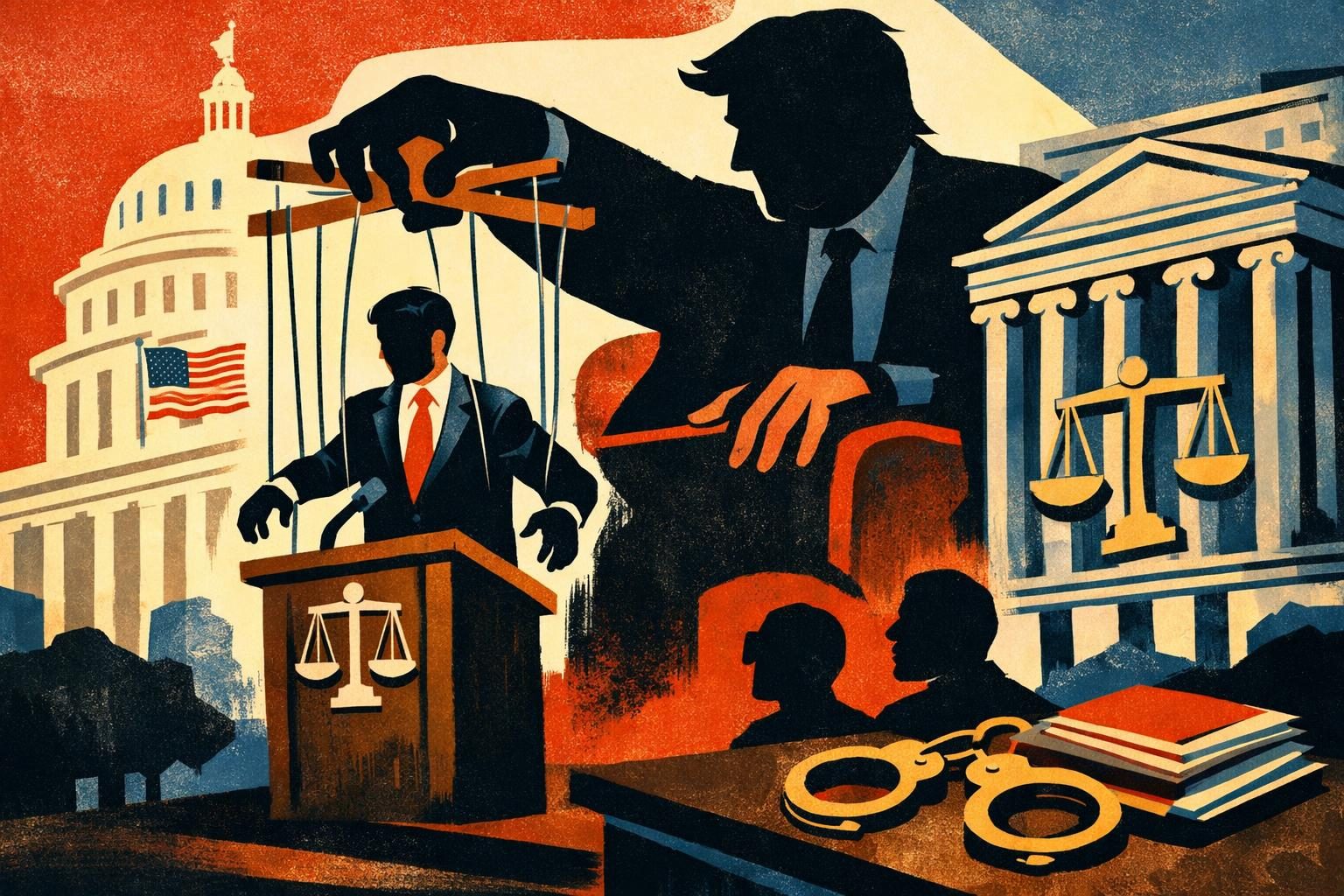
The Senate’s narrow confirmation of Todd Blanche as attorney general marked more than a routine personnel move. It gave President Donald Trump another deeply loyal ally at the top of the Justice Department and transformed months of warnings about the agency’s direction into a concrete governing fact. Blanche, who previously served as Trump’s personal lawyer, was confirmed in an overnight vote after a confirmation fight that had become a proxy battle over whether the department would remain independent or drift further into the president’s orbit. For critics, the outcome landed less like a surprise than a delayed proof of what they feared all along. The question was never simply whether Blanche would get the votes. It was whether the Senate would still insist that the Justice Department should answer to the law first and the president second.
That question now feels more urgent because the attorney general is not a symbolic post. The job sits at the center of federal law enforcement, oversees civil rights enforcement, and helps determine which investigations move forward, which stall, and which never gather momentum in the first place. In that sense, the confirmation has consequences far beyond the personality of one nominee. A Justice Department led by a presidential confidant is already being viewed through a different lens, especially after months in which Democrats and ethics watchdogs argued that the administration was normalizing the idea that DOJ exists to serve Trump’s political interests. The White House has not exactly tried to hide its preference for loyalists, but Blanche’s confirmation gives that preference institutional force. Even supporters who framed his nomination as a matter of trust and competence were forced to confront the optics of placing someone with such close personal ties to the president in a position that is supposed to demand distance. The narrow margin also matters, because it suggests there was no broad bipartisan confidence in the arrangement, only enough votes to push it through.
The record of the fight around Blanche’s nomination made the concerns harder to shrug off. Democratic senators warned throughout the process that the pick reflected a broader effort to bend justice toward the president’s will rather than preserve the department’s traditional independence. Their objections were not limited to abstract institutional theory. They pointed to Blanche’s previous assurances tied to a controversial settlement and related tax-audit protections, which became part of the argument that this was not ordinary personnel management. When a nominee has to issue written assurances about backing away from some of the ugliest aspects of a deal, the confirmation process starts to look less like a straightforward evaluation of qualifications and more like a negotiation over what parts of the department’s authority the White House is willing to respect. That is why the backlash never really depended on any one hearing or floor speech. The deeper criticism was that the administration has built a habit of testing the boundaries between political loyalty and public duty, then acting as though the boundary itself no longer matters. Blanche’s ascent does not create that suspicion from scratch, but it gives it a title, a seal, and a desk.
The practical consequences will unfold in the decisions the department makes next, not in the statement released after the roll call. Blanche now inherits a department where every major move will be scrutinized for signs of favoritism, selective enforcement, or caution around Trump-world controversies. Civil-rights cases, investigations of public corruption, litigation priorities, and internal personnel decisions will all be interpreted against the same backdrop: whether the attorney general is working for the public interest or for the president who chose him. That may be an unfair burden for any incoming official who insists he will act independently, but it is also the unavoidable result of the circumstances surrounding this confirmation. The administration has spent months signaling that loyalty is the real currency of advancement, and the Senate’s vote did not erase that perception. Instead, it gave it permanence. Even if Blanche tries to project independence, the burden of proof will now be on him to show that the department is not being run as a political weapon. That is an arduous standard, and one created not by speculation but by the nature of the appointment itself. For now, the confirmation stands as one more sign that the guardrails around federal law enforcement are being tested from the top down, with the people in charge asking everyone else to believe that nothing essential has changed.
Comments
Threaded replies, voting, and reports are live. New users still go through screening on their first approved comments.
Log in to comment
No comments yet. Be the first reasonably on-topic person here.