
Eight-man White House attack plot turns into a sweeping federal indictment
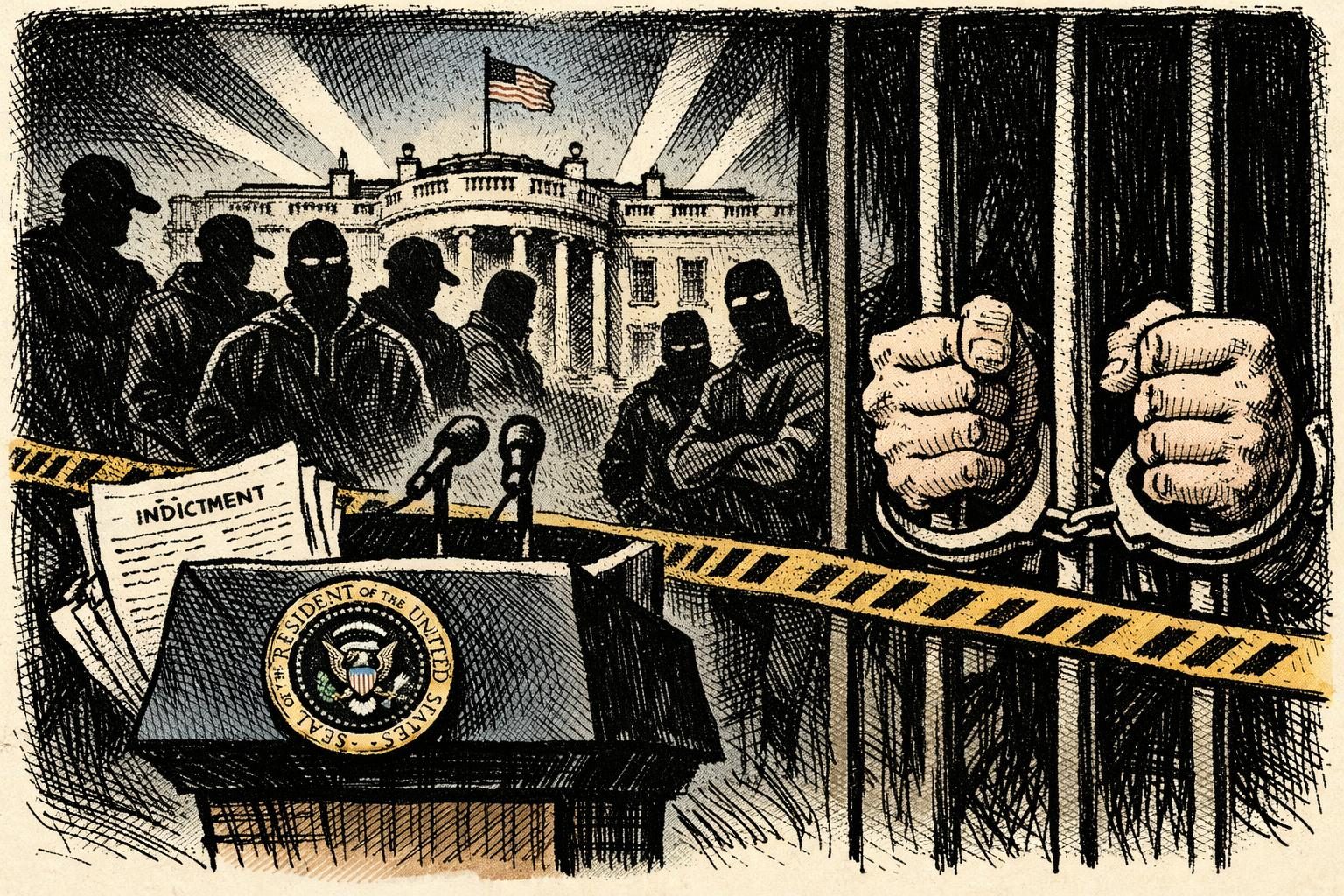
Federal prosecutors have turned what could have been dismissed as overheated online bravado into a sweeping national-security case. On August 14, 2026, a federal grand jury unsealed an indictment against eight men accused of conspiring in a plot to attack the UFC Freedom 250 event at the White House. The charging document goes well beyond vague threats or loose talk, alleging conspiracy to provide material support to terrorists and conspiracy to commit murder on federal government territory. That combination of charges signals that investigators and prosecutors are treating the matter as a serious domestic security threat, not as an isolated internet fantasy that drifted too far. Even if the plan never came close to execution, the government is making clear that it sees the alleged conduct as dangerous enough to warrant the full force of federal law.
The indictment matters not only because of the alleged target, but because of the setting. A White House event tied to a major combat-sports promotion would already have posed a complicated security challenge, and any claim that someone was preparing violence there raises the stakes immediately. Prosecutors did not limit the case to ordinary criminal conspiracy language; instead, they used terrorism-related charges that carry heavier political and legal significance. That suggests investigators believe the defendants’ conduct crossed the line from speech, anger, or online posturing into a coordinated effort that federal law treats as an assault on public safety and government authority. The details made public so far remain limited, and the indictment itself is not a finding of guilt, but the breadth of the accusations tells us the government believes the threat was credible enough to justify an aggressive response. In that sense, the case becomes part of a broader pattern in which federal authorities increasingly frame politically charged or ideologically driven violence plots as security emergencies rather than ordinary criminal matters.
The timing also gives the indictment added political weight. Officials now have a fresh example to point to when arguing for stricter domestic-violence enforcement, stronger intelligence-sharing, and expanded surveillance tools aimed at catching threats earlier. That is not a small matter, because the modern debate over domestic security often turns on whether authorities are moving quickly enough in the space between online radicalization and actual violence. Here, prosecutors appear to be saying that the gap can no longer be treated as harmless noise. The case also underscores how broad federal jurisdiction can become when an alleged plot involves a federal site and possible harm to government officials or others attending. In practical terms, that means the response is not just about one event or one indictment; it is about how the government wants to define the threshold at which suspicious talk becomes actionable terrorism. For supporters of more aggressive enforcement, the case will likely be cited as proof that early intervention is necessary. For critics, it may fuel renewed concern about how far federal authorities can stretch conspiracy law before conduct becomes actual violence.
At the same time, the indictment should be read with caution. Federal charges often describe the government’s theory of the case at its strongest, and the defendants are presumed innocent unless and until proven guilty in court. The public record so far does not establish how advanced the alleged plan was, what concrete steps were taken, or how close anyone came to carrying it out. Still, prosecutors have clearly decided that the alleged conduct was serious enough to warrant a grand jury presentation and a terrorism-framed filing. That alone makes the case notable, because it reflects an enforcement environment in which authorities are increasingly unwilling to wait for violence to occur before bringing the most serious charges available. Whether the evidence ultimately supports every allegation, the indictment itself sends a message: threats directed at federal targets, especially those tied to public events and government property, are being treated as a matter of homeland security. And in a political climate already obsessed with the line between speech, radicalization, and action, this case will almost certainly become part of the argument over how far the federal government should go to stop the next one before it starts.
Comments
Threaded replies, voting, and reports are live. New users still go through screening on their first approved comments.
Log in to comment
No comments yet. Be the first reasonably on-topic person here.