
Trump asks the Supreme Court to keep the ballroom wrecking ball moving
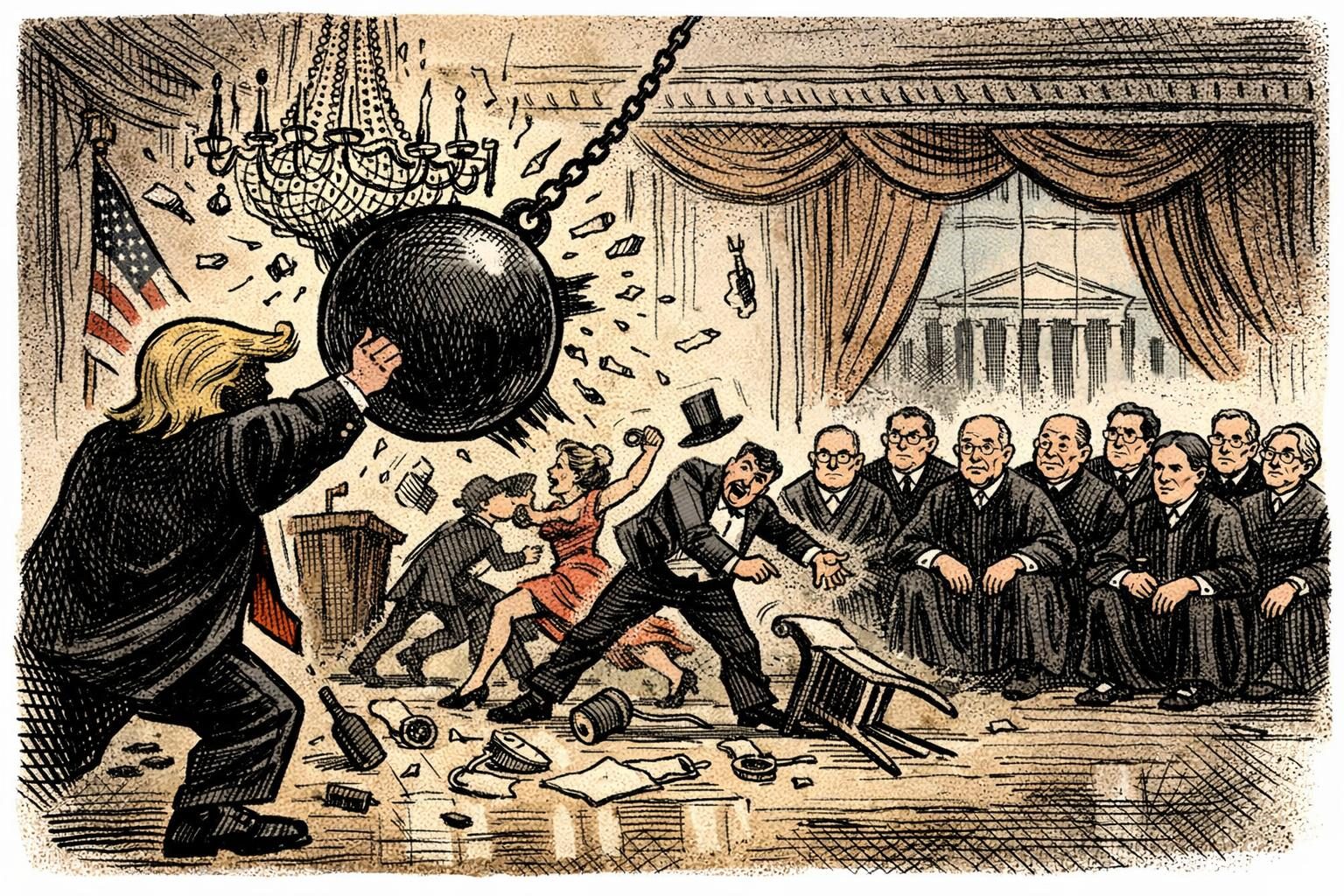
President Donald Trump’s administration went to the Supreme Court on Friday and asked the justices to let construction continue on the White House ballroom project while a legal fight over the work plays out on appeal. The request is a bid to pause a lower-court order that had stopped the project, at least for now, after judges said the administration could not simply push ahead on its own. At the center of the dispute is a plan for a 90,000-square-foot ballroom that would replace the East Wing, a scale of change that has turned what might have been sold as a renovation into a full-blown constitutional test. The administration is arguing, in effect, that the work should not be frozen while the appeal continues. Opponents say the White House is trying to do by executive force what should have gone through Congress in the first place.
The legal fight is not just about a room, or even about the aesthetics of the White House, which is why it has become such a sharp political flashpoint. A divided appeals panel already ruled that Trump could not unilaterally proceed with the project because Congress never approved it, a finding that strikes at the boundary between presidential control over the executive residence and Congress’s power over federal spending and major public projects. The administration’s Supreme Court filing puts that question directly in front of the justices: whether the president can treat a massive structural alteration to the nation’s most iconic residence as an internal matter, or whether the law requires something more than a signature and a hard hat. That is the kind of issue that tends to sound abstract until it becomes a giant hole where the East Wing used to stand. It also raises a practical question the court may have to answer quickly: should work continue while the appeal is being sorted out, or should the project remain halted until the legal dust settles?
The timing matters because the case is moving on a fast track, with the plaintiffs due to respond by Tuesday. That short turnaround suggests the justices may be asked to weigh in on an emergency basis, which could force them to decide whether the administration has shown enough urgency and legal justification to restart work immediately. If the court declines to intervene, the lower-court order would stay in place and construction would remain frozen while the appeal moves forward. If the justices do step in, the administration gets the immediate relief it wants, even though the larger question of whether the ballroom can lawfully go ahead would still be unresolved. For now, the matter sits in the familiar Trump-era pattern of trying to move fast, daring the courts to catch up, and treating delay itself as a political defeat. The result is that a project presented as a White House improvement has become a proxy battle over executive power, congressional authority, and how much unilateral force a president can bring to bear on federal property.
The politics are almost impossible to separate from the law, because the facts of the project already do much of the talking. Critics see the ballroom fight as a neat symbol of an administration that treats limits as obstacles to bulldoze rather than rules to obey, especially when the object in question is the White House itself. Supporters are likely to argue that presidents have broad authority over the residence and grounds, and that updating the complex is within the normal run of executive control. But that claim now has to contend with a court order, the absence of congressional approval, and the image of a wrecking ball moving through one of the most scrutinized buildings in the country. Even if the Supreme Court eventually sides with the administration, the case has already made the project look less like modernization and more like a constitutional brawl dressed up as construction. And if the justices refuse to pause the lower-court ruling, the White House will be left with an expensive reminder that there are still some places in American government where the president does not get to redecorate by fiat.
Comments
Threaded replies, voting, and reports are live. New users still go through screening on their first approved comments.
Log in to comment
No comments yet. Be the first reasonably on-topic person here.