
Judge clears Trump border-wall push on tribal land
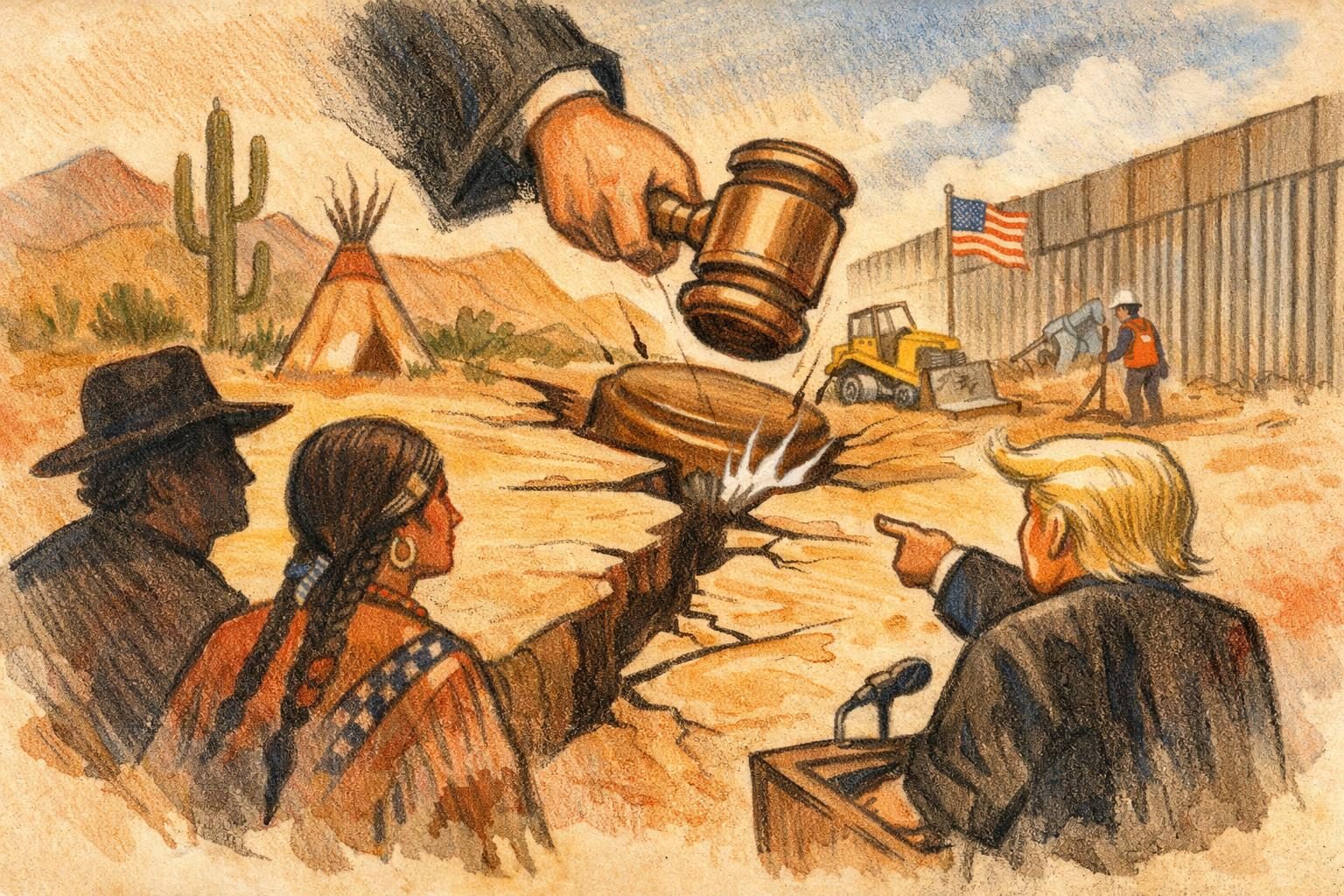
A federal judge on Friday declined to block the Trump administration from taking additional steps toward building 62 miles of border wall across part of the Tohono O’odham Nation’s reservation, a ruling that keeps the project alive for now even as tribal leaders continue to object. The decision does not settle the larger legal fight over the wall, nor does it erase the long-running clash between federal border policy and tribal sovereignty. But it does give the administration room to keep moving on a project that the tribe says was never consented to and should not be forced onto its land. For the White House, the ruling is another practical win in a border strategy built around speed, pressure, and confrontation. For the tribe, it is another reminder that legal resistance may slow the machinery without necessarily stopping it.
The Tohono O’odham Nation has long argued that wall construction through its reservation would divide ancestral territory, cut off access to culturally important areas, and deepen environmental damage in a region already under strain. The tribe’s opposition is rooted not only in politics but in basic questions of self-determination and stewardship over land that has been home to the O’odham people for generations. Leaders have warned for years that a barrier could further disrupt wildlife corridors, interfere with daily movement across the reservation, and intensify the sense that Native communities are being treated as an afterthought in a larger national argument. None of those concerns were resolved by Friday’s ruling. What the court did instead was refuse to halt the administration’s steps while the broader case continues, leaving the dispute to play out in a legal process that can move much more slowly than construction plans and political messaging.
The ruling fits a familiar pattern in the administration’s border agenda: announce a hardline measure, push through objections, and treat litigation as an inconvenience rather than a constraint. In that model, consent and consultation are not central obligations but obstacles to be managed on the way to a predetermined outcome. Supporters of the wall present the project as a necessary extension of border security, while critics say the administration is using the language of emergency to override local and tribal authority. The judge’s decision does not endorse every part of the government’s position, but it does allow the process to continue in a way that keeps the administration on offense. That matters politically, because every incremental move can be packaged as momentum, even when the underlying dispute remains unresolved and the costs fall on the people living nearest to the project.
For the tribe, the case is about more than a stretch of fencing or the placement of steel barriers. It is about whether the federal government will treat Indigenous land rights as something that can be pushed aside whenever border politics become urgent enough to justify it. The administration has repeatedly framed border wall construction as essential to security, but that framing does not answer the harder questions raised by the Tohono O’odham Nation: who gets to decide what happens on tribal land, what kinds of harms are acceptable in the name of enforcement, and whether federal power can simply override local objections when they become inconvenient. Friday’s ruling suggests those questions are still very much alive, even if the immediate legal result favors the government. The court did not decide that the tribe’s concerns are trivial; it decided, at least for now, not to stop the administration from proceeding.
That distinction is important because border debates often turn on symbolism as much as law. The administration gets to point to another legal opening and another sign that its agenda is still advancing. Tribal leaders, meanwhile, are left to continue fighting a project they say threatens sacred land and ignores the reality of life on the reservation. The gap between those two narratives is where the political fight is happening, and it is not likely to close anytime soon. If the administration keeps pressing ahead, the dispute will remain a test of how far Washington can go in the name of border security before the promises of consultation and respect for tribal sovereignty are emptied out. For now, the government has momentum, the tribe has its objections, and the land itself remains the place where those competing claims will collide.
Comments
Threaded replies, voting, and reports are live. New users still go through screening on their first approved comments.
Log in to comment
No comments yet. Be the first reasonably on-topic person here.