
California says internal texts show a politics-first immigration raid near Newsom’s event
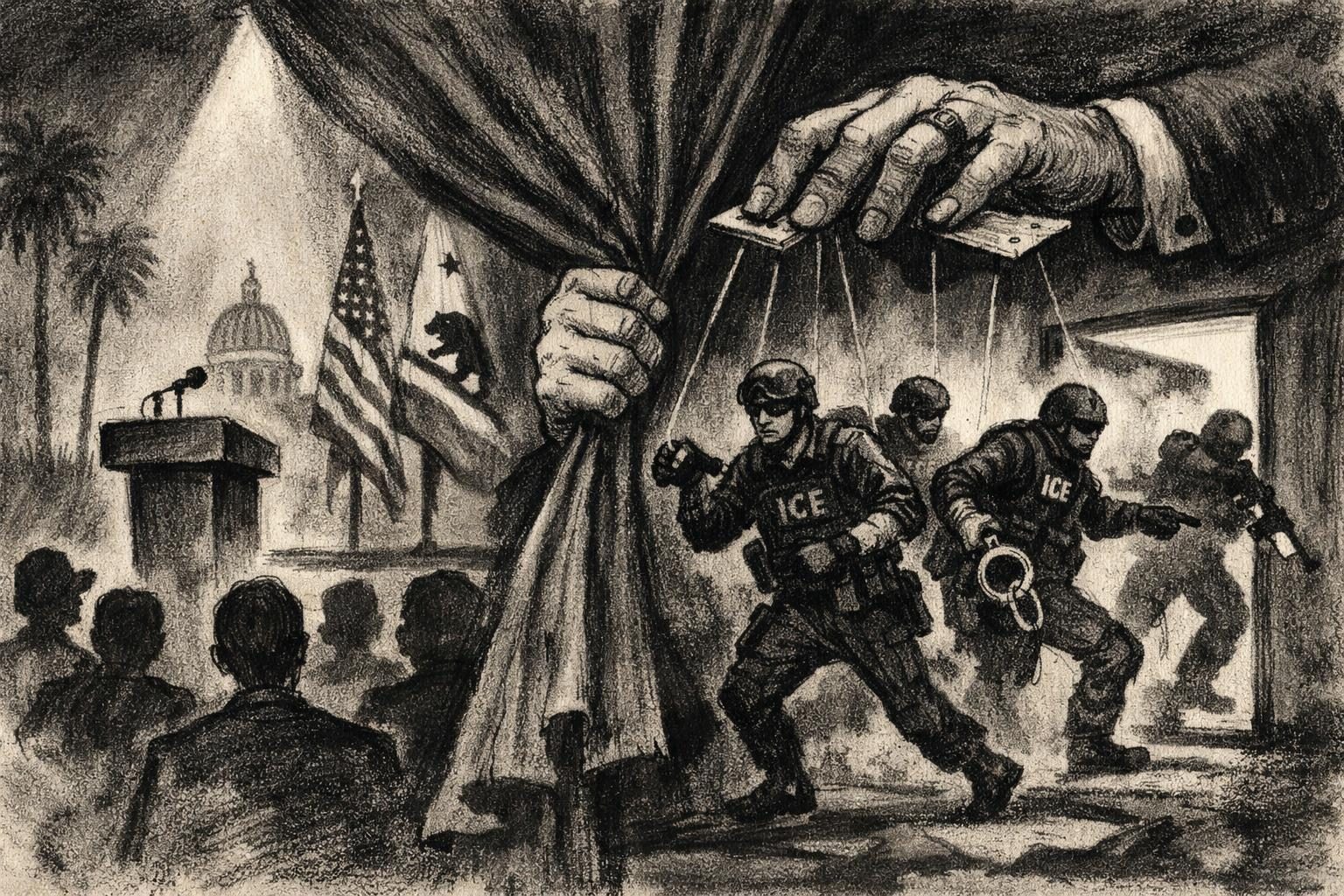
California on Friday put fresh court filings and internal messages at the center of its claim that federal immigration agents staged a politically charged operation near Governor Gavin Newsom’s August 14, 2025 event, not a routine enforcement action. The state says the newly released material shows Homeland Security Investigations personnel talking about the raid in terms that look far more like political theater than ordinary police work. According to California, the texts and exhibits suggest agents were pulled away from other duties to make the operation happen at the right time and in the right place. That matters because the difference between a legitimate enforcement action and a political provocation is enormous, both legally and institutionally. If the documents are accurately read, they would imply that immigration powers were used not simply to enforce the law, but to shape the atmosphere around a public event featuring one of the administration’s most prominent critics.
The state’s accusation is more than a dispute about tone. It goes directly to whether the federal government was using immigration enforcement in a neutral way or whether the operation was calibrated to send a message to a governor who had become a visible political opponent. California has been arguing in court that the administration treated immigration operations as a weapon, and the newly surfaced materials are meant to give that argument documentary support. If internal messages really describe the raid as a political stunt, that would undercut the standard federal explanation that such actions are driven by public safety, investigative need, or ordinary operational planning. The state is clearly betting that the written record will matter more than denials or broad assurances after the fact. In political and legal fights like this, internal communication can be more damaging than any press statement because it can reveal intent, coordination, and the reasons behind decisions that would otherwise be described in neutral terms.
The timing of the release also gives the documents added force. California chose to spotlight the material while continuing to press its larger case that immigration enforcement was being used to target a governor who had emerged as one of the administration’s loudest Democratic critics. That broader context does not prove the raid was politically motivated, but it does explain why the state is framing the case so aggressively. The message is that this was not a random enforcement event that happened to land near a political gathering; instead, the gathering may have been the point. If that claim survives scrutiny, it would suggest a troubling shift in how federal power can be deployed. Government agencies are expected to enforce the law evenly and without regard to political convenience, and the appearance of the opposite is enough to raise alarms, even before a court makes any final finding.
The practical fallout could be serious even if the administration insists the allegations are exaggerated or politically motivated themselves. Law-enforcement agencies depend on public trust, and that trust gets weaker when communities suspect that raids are timed to embarrass rivals or influence political narratives. Immigration enforcement is especially sensitive because many people already view contact with authorities as risky, unpredictable, or potentially retaliatory. A perception that agents were acting on political cues rather than operational necessity can spread far beyond one event or one governor. It can affect how communities respond the next time officers show up, how witnesses cooperate, and how courts judge the credibility of government explanations. California’s public release appears designed to force those issues into daylight and prevent the administration from dismissing the controversy as a mere partisan squabble.
There is still a difference between an accusation supported by documents and a final legal conclusion, and that distinction matters. The state’s filing and message dump may be powerful evidence, but they will still be tested against competing explanations, context, and whatever the administration says in response. Even so, the fact that the discussion is now grounded in texts and court exhibits changes the stakes considerably. This is no longer just a political argument about motives; it is a fight over what the documentary record shows and whether federal officials used immigration enforcement to shadow a governor’s appearance. If the internal record does what California says it does, the episode will linger as more than one controversial raid. It will stand as another example of how quickly law enforcement can lose credibility when the line between public duty and politics starts to blur.
Comments
Threaded replies, voting, and reports are live. New users still go through screening on their first approved comments.
Log in to comment
No comments yet. Be the first reasonably on-topic person here.