
Trade court keeps ripping holes in tariff power
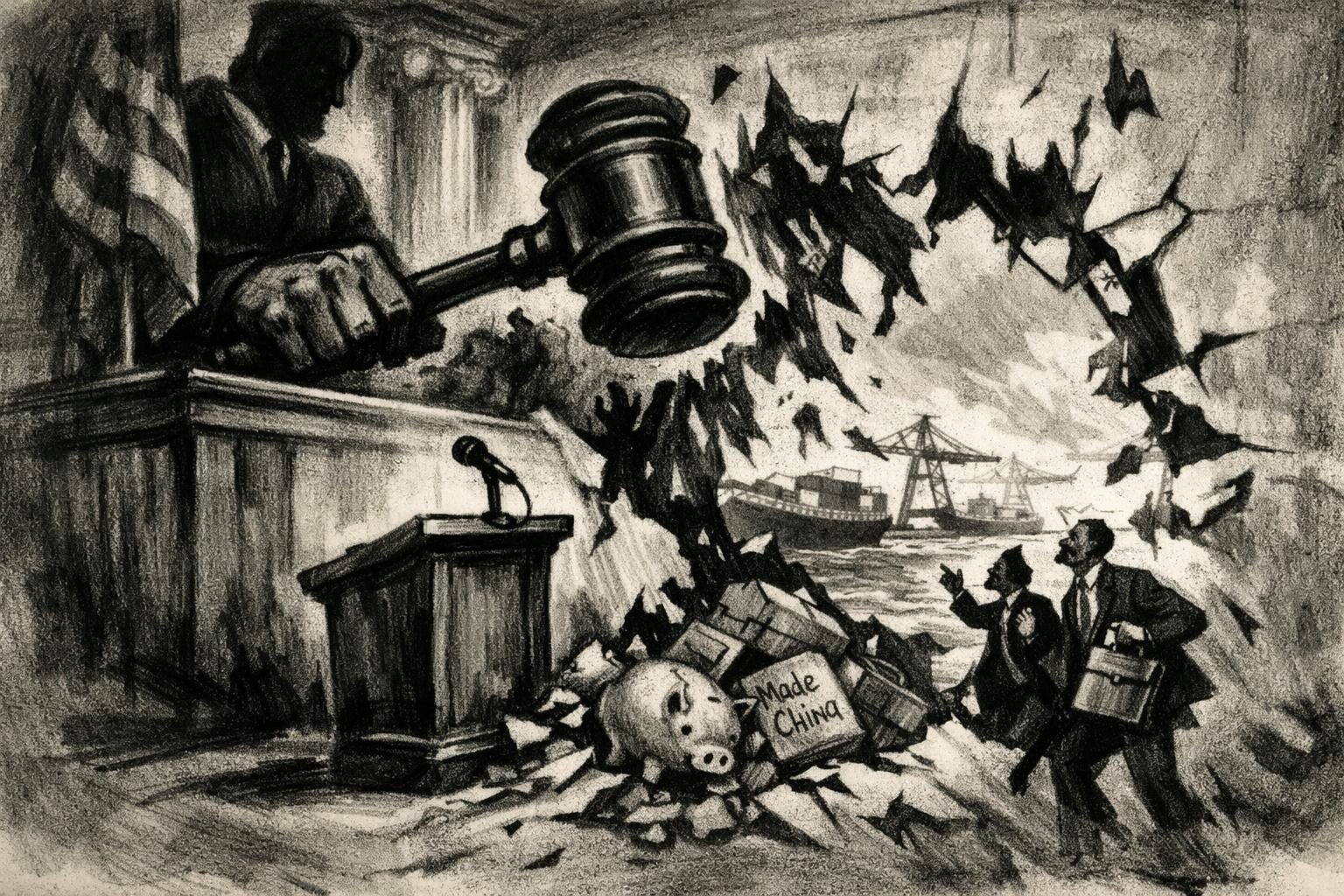
A federal trade court has put a fresh, very public dent in the government’s tariff machinery, and the appeal now moving through the Federal Circuit shows just how much is at stake. The Court of International Trade entered judgment against the government in litigation challenging certain tariffs and then enjoined the imposition of those tariffs as to specific plaintiffs. That is not a theoretical warning shot or a procedural footnote. It is an actual judicial order limiting how the executive branch can use tariff authority against identifiable parties, and it lands squarely in the middle of a larger battle over the scope of presidential trade power. The government’s response, including a motion to consolidate appeals and seek a stay, makes clear that the administration views the ruling as more than an annoyance. It is treating the case as a live threat to a central tool of economic and political leverage.
That matters because tariffs are not just a line item in a trade-policy debate. They function like taxes, with direct consequences for prices, inventory decisions, supplier contracts, and long-term business planning. Once tariffs are in place, companies have to absorb the cost, pass it along, or redesign supply chains around a policy that can shift with little warning. When a court starts cutting back the legal basis for those duties, the effect goes beyond the narrow plaintiffs who won the case. It can weaken the administration’s leverage in negotiations, complicate assumptions already baked into imports and manufacturing schedules, and create uncertainty about how far tariff authority can really stretch. In a political environment where tariffs have often been used as a catch-all instrument, the possibility of judicial limits is not just legally meaningful. It is economically disruptive in a way that both supporters and critics can understand.
The broader institutional question is whether the executive branch can continue using tariff authority expansively while expecting the courts to step aside until after the damage is done. That is the kind of assumption this order threatens. The trade court’s injunction suggests at least some judges are willing to examine the edges of presidential trade power instead of treating them as beyond serious review. For an administration accustomed to acting first and defending later, that presents a practical problem as much as a doctrinal one. A tariff regime can be announced quickly, but unraveling it in court creates uncertainty that businesses have to manage in real time. Even if the government ultimately prevails on appeal, the interim period can still reshape behavior, raise compliance costs, and undermine the certainty that trade policy is supposed to provide. The fact that the government is pressing for consolidation and a stay tells you it understands the risk of letting the injunction stand while the appellate fight drags on.
Still, the case should not be read as proof that presidential trade authority has collapsed. The government will argue, as it likely must, that the president retains broad legal tools to address trade disputes and protect national economic interests. It will also contend that the dispute is part of the normal process of judicial review, not some extraordinary rebuke. Those claims are not frivolous, and the final shape of the legal fight is not yet fixed. But the practical reality is that the trade court’s order has already inserted friction into a policy area that depends on speed, predictability, and bargaining power. That is why this case has become one of the most consequential checks on executive trade power now in motion. The legal questions are technical, but the stakes are concrete: who pays, who plans, and how much room the White House really has to use tariffs as a general-purpose weapon before a court says enough.
Comments
Threaded replies, voting, and reports are live. New users still go through screening on their first approved comments.
Log in to comment
No comments yet. Be the first reasonably on-topic person here.