
Justice Department keeps landing large fraud and kickback recoveries, underscoring how much taxpayer money is still bleeding out
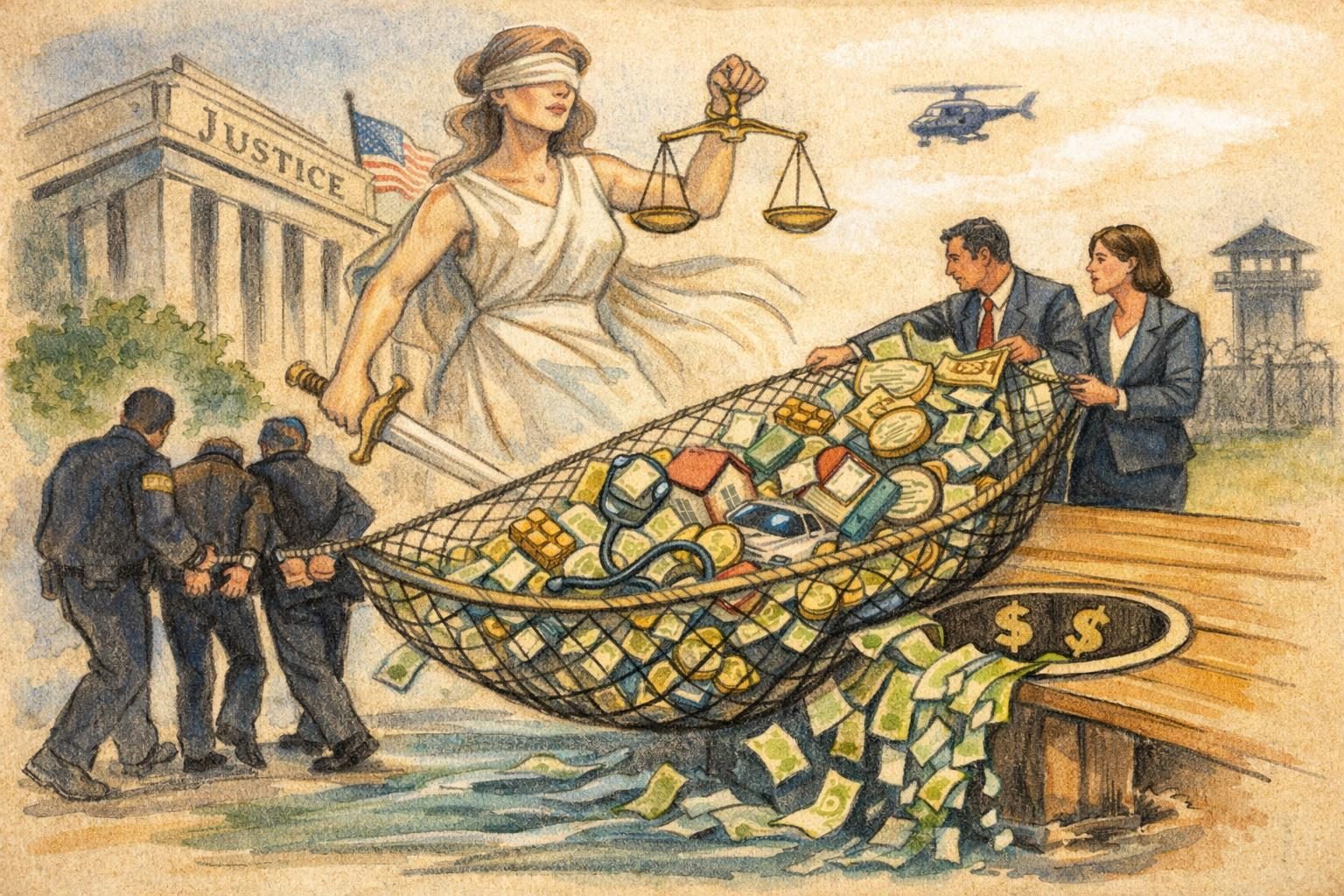
The Justice Department has spent the last few days piling up another set of fraud recoveries and criminal penalties, and the pattern is hard to miss: the government is still finding large amounts of money that should never have left taxpayers’ hands in the first place. The newest actions touch several different corners of the enforcement world, from health care billing and customs-duty schemes to the more intimate betrayal of a lawyer accused of stealing settlement money from clients. In one matter, a company and its chief executive agreed to pay $7.3 million to resolve allegations tied to evaded duties and related false claims. In another, a Texas laboratory, its former chief executive, and a Florida businessman agreed to pay a combined $36.4 million over allegations that federal programs were improperly billed. Separately, a former attorney was sentenced to more than three years in federal prison after stealing settlement funds that belonged to clients. None of this is glamorous, and none of it is rare enough to be shocking. But together the cases show a federal enforcement system still chasing very ordinary, very expensive forms of theft.
That matters because fraud is often easiest to see when it is translated into a dollar figure, and these figures are not small. Civil settlements can recoup some losses, but they also tend to mark the end of a longer trail of false claims, kickbacks, misleading paperwork, and hidden arrangements that likely went on for some time before regulators or investigators caught up. The health care allegations are especially troubling because they do not just drain public programs; they can also distort the way patients are steered, tested, treated, and billed. Kickback-driven conduct is not merely a bookkeeping problem. It can push decisions away from medical judgment and toward whatever arrangement produces the next payment. Customs-duty evasion, meanwhile, is another reminder that fraud against the government does not always look like a headline-grabbing embezzlement scheme. Sometimes it is a deliberate effort to shave off obligations owed to the public, repeated through the dull machinery of import records and compliance failures until someone finally looks closely enough to see the pattern.
The legal actions also underline how much of the anti-fraud system depends on persistence rather than spectacle. These are the kinds of cases that usually emerge from a mix of whistleblowers, auditors, investigators, and civil lawyers willing to spend a long time tracing paper trails that most people would never notice. That is why the government’s recovery totals, while useful, are only part of the story. A settlement means money coming back, but it does not mean the damage was limited to the amount ultimately paid. In health care fraud especially, the harms can ripple outward well beyond the final number on a press release. False billing can waste program dollars, create administrative drag, and reward bad actors who learn that the system is easier to game than to serve. When a lawyer is accused of stealing from clients, the harm is more direct and personal. People who thought their case had ended with a settlement can find out that the money was quietly diverted before it ever reached them, which is one of the most corrosive kinds of betrayal in the legal system.
Politically, the newest recoveries cut against the idea that public corruption and white-collar abuse are always driven by a few spectacular villains. More often, the system is bled by smaller, recurring schemes that can survive for years if no one pushes hard enough. That is inconvenient for any administration that wants to sell competence as a general virtue, because the record here suggests the government has to keep chasing the same category of misconduct over and over again. The fact that prosecutors and civil enforcers are still landing meaningful settlements and prison terms is real news, and it deserves credit. But it is also a reminder of what those enforcement wins represent: not the end of fraud, but the clean-up after somebody already got away with too much. Taxpayers, patients, and clients do not get their trust back just because a settlement check gets written or a sentence is imposed. They mostly get proof that the theft happened, proof that the government could still prove it, and a partial recovery after the fact. That is better than nothing, but it is not exactly a comforting portrait of how much leakage the public sector continues to absorb.
Comments
Threaded replies, voting, and reports are live. New users still go through screening on their first approved comments.
Log in to comment
No comments yet. Be the first reasonably on-topic person here.