
Justice Department’s new religious-liberty guidance is already handing critics a fresh target
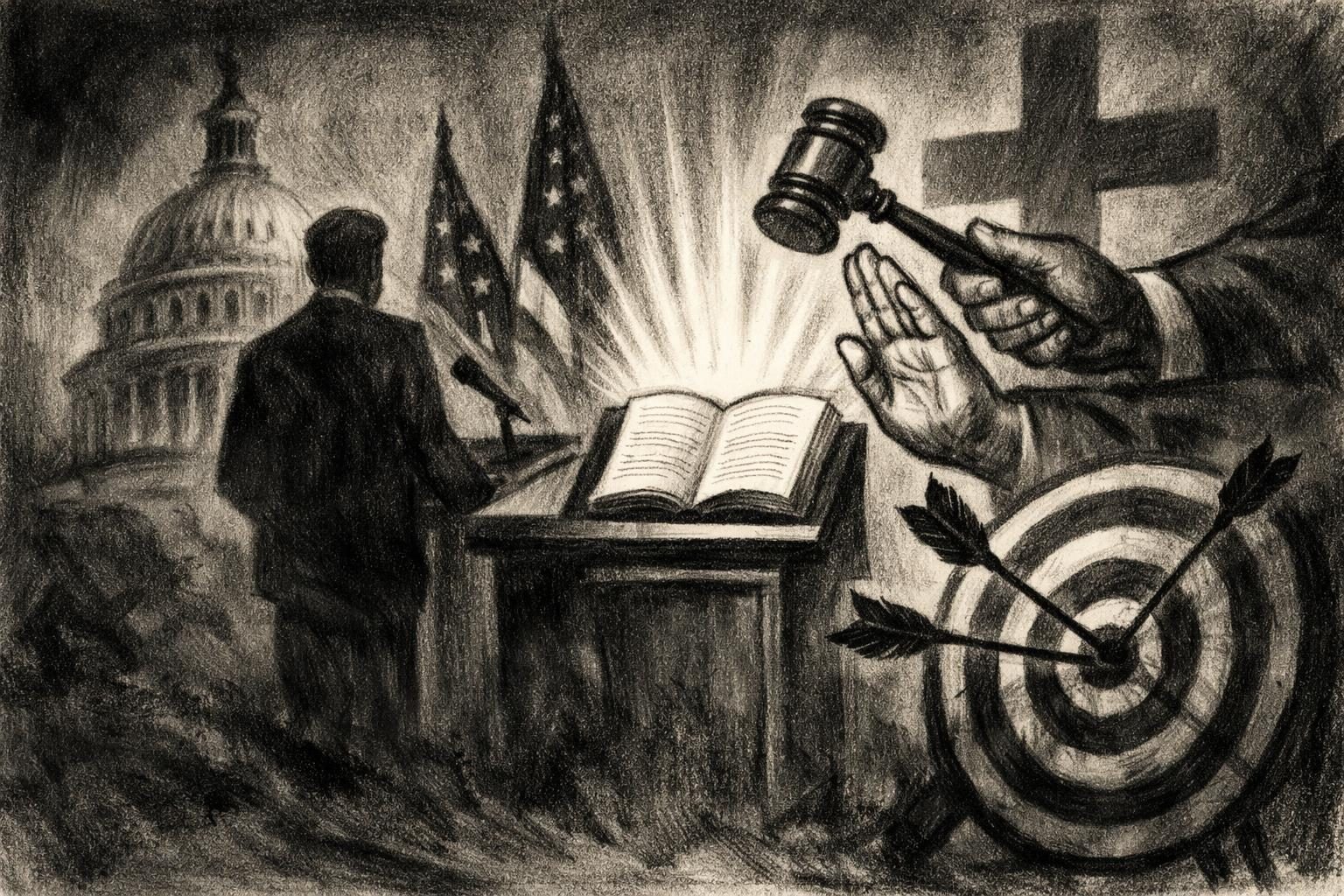
The Justice Department on August 14 rolled out updated guidance on federal religious-liberty protections, a move that arrives with the usual official language about constitutional safeguards and equal treatment, but also with a political smell that is hard to ignore. The memo is not a new law, and it does not rewrite the Constitution, but internal guidance from the department can still matter a great deal in practice. It can shape how agency lawyers interpret complaints, how investigators decide which issues deserve attention, and how federal officials talk about conflicts involving faith and public authority. That means a document framed as housekeeping can still end up influencing the real-world boundaries of enforcement. And in a moment when the administration has been eager to use federal power to police culture-war priorities, a religious-liberty memo is not likely to be read as neutral by anyone paying close attention.
The timing is part of what makes the guidance so easy to question. Religious liberty is one of the most flexible phrases in American political life, able to sound broadly inclusive in one context and sharply exclusionary in another. In theory, the concept protects pluralism and prevents the state from trampling sincere belief. In practice, administrations can use it to elevate certain claims while dismissing others, especially when the line between accommodation and favoritism gets blurred. Critics are already likely to see this guidance as another example of civil-rights language being pressed into service for a selective agenda, particularly one that gives conservative religious claims more room than other competing rights. That suspicion does not require a conspiracy theory; it follows naturally from the fact that these memos are often written broadly enough to leave room for uneven implementation. When the federal government starts talking about liberty in a highly politicized environment, people tend to assume the words are doing more than one job.
What makes the issue more combustible is where these policy choices can land on the ground. Religious-liberty claims do not stay in the abstract for long. They show up in schools, federal contracting decisions, workplace disputes, benefits administration, public-facing services, and other places where the government is expected to balance belief against access and nondiscrimination rules. In those settings, a guidance memo can influence whether officials treat a complaint as a legitimate accommodation request or as a vehicle for exclusion dressed up in moral language. It can also affect how aggressively agencies defend their own policies if they are challenged in court. Supporters of the update may argue that the department is simply reminding federal employees to respect constitutional protections that are sometimes overlooked. But the skeptics have a fair point too: once the government begins signaling that certain religious objections deserve special deference, every institution touched by the memo will start asking who gets protected, who gets exempted, and who gets left to absorb the costs.
The wider political effect may be even larger than the operational one. The administration appears to want to present itself as a champion of faith while continuing to run a federal bureaucracy that critics say is comfortable treating civil rights as a matter of convenience rather than principle. That combination invites the kind of backlash that policy memos rarely avoid once they are interpreted through a partisan lens. If the guidance is narrowly applied and genuinely meant to reduce conflict, it may still generate court fights over what counts as legitimate accommodation and what crosses into discrimination. If it is applied aggressively, it could deepen the sense that the department is using rights language as camouflage for a preferred ideological outcome. Either way, the memo is likely to provoke more than quiet compliance. It gives opponents a fresh target, gives supporters a new talking point, and leaves the public to guess whether the government is clarifying religious liberty or trying to redefine it for its own purposes.
Comments
Threaded replies, voting, and reports are live. New users still go through screening on their first approved comments.
Log in to comment
No comments yet. Be the first reasonably on-topic person here.