
Justice Department expands the cartel war with fresh charges and sanctions
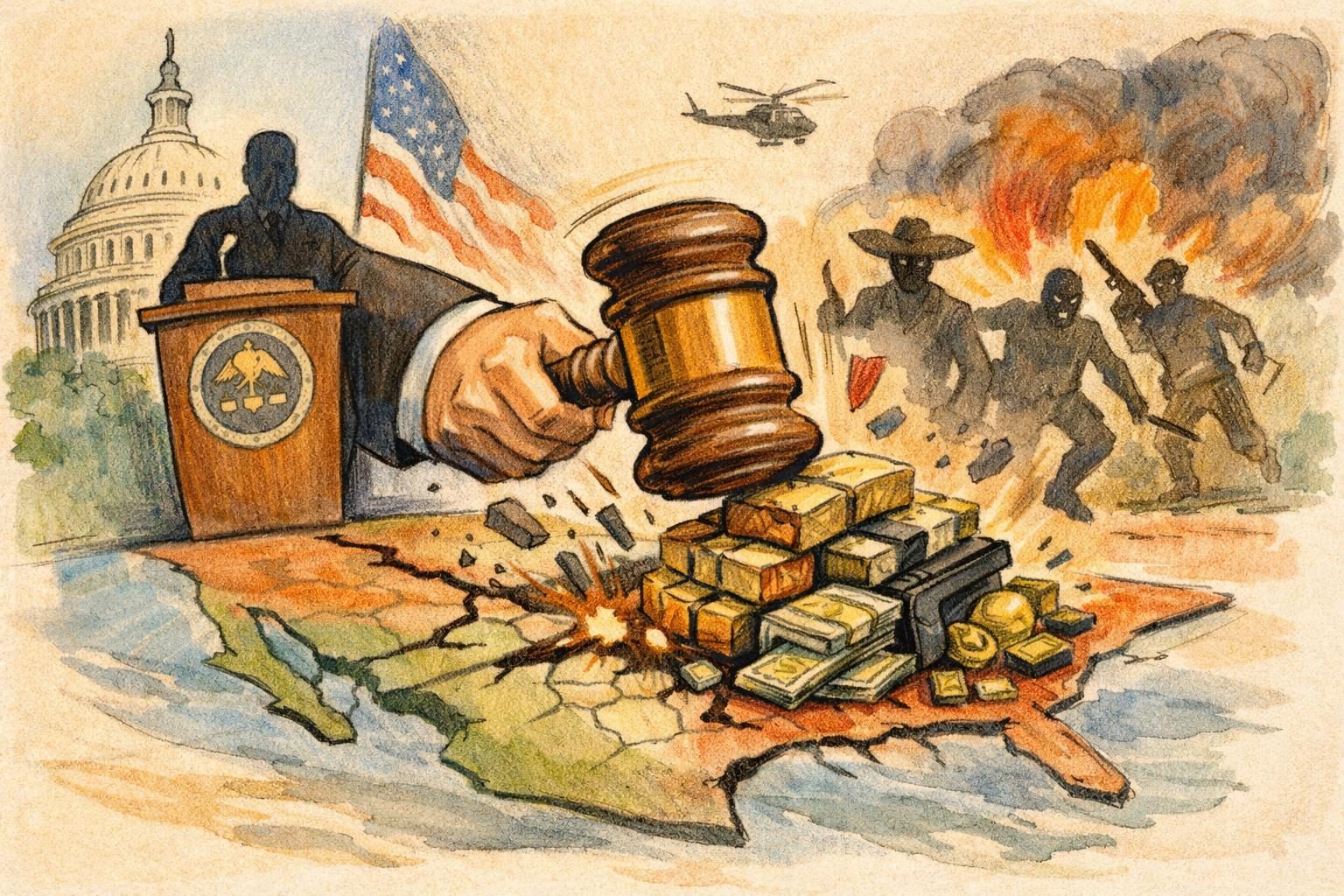
The Justice Department said on August 14 that it had brought new criminal charges against five senior figures tied to the United Cartels, while also moving to impose sanctions aimed at the group’s network and finances. The announcement is part of a broader federal push to present cartel organizations not just as drug-trafficking conspiracies, but as national-security threats with cross-border reach. In practical terms, the move is designed to do two things at once: increase the legal risk for people the government says sit near the top of the organization, and make it harder for the group to operate through money, intermediaries, and intimidation. Federal officials framed the action as a coordinated effort to strip away the cartel’s leadership and disrupt the machinery that supports it. That is a familiar law-enforcement objective, but the language around this case suggests the administration is trying to make the crackdown feel broader, sharper, and more strategically important than a routine narcotics prosecution.
The charges and sanctions are notable not only because they target senior leaders, but because they sit inside a larger pattern of escalation. The administration has increasingly described cartel networks in terms usually reserved for transnational threats, and this case fits that approach. By pairing criminal indictments with financial penalties, the government is signaling that it wants to attack both the people and the infrastructure behind the organization. That matters because cartels do not depend on a single chain of command in the way a formal corporation might, and enforcement agencies often struggle to translate a headline-grabbing arrest or indictment into a lasting disruption. Financial sanctions can freeze assets, complicate transactions, and discourage cooperation from banks, businesses, or facilitators who fear secondary exposure. Criminal charges, meanwhile, create the possibility of arrests, extradition fights, and long-running cases that can pressure defendants and their allies even before anyone reaches a courtroom.
The action also highlights how much the federal government has broadened its public framing of the border and cartel issue. Hardline rhetoric about immigration and border security has often treated these questions as part of the same political fight, but the operational reality is messier. Prosecuting a cartel network tied to cross-border activity requires intelligence gathering, coordination across agencies, and often cooperation with foreign counterparts whose priorities do not always line up neatly with Washington’s. Even when officials make strong public claims, it can take months or years to determine how much practical damage a given set of charges and sanctions actually does. That is why this announcement should be read less as a one-day law-enforcement event and more as an attempt to shape the environment around the case. The government is not just saying it wants arrests; it is saying it wants to redefine the cartels as targets for a sustained national-security campaign.
There is also a political layer to the timing and presentation of the move. The administration benefits from showing visible action against a group it says represents a violent and destabilizing threat, especially when public debate over borders, fentanyl, and organized crime remains intense. But the more aggressively Washington talks about cartels in foreign-terror terms, the more it raises expectations for results that are hard to measure and even harder to sustain. If the goal is to dismantle leadership, enforcement officials will need to show more than a press release and a sanctions list; they will need to demonstrate that the group’s operations, finances, and replacement structures were meaningfully damaged. That is a high bar, particularly with organizations that have spent years adapting to pressure from Mexican authorities, U.S. prosecutors, and international financial scrutiny. For now, the most concrete effect is legal exposure for the named defendants and a stronger message to anyone who might still be doing business with them.
Taken together, the charges and sanctions are best understood as part of an escalation strategy rather than a standalone case. The Justice Department is trying to widen the consequences for cartel-linked actors beyond the traditional criminal courtroom, and it is doing so in a way that blurs the line between law enforcement and national-security policy. Whether that approach proves effective will depend on what follows: arrests, asset seizures, cooperation from allies, and evidence that the organization’s ability to move money and direct violence has actually been degraded. For now, the administration has made its intent clear. It wants to make the United Cartels more expensive, more vulnerable, and more isolated, while also signaling that the government is prepared to keep expanding the tools it uses against them. That may not end the cartel problem, but it does show that the federal response is becoming more aggressive, more coordinated, and more openly political in its framing.
Comments
Threaded replies, voting, and reports are live. New users still go through screening on their first approved comments.
Log in to comment
No comments yet. Be the first reasonably on-topic person here.