
Federal court keeps swatting down the administration’s election-control fantasy
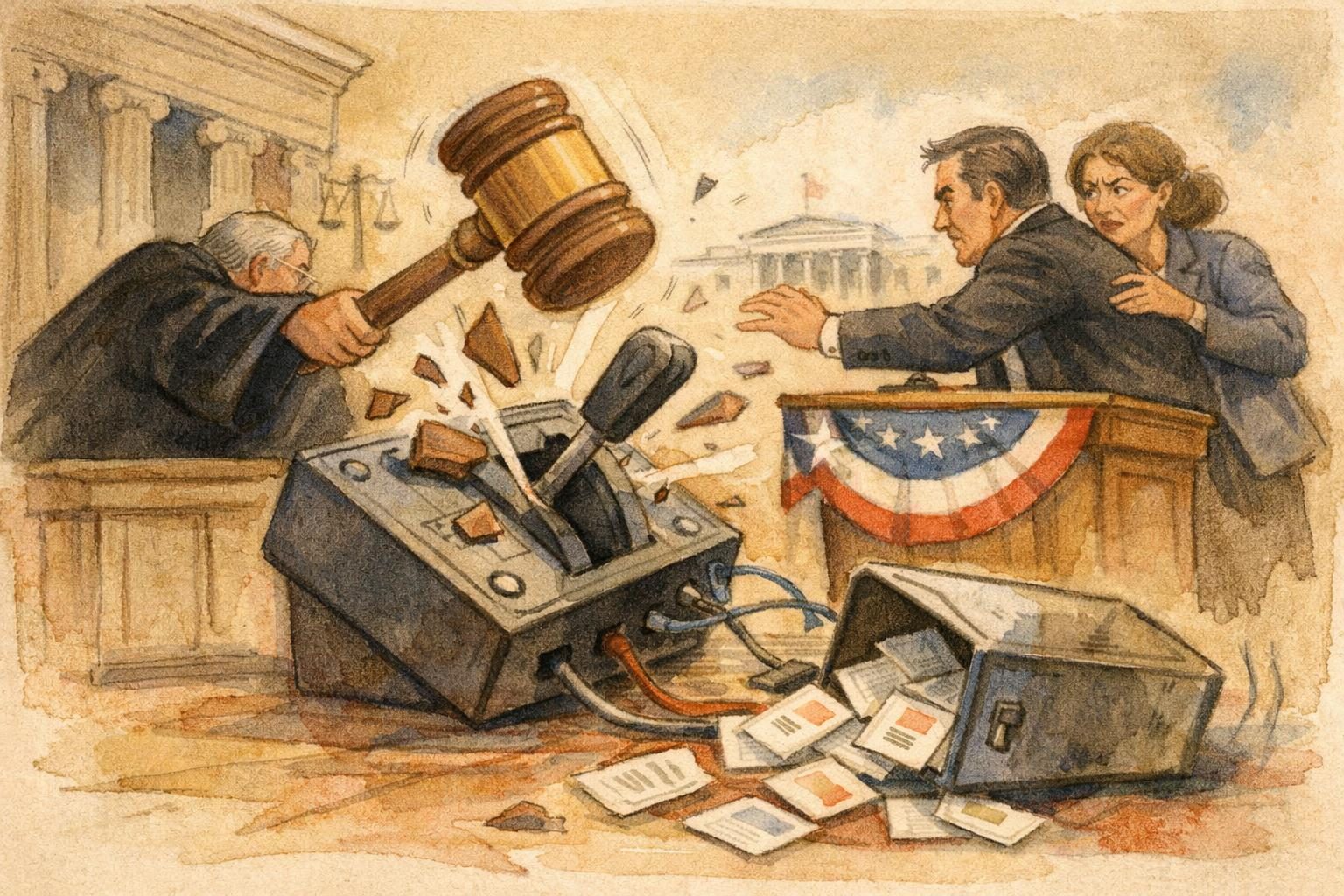
A federal court handed the administration another bruising defeat on August 14, again cutting against its effort to push federal power deeper into the machinery of election administration. The ruling came in a multistate case brought by state attorneys general who argued that the White House had tried to use executive authority to force its way into matters that traditionally belong to the states, including voter-roll maintenance and the handling of mail ballots. However the court phrases the order in its final form, the practical message is already plain enough: the administration’s theory of how much control it can exert over elections is running into serious constitutional and statutory resistance. This was not a narrow procedural squabble over paperwork or deadline tweaks. It was a direct fight over who gets to decide how elections are run in the first place, and the court once again signaled that the answer is not “the president, by himself.”
That matters because election administration is one of those areas where the balance between federal and state authority is supposed to be stable, boring, and predictable. States generally run the actual mechanics of voting, while Congress can set rules in the limited ways the Constitution allows. What the administration appears to have wanted, according to the states challenging it, was something much broader: a way to dictate how states maintain voter records and process mail ballots by using the leverage of federal power rather than a statute passed by Congress. That is why state officials have described the dispute as a structural one, not just a disagreement over anti-fraud policy. If the federal executive branch can simply declare new election controls and dare the states to comply, then the line between lawful election oversight and partisan command-and-control starts to vanish. The court’s latest ruling is another reminder that judges are not buying the idea that the White House can improvise a national election regime out of thin air.
The political stakes are obvious even if the legal language is dense. Every time a president claims unilateral authority to reshape election rules, it creates a model that the next president can also use, which is exactly why governors, secretaries of state, election administrators, and voting-rights advocates are treating these cases as far more than courtroom theater. The administration may present its moves as common-sense anti-fraud housekeeping, but the critics see something more troubling: a federal thumb on the scale that could be used to make voting harder, less uniform, or more vulnerable to partisan manipulation depending on who is in charge. That concern is not abstract. Election systems work because the rules are known in advance and because state and local officials can administer them without political pressure from Washington overriding their responsibilities. When courts keep pushing back, they are not only rejecting one administration’s preferred policy. They are also preserving the basic premise that election rules should not be rewritten by executive fiat every time a president gets impatient with the law.
There is still some uncertainty about the immediate operational impact of the ruling, and that caution matters. The exact reach of the order will depend on its wording, any associated injunction, and whether the administration quickly seeks further review or an emergency appeal. But the broader legal picture is hard to miss. The multistate coalition’s position is that the federal government does not get to draft its own voter lists and then pressure the states into treating those lists as binding, especially not when the underlying authority is shaky. The states are not arguing that the federal government has no role at all in elections; they are arguing that the role has limits, and those limits are built into the constitutional system. That is why these fights keep landing in court, and why the court’s repeated resistance has become a recurring problem for the administration rather than a one-off embarrassment. The latest setback suggests that the White House is still trying to push past those limits without the statutory backbone needed to support the effort.
For now, the ruling leaves the administration with another reminder that election control is not something it can simply seize because it wants it. The court’s decision adds to a pattern of losses that make the legal theory behind the administration’s approach look increasingly shaky, even if officials continue to frame it as a good-government initiative. State attorneys general, elected election officers, and advocates who monitor voting access will almost certainly keep pressing the point that the federal government cannot centralize election administration through pressure, improvisation, or executive swagger. And unless a higher court changes the picture, this ruling stands as another boundary line drawn around presidential power. The message is less subtle than the legal jargon might suggest: election law still belongs to the system Congress built and the states administer, not to a White House trying to govern by assumption.
Comments
Threaded replies, voting, and reports are live. New users still go through screening on their first approved comments.
Log in to comment
No comments yet. Be the first reasonably on-topic person here.