
The administration keeps defending masked federal agents in court
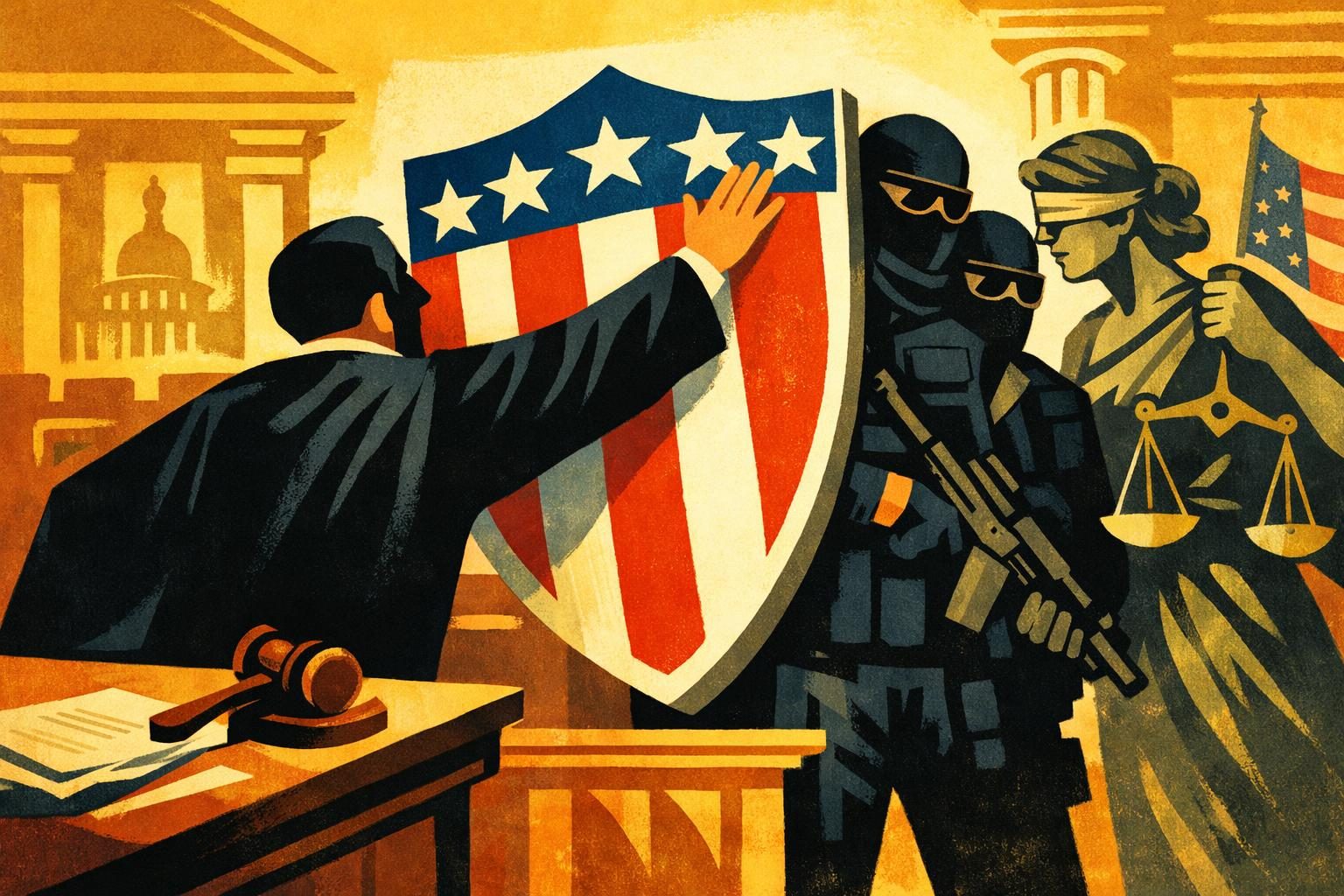
The Trump administration is once again in court defending the right of federal law-enforcement officers to cover their faces and keep their names out of view while they operate in California, sharpening a dispute that has moved far beyond a simple argument over uniforms. The fight centers on state rules designed to make federal agents easier for the public to identify, including limits tied to mask use and visible identification during enforcement actions. The Justice Department is arguing that California cannot impose those requirements on federal officers, particularly when the administration says masks protect agents from harassment, retaliation, and doxxing. California, in turn, says residents have a basic right to know whether the people confronting them are real officers and not impostors taking advantage of a tense political moment. What looks on paper like a regulatory disagreement is really a broader contest over who gets to define accountability when federal power appears in public.
The administration’s legal posture reflects a familiar claim: that states may not dictate the details of federal policing when federal officials say operational safety is at stake. That argument is not limited to one set of officers or one set of encounters, but it has become especially visible in the context of immigration enforcement, where masked agents and unmarked vehicles have drawn intense criticism from activists, local officials, and civil-liberties groups. Supporters of the federal position say that agents have been singled out online and threatened after public-facing operations, and they describe face coverings as a practical response to a hostile environment. Critics counter that anonymity does not solve a safety problem so much as create one, because masked raids can leave bystanders unsure whether they are seeing law enforcement, private security, or criminals carrying out a kidnapping in broad daylight. The dispute lands squarely in the uneasy space between officer protection and public transparency, and the administration is clearly betting that courts will treat safety claims as a shield against state interference.
California’s response is built around a different premise: that law enforcement derives legitimacy not only from legal authority, but from visible accountability. State officials and advocates have argued that if officers are going to stop, question, detain, or arrest people in neighborhoods, the public should be able to identify who they are and which agency they represent. That position is not merely symbolic. It speaks to whether people can record encounters, file complaints, confirm credentials, and understand whether a person in tactical gear is acting under lawful authority. The administration’s critics say those safeguards matter even more when federal agencies are engaged in controversial operations and when the stakes for immigrant communities are especially high. They also argue that once the federal government claims a free hand to set its own rules about anonymity, it becomes much harder for states to enforce meaningful standards on public-facing policing. The result is a constitutional clash over the outer edge of federal supremacy and the practical limits of state efforts to regulate conduct on the street.
The stakes extend well beyond California because the legal fight fits a broader pattern in which the administration has favored aggressive federal enforcement while resisting outside scrutiny. In one sense, the mask dispute is about a specific tactic. In another, it is about whether federal officers can adopt methods that would be deeply controversial in ordinary local policing and then insist that public concern is itself the problem. That dynamic has fueled a political backlash far wider than any one court case, with local governments and community groups warning that visible anonymity erodes trust long after an operation ends. If residents cannot tell who is arresting them, they are less likely to cooperate with legitimate investigations, less likely to trust official instructions, and more likely to interpret every encounter as a threat. The administration may prevail on the argument that federal officers need room to protect themselves, but the larger question is whether the government can keep normalizing concealed enforcement without paying a lasting price in legitimacy. Even before judges reach the constitutional merits, the optics are already doing damage, because a government that insists on masked authority is asking the public to accept power without the usual signs of responsibility.
Comments
Threaded replies, voting, and reports are live. New users still go through screening on their first approved comments.
Log in to comment
No comments yet. Be the first reasonably on-topic person here.