
Court Forces Adelanto ICE Center Into Emergency Repairs After Rights Failures
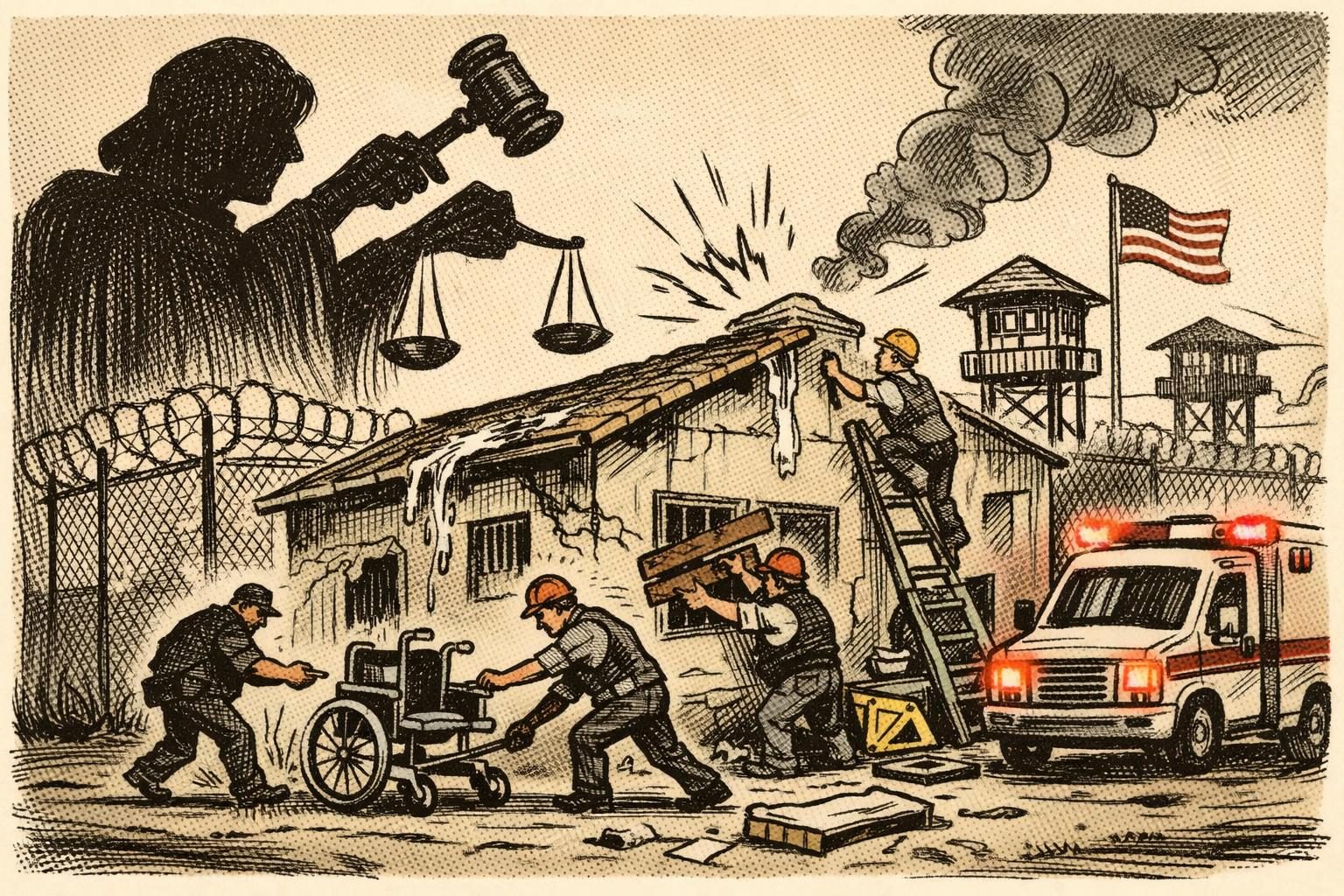
A federal judge has put the Adelanto ICE Processing Center under an emergency repair order, forcing the government’s immigration detention apparatus to confront conditions that a court said are likely violating detainees’ constitutional and disability rights. The ruling, issued August 14, does not merely express concern or demand a review. It requires action now, after the court concluded that people held at the facility are likely to win claims tied to inadequate medical care and a failure to provide proper accommodations for disabilities. That is a serious finding in any setting, but it lands especially hard in a detention system that has spent years cycling through the same complaints until a judge steps in and orders the problem fixed. The practical message is blunt: the center’s routine cannot continue unchanged while the case proceeds.
The order is a judicial acknowledgment that the problems at Adelanto appear to be systemic rather than accidental. According to the court’s findings, the alleged failures are serious enough that detainees do not have to wait for the full case to play out before seeing relief. The ruling calls for a comprehensive plan to improve medical care and disability accommodations, along with outside monitoring to make sure the changes are actually carried out. That detail matters because detention facilities often respond to criticism with promises of future compliance while conditions remain stuck in the same familiar shape. By requiring oversight, the court signaled that it does not trust promises alone to solve what has already become a documented breakdown. In effect, the government has been told that it must demonstrate correction, not simply announce it.
The broader significance goes beyond Adelanto itself. Immigration detention has long been criticized for creating conditions where basic needs are repeatedly mishandled, especially when people enter custody with medical vulnerabilities, disabilities, or other urgent care needs. The Adelanto order adds another formal record to that history, showing that judges are still being asked to intervene where administrative systems have failed to protect people in custody. For critics of detention, this is not an abstract policy argument but evidence of a recurring operational pattern: harm is reported, ignored, then litigated, and only after a court finds likely rights violations does the institution begin to move. That sequence is expensive, slow, and deeply revealing. It suggests a system that does not reliably self-correct, even when the consequences affect people who have very little power to demand treatment on their own.
The timing of the ruling also matters because it arrives as public scrutiny of detention conditions remains intense and politically charged. A court order of this kind is not the same as a final judgment, but it is far from a minor procedural step. It means the allegations have been strong enough to persuade a judge that immediate intervention is justified while the case continues. For the administration, that creates both legal and political pressure to show that conditions can be brought into compliance quickly and verifiably. For detainees and advocates, it provides something more than condemnation: it creates an enforceable framework for change. Whether the facility can actually meet that standard remains to be seen, but the court has already made one thing clear. The old arrangement is no longer acceptable, and the burden is now on the government to prove that meaningful reform is finally underway.
Comments
Threaded replies, voting, and reports are live. New users still go through screening on their first approved comments.
Log in to comment
No comments yet. Be the first reasonably on-topic person here.