
Justice keeps converting immigration politics into federal paperwork, arrests, and prosecutions
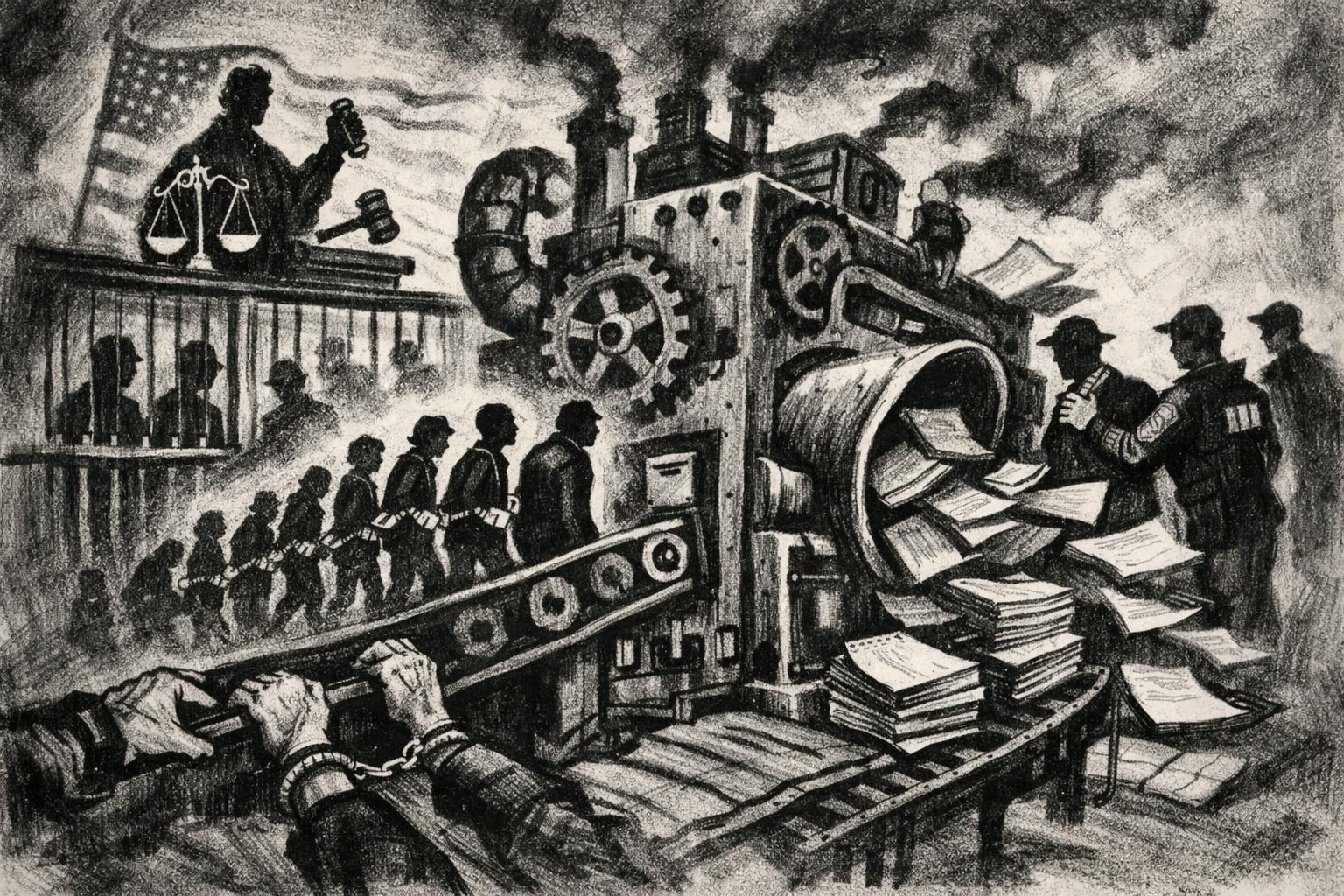
In the August 14-15 window, the Justice Department kept turning immigration enforcement into something that looks at once procedural and theatrical: a stack of filings, arrests, and public statements that together amount to a political message as much as a legal one. The current record shows federal prosecutors moving fresh matters tied to immigration operations rather than simply revisiting old talking points or reciting generic policy language. That distinction matters because each new filing is a concrete use of federal power, the kind that can produce arrests, indictments, courtroom deadlines, and longer-term pressure on local institutions. It also shows that the administration’s immigration push is not just living in speeches or campaign-style framing; it is being carried out through ordinary federal machinery, which gives it a more durable and harder-to-ignore shape. In practical terms, the paperwork keeps arriving, and with it comes a clear sign that the enforcement apparatus is still running at full speed.
The Justice Department’s own public-facing press pages reinforce that impression. Recent entries show repeated district-level actions and broader statements connected to immigration enforcement, suggesting a pattern rather than a one-off burst of activity. Even when the allegations differ from case to case, the larger structure is consistent: immigration-related enforcement is being used to demonstrate toughness, widen federal involvement, and keep immigration at the center of the political conversation. That can be useful to the White House because it gives the administration something tangible to point to when defending its broader immigration agenda. But it also creates a built-in vulnerability, because the more the government leans on arrests and prosecutions as a public signal, the more it invites scrutiny over whether the underlying conduct really justifies the spectacle. The result is a familiar federal balancing act, except here the balance is visibly tilted toward visibility and force.
One recent example helps explain the broader pattern. Federal prosecutors in Utah announced charges against two former court clerks, alleging they helped in an immigration-related effort, according to the public record cited by the Justice Department. The specifics of that case are important because they show how immigration enforcement can reach beyond the usual border or detention context and spill into local administrative spaces where records, court processes, and official access become part of the dispute. When the federal government treats those settings as sites for criminal investigation, it raises the stakes for local systems that may already be trying to manage their own workloads and obligations. It also makes clear that immigration enforcement is not confined to a single office or a single type of offense; it is being extended through multiple channels, including criminal charges that may carry consequences well beyond the immediate allegations. The fact that this is happening in the same window as other DOJ immigration actions suggests an active enforcement campaign, not a symbolic placeholder.
That broader campaign is exactly where the political and legal tensions start to tighten. Critics are likely to focus on civil-liberties concerns, due process, and the risk that aggressive immigration-related prosecutions can outpace the evidence or the harm they are meant to address. The recent Justice Department record indicates that these actions are not isolated filings but part of a larger enforcement strategy that stretches across U.S. attorneys’ offices, civil-rights components, and policy messaging. When multiple parts of the department are effectively speaking the same language at once, the government can look more coordinated, but it can also look more intent on producing an enforcement narrative than on measuring proportionality. That is where overreach concerns tend to sharpen, especially if local officials, defense lawyers, or affected communities start pushing back against the federal footprint. The administration may benefit in the short term from projecting resolve, but it also takes on the burden of proving that these actions are both legally sound and politically defensible.
The immediate takeaway is that immigration remains one of the clearest arenas in which federal power is being expanded and dramatized at the same time. The Justice Department’s public record shows an ongoing accumulation of enforcement acts in a narrow time frame, and that accumulation is itself meaningful even when no single case dominates the news cycle. It tells us that the campaign is live, not merely remembered, and that the federal government is still using the criminal justice system as part of its immigration posture. That posture has obvious political value, especially when toughness on immigration remains a reliable signal to core supporters and a useful frame in broader messaging. But the same posture can also undercut legitimacy if the public starts to see the process as more performative than proportionate. For now, the most durable fact is simply that the machinery is still moving, and it is moving in a way that makes immigration both a legal pipeline and a political spectacle at once.
Comments
Threaded replies, voting, and reports are live. New users still go through screening on their first approved comments.
Log in to comment
No comments yet. Be the first reasonably on-topic person here.