
Immigration raid at a church triggers immediate backlash over where enforcement crossed the line
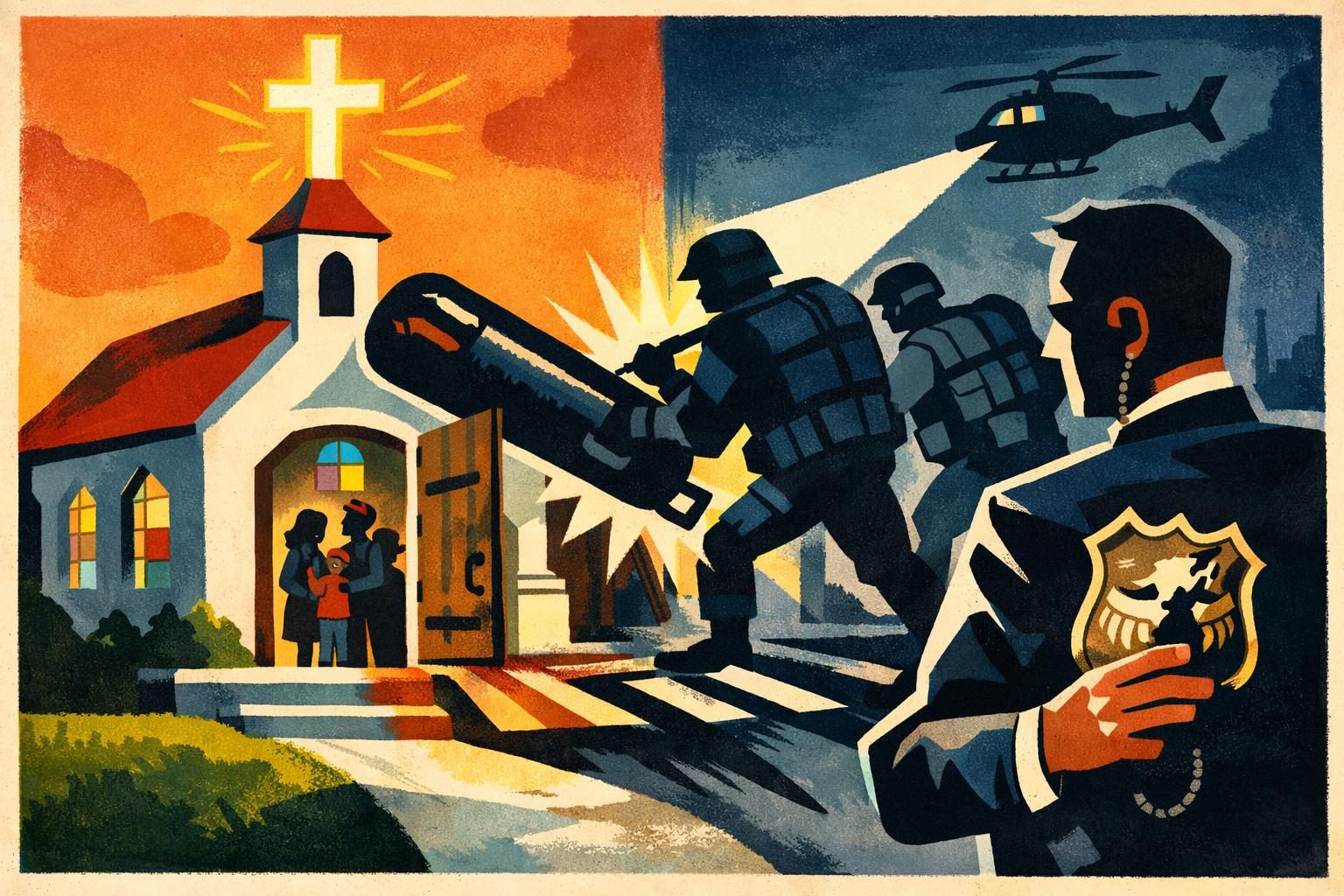
Federal immigration enforcement on August 14 sparked an immediate backlash after officials took action in a setting that many observers viewed as unusually fraught: a church. The operation itself is the central fact here, and it is enough to explain why the response was so sharp and so fast. Churches are not just buildings where people gather; they are places many communities treat as sanctuaries, socially and morally, even when the law does not create absolute immunity there. When the government chooses to show up in that environment with immigration enforcement, it inevitably raises questions about judgment, proportionality, and whether officials are using every available tool simply because they can. That is why this episode traveled quickly from a routine enforcement record into a broader argument about the limits of federal power.
What made the reaction especially intense was not only that enforcement happened, but where it happened and what it communicated. The available material indicates that this was a real, documented enforcement action, not a speculative policy memo or a vague dispute over future rules. That distinction matters because critics were not reacting to a hypothetical possibility; they were responding to an actual event with immediate consequences. The setting gave the whole thing an unmistakable symbolic weight, and that symbolism was not lost on advocates, local observers, or legal commentators who quickly described the move as unnecessary and avoidable. Even supporters of strict immigration enforcement have to contend with the fact that some places carry a different social meaning than an ordinary workplace, roadway, or residence, and that difference affects how force is perceived whether officials like it or not. Once the scene became public, the operation stopped looking like a narrow enforcement matter and started looking like a test of how far the government is willing to go before it decides a target is worth the blowback.
The criticism that followed was not abstract or limited to people predisposed to oppose immigration enforcement in general. Instead, the response centered on discretion, restraint, and whether the government could have pursued the same objective without creating the appearance of crossing a line. That is a harder argument for officials to dismiss than a simple ideological complaint, because it asks whether the tactics fit the setting and whether the government itself invited the controversy by choosing a location loaded with emotional and political significance. In moments like this, the enforcement action does more than remove or detain a person; it also communicates a theory of authority to everyone watching. If the message is that no location is off-limits, then critics will say the government is not merely applying the law but deliberately maximizing fear and public spectacle. If the message is that the operation was an isolated case with a specific justification, officials will need to explain why the church setting was appropriate and unavoidable in the first place. Either way, the burden of explanation now sits squarely with the government because the optics are doing much of the political work for its opponents.
The broader significance extends beyond one church, one day, or one enforcement team. Immigration policy has already become one of the most divisive arenas in American politics, and events like this harden that divide by giving both sides a vivid example to use. For advocates and community leaders, the action can be presented as proof that federal authorities are willing to intrude into spaces that people see as protected or at least deserving of caution. For officials and their allies, the same episode may be defended as ordinary enforcement that should not be weakened by emotional reactions to the location. But the practical reality is that the government’s credibility suffers whenever an operation appears to disregard community impact, especially in places where people expect some degree of restraint. That is why the episode matters even if no major court fight or formal complaint follows immediately. It adds to a growing sense that immigration enforcement is increasingly being conducted as a public demonstration of toughness rather than a narrowly calibrated exercise of law. If more incidents like this emerge, the question will stop being whether one raid crossed a line and start being whether the line itself has effectively disappeared. For now, the documented action on August 14 has already done enough damage to ensure that the debate is not just about immigration law, but about the moral and political boundaries of federal authority itself.
Comments
Threaded replies, voting, and reports are live. New users still go through screening on their first approved comments.
Log in to comment
No comments yet. Be the first reasonably on-topic person here.