
Immigration enforcement keeps running into fresh judicial resistance
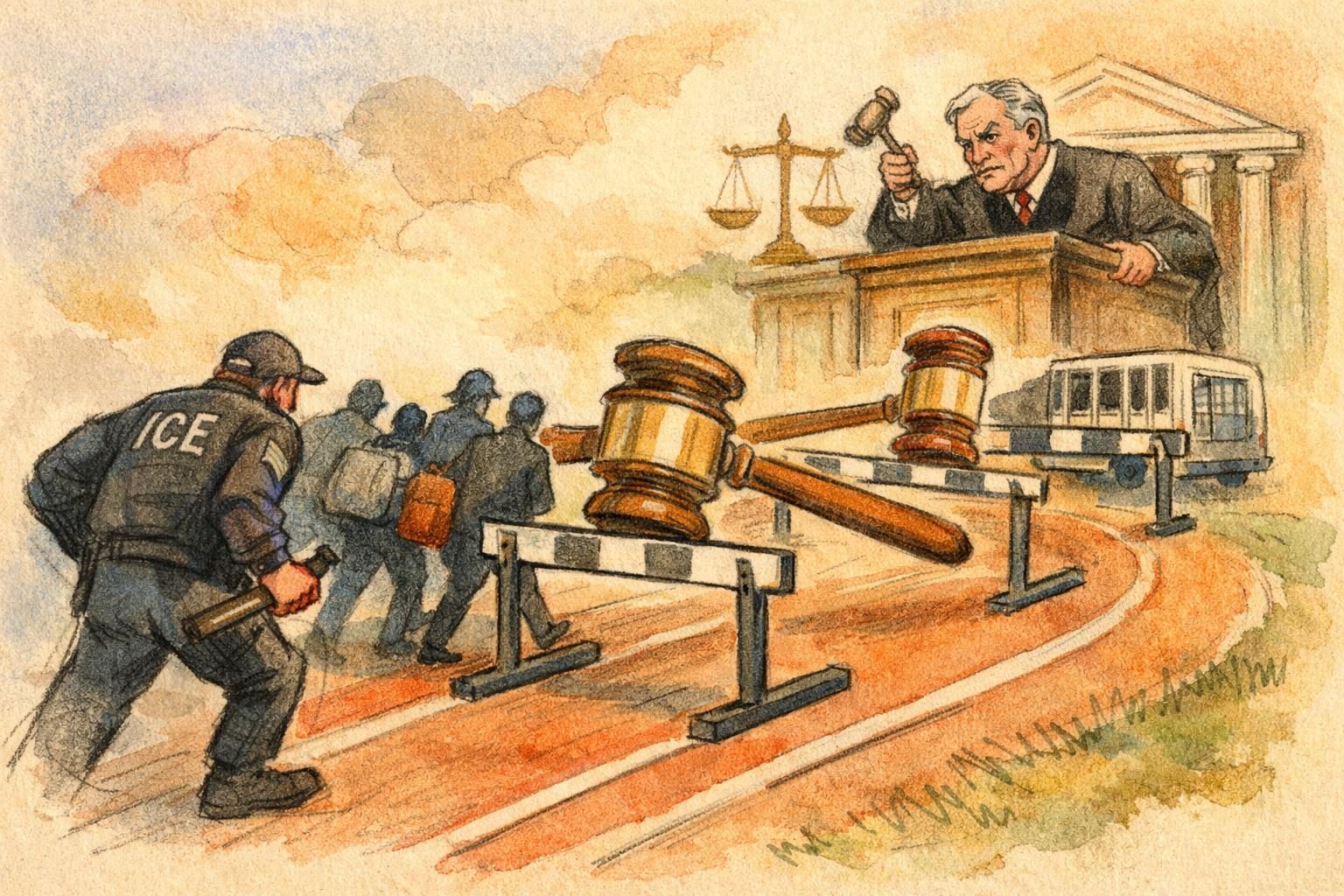
The administration’s immigration agenda is still colliding with the courts, and the latest round of legal maneuvering shows just how contested the push for faster deportations has become. Judges and plaintiffs continue to press back against efforts to widen expedited removals, while other lawsuits challenge enforcement tactics that critics say invite federal agents to rely on race, neighborhood, occupation, and other broad cues instead of individualized suspicion. The result is a legal landscape that remains unsettled even as the government tries to move people through the system more quickly. That matters because the difference between a normal hearing and a rushed removal can determine whether someone has any real chance to seek relief. In practice, these cases are becoming tests of how much the executive branch can compress due process before the courts step in.
The fast-track deportation fight sits at the center of that larger conflict. The administration has treated speed as a feature, arguing that immigration law must be enforced decisively and that removal proceedings need not be bogged down by what officials frame as unnecessary delay. Critics answer that speed is only a virtue if it does not strip people of meaningful review, especially in cases involving humanitarian protections, pending claims for relief, or long-standing ties to the United States. That tension has fueled repeated challenges over whether the government can expand expedited removal without giving affected people a fair opportunity to contest the government’s case. The courts have not settled the matter once and for all, but they have signaled discomfort with any approach that makes deportation automatic before a person can fully be heard. For advocates, that is not a technical objection; it is the core of the argument that the process itself is becoming punitive.
The broader enforcement strategy is drawing similar skepticism in challenges aimed at the way immigration stops are carried out on the ground. Plaintiffs and civil rights groups have argued that when officers lean on general indicators such as a person’s apparent race, where they live, or what kind of work they do, the government starts to drift away from individualized suspicion and toward collective profiling. That critique is politically explosive because it cuts to how enforcement actually looks in communities where immigration checks are most aggressive. It is one thing for officials to promise targeted operations; it is another for residents to experience raids, stops, and surveillance that feel sweeping and arbitrary. Court fights over these tactics have therefore become about more than immigration policy in the abstract. They are about whether the government can use the force of federal authority in ways that reshape daily life for entire neighborhoods. Even temporary court relief can matter a great deal if it slows an enforcement practice long enough for legal claims to be heard.
The White House and the Justice Department have maintained that the administration is simply enforcing the law, but the continuing wave of challenges keeps exposing a gap between that message and the mechanics of enforcement. Immigration advocates say the government is normalizing shortcuts, especially in cases involving people who entered lawfully under humanitarian programs or who may have strong claims to remain in the country. Those critics argue that if the state can make deportation easier by making review thinner, then the system starts to look less like a legal process and more like summary punishment. The administration, meanwhile, appears intent on testing how far it can push before judges force it to slow down. So far, the answer from the courts has been cautious rather than deferential, with judges showing reluctance to hand the executive branch a blank check on removal speed or enforcement breadth. That does not resolve the underlying fights, but it does mean the deportation push continues to meet fresh resistance at precisely the point where officials most want momentum.
Comments
Threaded replies, voting, and reports are live. New users still go through screening on their first approved comments.
Log in to comment
No comments yet. Be the first reasonably on-topic person here.