
DOJ’s cartel push keeps widening, because apparently every week needs a new example
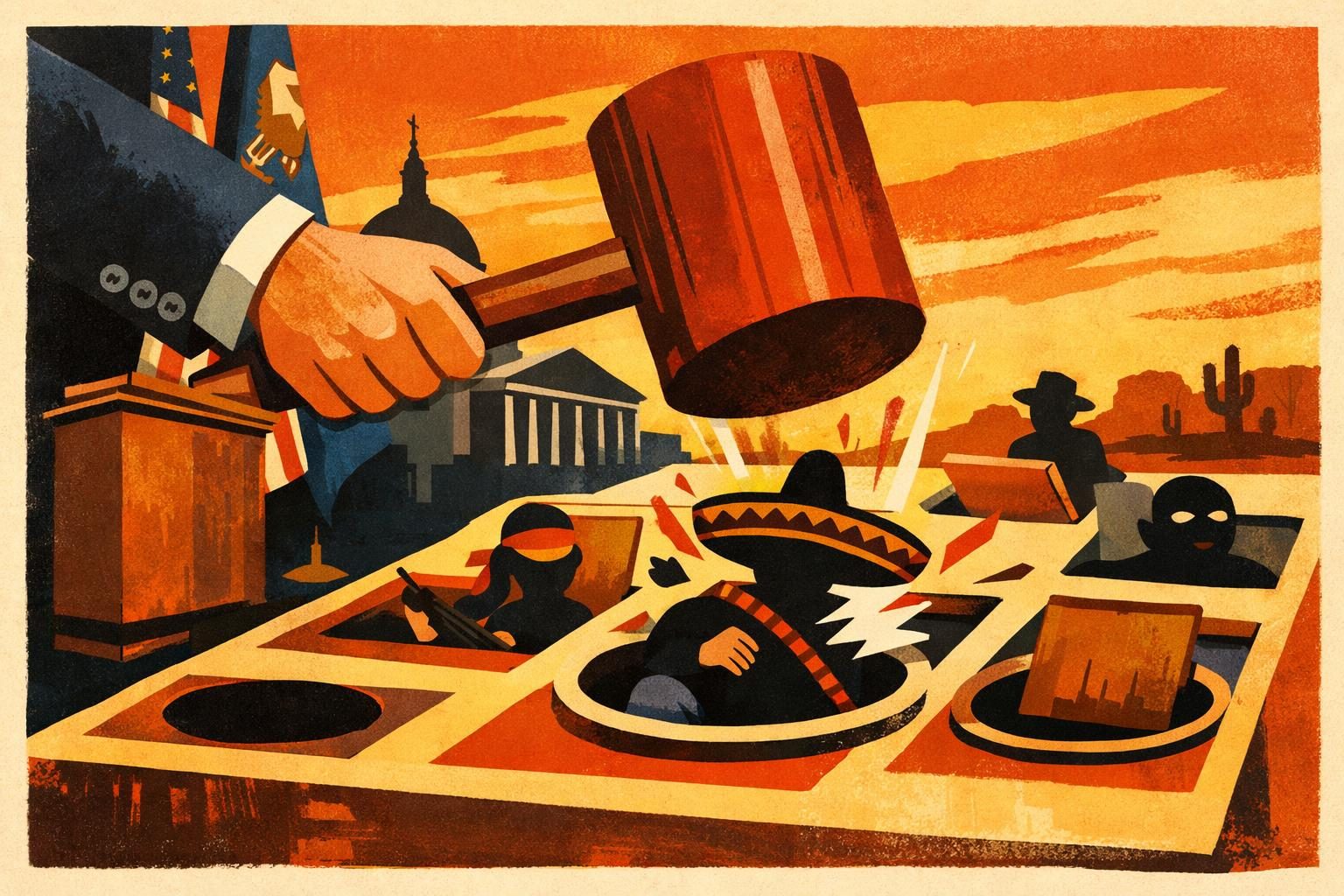
The Justice Department’s latest cartel case file got another fresh stamp on August 14, when officials announced charges against five senior leaders tied to United Cartels, a group the administration has designated as a foreign terrorist organization. That alone says a lot about how the federal government is choosing to frame the fight. This is no longer being presented as routine narcotics policing or a narrow set of criminal indictments. It is being treated as a national-security campaign, with the language, machinery, and courtroom posture that come with that shift. In practical terms, that means prosecutors are not just aiming at low-level couriers or local distributors, but at people the government says sit nearer the top of a transnational criminal structure. The date matters because it shows the campaign is not cooling off; it is still actively producing new enforcement steps, and the Justice Department appears committed to keeping the pressure visible.
That approach has obvious political value for an administration eager to advertise toughness. Cartels are among the easiest targets for law-and-order messaging because they combine violence, drugs, human trafficking, money laundering, and corruption in a way that is both real and easy to dramatize. When the government announces a new case against senior leaders, it can present that step as evidence that it is not merely talking about border security and cross-border crime, but taking concrete action against organizations it says are poisoning communities and destabilizing institutions. At the same time, this kind of messaging creates its own trap. The more the White House and Justice Department elevate each case into a symbol of broad competence, the more each filing has to carry more than its legal weight. It has to work on the facts, survive scrutiny, and avoid looking like a publicity prop wrapped around serious charges. That is not a small burden, especially when the administration is clearly trying to make cartel enforcement one of its signature demonstrations of resolve.
The August 14 action fits into a broader pattern that has been building all year, with federal agencies repeatedly presenting cartel-related prosecutions and coordinated enforcement moves as part of a larger crackdown. The government has been pushing the idea that these organizations are not just criminal enterprises in the ordinary sense, but top-tier threats that justify intensified interagency coordination and a more aggressive federal posture. That framing helps explain why the Justice Department’s materials keep highlighting senior figures, organizational leadership, and the cross-border nature of the alleged conduct. It also explains why the department is leaning so heavily on the symbolism of high-profile charges. In the federal government’s telling, each new case is supposed to demonstrate momentum and deterrence at once. If the strategy works, prosecutors can argue they are weakening networks that rely on hierarchy, intimidation, and secrecy. If it does not, the government risks looking like it is announcing an endless series of tactical wins without changing the larger conditions that keep these groups in business.
That tension is why the latest enforcement step matters beyond the courtroom. Critics of the administration’s broader approach will say, fairly, that cartel prosecutions do not solve the deeper drivers of cross-border violence, including drug demand, weapons trafficking, corruption, and the economic conditions that allow criminal networks to recruit and operate. Those are valid concerns, and they help explain why even a successful indictment is not the same thing as a durable solution. But it is also true that the Justice Department is dealing with real defendants in real cases, not just abstract policy problems, and that these cases can produce meaningful consequences if the evidence holds up and the charges advance. The government does not get to declare victory just because it makes a dramatic announcement, but it also should not be dismissed when it brings charges that potentially disrupt criminal leadership and expose a network’s inner workings. The harder question is whether the administration can turn this from a steady stream of headline-friendly actions into something structurally effective. For now, the answer is not fully knowable. What is knowable is that the cartel file remains one of the administration’s central enforcement obsessions, and the Justice Department is still treating every new case as another opportunity to prove that its all-out posture is more than just performance.
Comments
Threaded replies, voting, and reports are live. New users still go through screening on their first approved comments.
Log in to comment
No comments yet. Be the first reasonably on-topic person here.