
Justice Department doubles down on capital punishment machinery
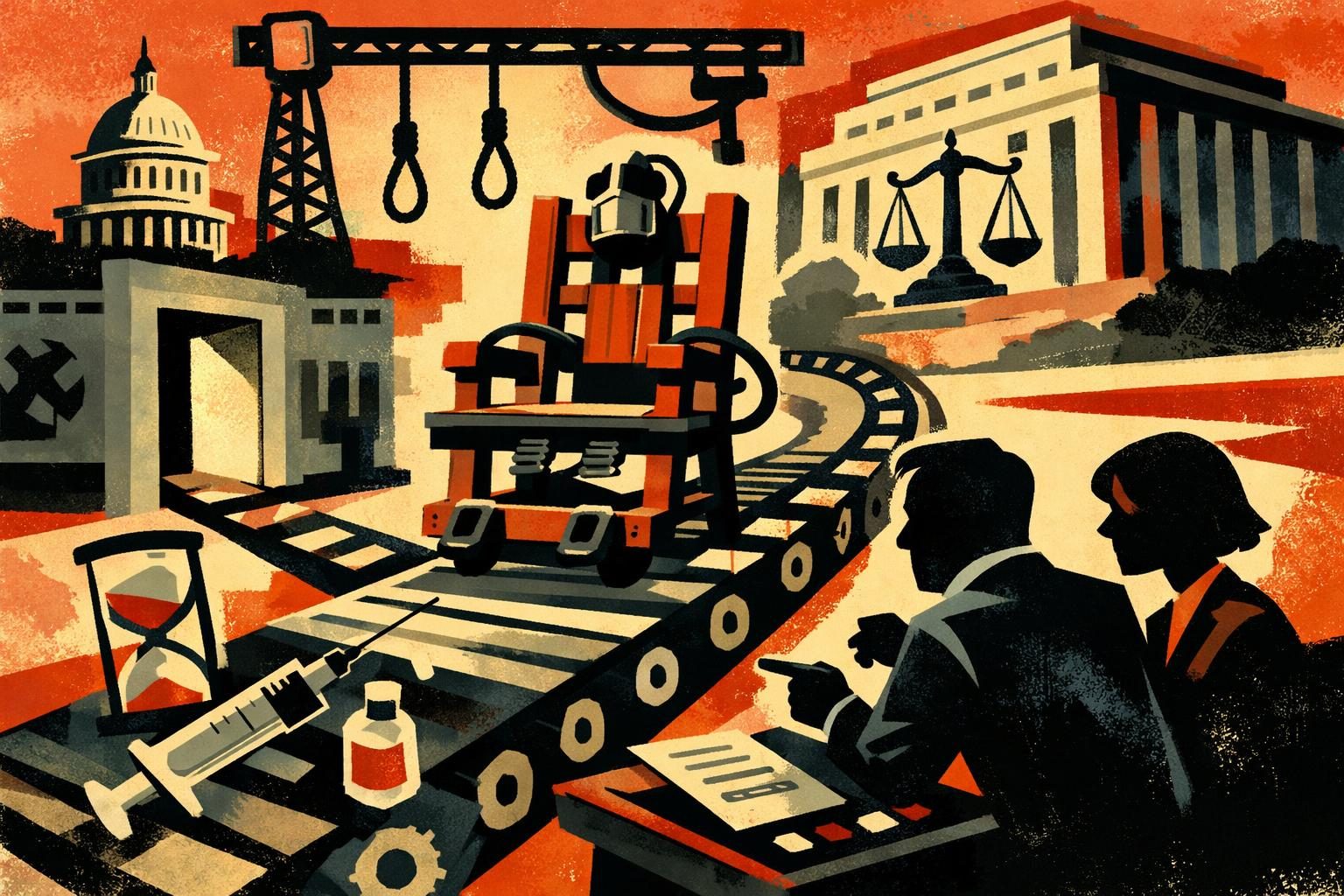
The Justice Department is pushing ahead with an effort to harden and speed up the federal death-penalty system, turning what might otherwise have looked like an internal procedural update into a clear policy statement with real-world consequences. On Aug. 14, 2026, the department’s overhaul remained an active and consequential move, with officials still pressing the changes announced in April to reshape how capital cases are handled and how executions would be carried out. The package is not limited to one technical tweak or a narrow revision of courtroom practice. It includes the department’s decision to readopt the lethal-injection protocol used during the first Trump administration, an expansion of execution methods to include the firing squad, and an internal streamlining of death-penalty processing. Taken together, those steps amount to an unmistakable effort to make federal capital punishment more usable, more efficient, and less encumbered by the delays that have long slowed it down. The department is treating the move as a matter of administration and enforcement, but the substance is far more sweeping than a routine bureaucratic update.
That matters because federal death-penalty policy has always carried a burden beyond the ordinary machinery of justice. It sits at the intersection of law, morality, politics, and federal power, which means even small changes tend to trigger large arguments about legitimacy and restraint. Here, the government is doing more than refreshing old rules. It is signaling that capital punishment should be operationalized with less hesitation and fewer internal bottlenecks, while also broadening the methods it is willing to use. The return to a previous lethal-injection protocol suggests an intention to rely on a framework the department already knows, even as the firing-squad expansion underscores a readiness to keep execution options open if one method faces legal or practical trouble. That combination may be pitched as flexibility, but it also invites scrutiny over whether the department is normalizing a harsher posture toward death-row cases rather than merely clarifying procedure. For critics, the concern is not only that executions remain on the table, but that the federal government is investing energy in making them easier to carry out.
The internal process changes are just as important as the execution methods themselves, even if they are less visible to the public. Streamlining death-penalty cases can mean faster decisions, tighter internal review, and fewer points where a case might slow down before reaching the final stage. Supporters of the policy are likely to frame that as basic efficiency and consistency, especially in a system where capital cases can sit unresolved for years. But in death-penalty practice, speed is never just speed. Faster processing can also mean less time for defense investigation, fewer opportunities to surface errors, and more pressure on judges, lawyers, and inmates trying to navigate a system already built on irreversible consequences. That is why the practical fallout is so immediate. Defense attorneys, civil-rights groups, and long-standing death-penalty opponents now have a sharper and more concrete target for litigation and public opposition. They can challenge not only individual cases, but the broader direction of the department’s policy choices, which appear designed to make federal executions less exceptional and more routine. Even before any execution is scheduled under the revised framework, the administrative changes themselves may become the subject of court battles and fierce political debate.
The political message is hard to miss. The department is presenting punishment as proof of toughness, and doing so at a moment when critics already accuse the administration of turning justice into a tool of politics. That makes the death-penalty push more than a question of penal administration. It becomes a test of how the government wants to project authority, and at what cost. In this framing, a hard line is not just a policy preference; it is part of the administration’s public identity. Yet the risks are substantial. Any effort to accelerate capital punishment in the federal system raises familiar concerns about cruelty, haste, and error, and those concerns only grow when the department is also widening the range of execution methods available. Federal death cases are inherently high-stakes and deeply scrutinized, and the more aggressively the government moves to normalize execution procedures, the more likely it is to invite scrutiny over whether due process is being compressed in the name of decisiveness. The administration may see this as a demonstration of resolve, but it also gives its opponents a straightforward argument: that the government is not merely enforcing the law, but trying to make punishment itself a political spectacle. In that sense, the policy push is both operational and symbolic, and the symbolism may prove just as consequential as the procedures themselves.
Comments
Threaded replies, voting, and reports are live. New users still go through screening on their first approved comments.
Log in to comment
No comments yet. Be the first reasonably on-topic person here.