
Texas bankruptcy courts take their public filing system offline for maintenance
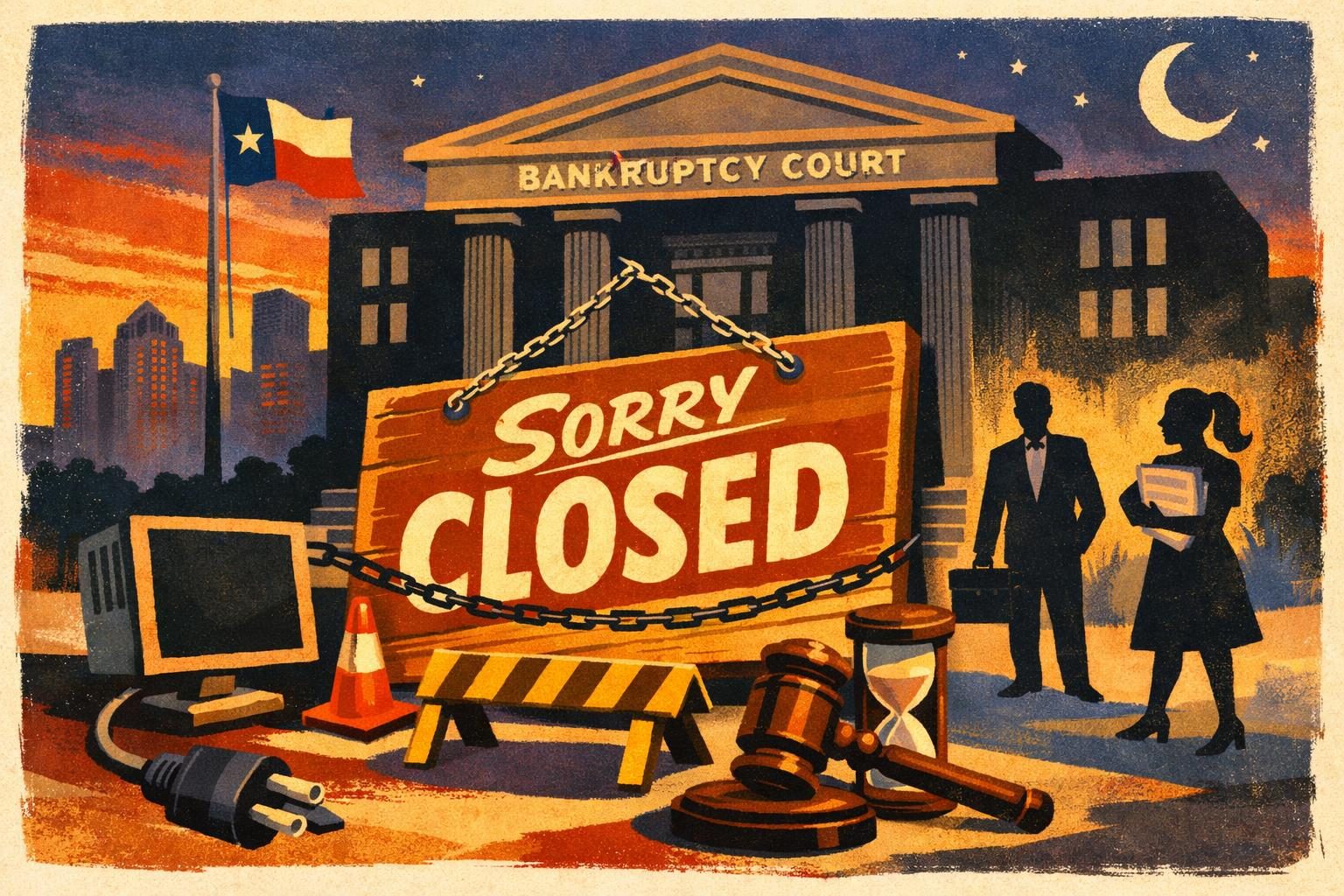
The Southern District of Texas is taking its bankruptcy filing and public access systems offline for scheduled maintenance, a routine-sounding move that still lands as a meaningful disruption in one of the busiest federal bankruptcy venues in the country. According to the court’s notice, bankruptcy CM/ECF and PACER will be unavailable from the evening of August 14 through the evening of August 16 while servers are updated. In practical terms, that means attorneys, debtors, trustees, creditors, and other users will lose routine electronic access to file documents, review dockets, and check the status of bankruptcy cases during the shutdown window. The clerk’s office has advised users to rely on emergency contacts if a matter truly cannot wait, which is the kind of caveat that signals the court understands the inconvenience even if it cannot avoid it. No one is suggesting this outage reflects a scandal or a policy dispute, but in bankruptcy court, even a planned interruption has real consequences because the system is built around deadlines, filings, and immediate public access.
That makes this more than an IT housekeeping note, especially in a district that handles a heavy volume of financially sensitive cases. Bankruptcy proceedings do not move on a relaxed schedule, and the parties who use these systems often do not have much room to absorb delays. A late filing can matter, a missed deadline can matter, and a weekend outage can become a problem faster than it would in a less urgent part of the legal world. The court’s notice appears designed to minimize that risk by announcing the downtime in advance and limiting it to a defined maintenance window, but a planned outage still creates a narrow bottleneck for anyone trying to get something onto the record at the last minute. For lawyers watching a filing deadline, or for debtors trying to protect an interest in an emergency, the difference between a normal online process and an offline weekend can be substantial. Even if the outage goes exactly as intended, the simple fact remains that an operating system built around continuous access becomes fragile the moment the access point disappears.
There is also a broader institutional point here, and it is one that federal courts keep running into as they depend more and more on digital infrastructure that users rarely see until it stops working. CM/ECF and PACER are the connective tissue of modern federal case management, and when those systems go dark, the disruption is immediate and widely shared. That is especially true in bankruptcy, where the court record is not just a repository of paperwork but the living map of a debtor’s financial collapse, a creditor’s claims, and a judge’s orders. Access is not a luxury in that environment; it is part of the process itself. The need for maintenance is understandable, and a scheduled update is far better than an unexpected failure, but the notice still underscores how much the legal system depends on aging digital plumbing that has to be repaired in carefully chosen windows. The irony is hard to miss: the more central electronic filing becomes to court operations, the more damaging even a short interruption can feel.
That is why the significance of this shutdown is mostly operational but not trivial. There is no hint of sabotage, no suggestion of a security incident, and no indication that the court is doing anything beyond ordinary upkeep. Still, the announcement serves as a reminder that the machinery behind the judiciary can be just as consequential as the rulings it produces. For the people who practice in bankruptcy court, the difference between a system that is online and one that is dark can shape the pace of a case, the timing of an emergency motion, or the ability to respond before a deadline expires. If the update is completed without incident, the story will fade quickly into the background as one more necessary maintenance notice. If anything goes wrong, however, the consequences could ripple through filings and hearings at exactly the moment when weekends already slow everything down. For now, the event is less a dramatic breakdown than a blunt demonstration of how much modern court administration depends on uninterrupted digital access, and how quickly a routine maintenance window can become a real-world problem for the people forced to work around it.
Comments
Threaded replies, voting, and reports are live. New users still go through screening on their first approved comments.
Log in to comment
No comments yet. Be the first reasonably on-topic person here.