
Supreme Court deadline clock on Trump’s CNN fight hits the new August 14 date
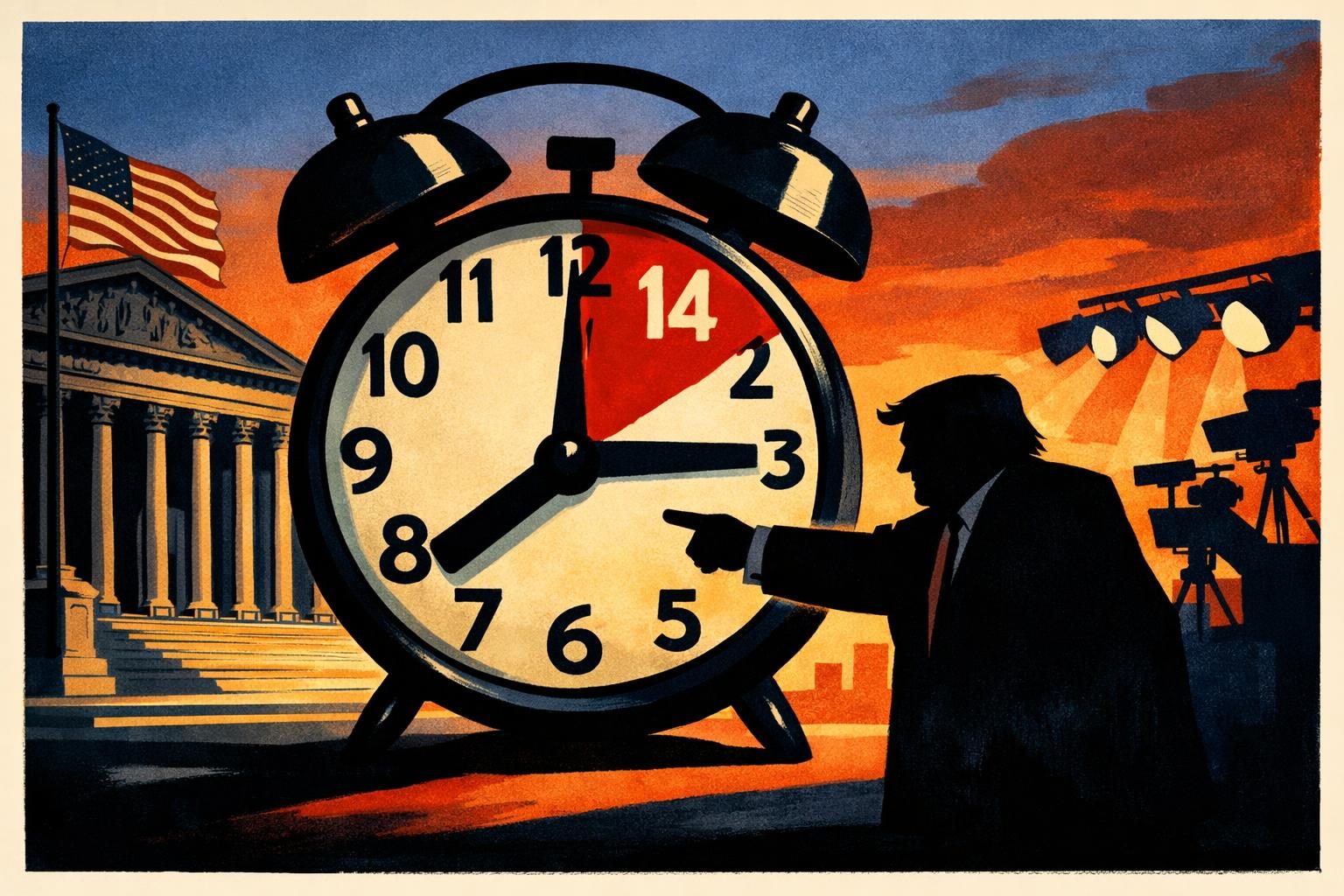
The Supreme Court’s docket has turned a procedural date into the day’s main development in Donald Trump’s dispute with CNN. According to the public filing record, the extension on Trump’s time to seek certiorari runs through August 14, making that deadline the latest concrete marker in a case that has already seen multiple requests for more time. There is no merits ruling attached to the date, no sudden doctrinal turn, and no fresh opinion from the justices. Still, the clock matters. In high-stakes litigation, especially litigation involving a former president and a major media organization, the difference between an ordinary deadline and an extended one can shape the tempo of the case as much as any substantive order.
What makes this update newsworthy is not that the underlying dispute has changed, but that the Court’s calendar has. The docket reflects that the extension is active through the edition date, which means the petition window remains open rather than closed. That is a small piece of administrative reality, but it is also the sort of reality that lawyers, clerks, and parties watch closely because timing in the Supreme Court is not decorative. A case can languish, accelerate, or quietly expire based on whether a deadline is met, extended, or missed. Here, the important point is that the matter remains alive on the Court’s schedule, and the filing record provides a clear, verifiable marker for that status. In a legal environment where speculation can outrun the paperwork, the docket itself is the safest guide.
The broader dispute is not new, and that is part of why this deadline now carries so much procedural weight. The litigation has already moved through earlier rounds of extension requests, which makes the August 14 date less like a random calendar note and more like the latest checkpoint in a drawn-out effort to keep the case in motion. Even so, the extension should not be confused with a signal about how the Court views the merits. A deadline extension says something about timing, not about victory. It can indicate that a party needs more time to prepare, that counsel is managing a complicated filing process, or simply that the Court is willing to allow the petition process to continue on a longer fuse. None of those possibilities, standing alone, tells readers how the justices will ultimately handle the dispute. What it does tell them is that the case has not gone dormant and that the Court has allowed the timeline to remain open long enough to matter on this date.
That distinction is why a procedural update like this still has strategic and reputational significance. For Trump, any live Supreme Court filing keeps a long-running legal conflict in circulation and preserves the possibility of a higher-court move, even if the immediate event is only about time. For CNN, and for anyone watching the litigation from the outside, the docket entry underscores that the matter is still in play rather than conclusively finished. Deadlines in the Supreme Court are never merely clerical, because they determine whether a petition can be filed, whether an opposition response will follow, and whether the case advances to the next stage of review. The extension through August 14 therefore functions as more than a technicality. It is a hard procedural marker that tells the public where the case stands right now and how much room remains before the next filing decision has to be made. That is enough to qualify as a live development, even if the substance of the underlying fight remains unchanged.
Comments
Threaded replies, voting, and reports are live. New users still go through screening on their first approved comments.
Log in to comment
No comments yet. Be the first reasonably on-topic person here.