
Alabama’s flagship university loses its president after a public fallout
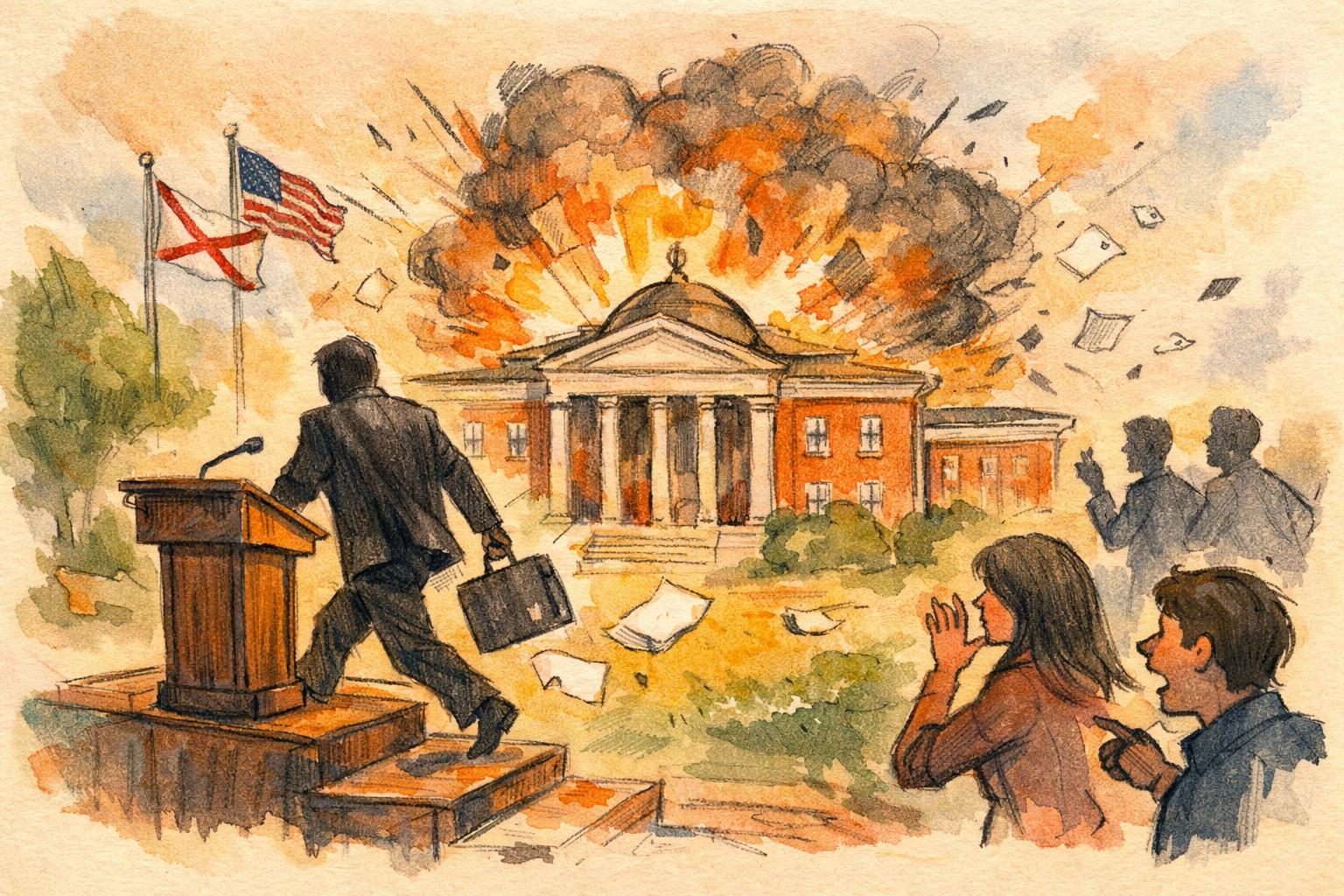
The University of Alabama is now trying to steady itself after a leadership collapse that began with a statement and ended with a resignation. The school’s president stepped down on Friday following intense criticism over how the university responded publicly to the death of conservative activist Charlie Kirk. What might have remained a clumsy communications episode instead turned into a broader institutional crisis, dragging the campus into a fight that reached far beyond Tuscaloosa and into the state’s political bloodstream. In a matter of days, the issue shifted from questions about wording and timing to questions about judgment, authority, and whether the university could keep its footing under pressure. For a flagship public institution, that is not a small embarrassment. It is a warning sign.
The backlash reflected how volatile higher education politics have become, especially in states where universities are watched closely by lawmakers, donors, alumni, activists, and students who increasingly expect leadership to pick sides or pay a price for hesitating. In this case, critics on the right argued that the university handled the situation badly and too slowly, leaving the impression that administrators were either insensitive or out of touch with the moment. Others used the episode to point out a deeper pattern that has become familiar at public universities: leaders often try to manage controversy by smoothing over conflict rather than by setting a clear standard and standing behind it. That approach may buy a little time, but it tends to create a bigger backlash later, especially when political emotion is already running hot. Once a university enters that cycle, every statement becomes evidence in someone else’s case. The institution stops looking like a place of learning and starts looking like a stage on which everyone else is fighting.
The resignation also underscores how fragile governance can become when academic leadership is pulled into a culture war it cannot fully control. A president at a major university is expected to do a little of everything at once: protect the institution’s reputation, reassure faculty, calm students, keep legislators from sharpening their knives, and make donors feel heard without letting them run the place. Those jobs are difficult under normal circumstances. They become nearly impossible when a public controversy is treated as a referendum on the university’s values and political loyalties. In that kind of atmosphere, even a routine response can be read as provocation, and any delay can be interpreted as a cover-up or a sign of cowardice. The result is a leadership trap with no clean exit. If administrators move too quickly, they risk sounding reckless or insincere. If they move too slowly, they look weak. The Alabama episode suggests that the institution ended up caught in exactly that vice.
What happens next will matter well beyond one resignation. Interim leadership can keep the daily operations moving, but it cannot instantly rebuild confidence among students, faculty, lawmakers, and outside stakeholders who now see the university as vulnerable to political whiplash. The search for a successor will likely be watched as closely as the original controversy, because the next president will inherit not just an administrative job but a test of institutional credibility. The university will also have to show that it can handle public communication without turning every sensitive event into a campus-wide crisis. That is easier said than done, particularly at a flagship public university in a politically charged environment where every misstep gets amplified and every correction is treated as a verdict. For now, Alabama is left with an uncomfortable lesson that plenty of institutions would rather ignore: when leadership loses control of the message, it often loses control of the room too. And once a campus blowup reaches that point, the fallout rarely stays contained to one office or one statement.
Comments
Threaded replies, voting, and reports are live. New users still go through screening on their first approved comments.
Log in to comment
No comments yet. Be the first reasonably on-topic person here.